Posted by Anita on 05.12.09 5:34 PM
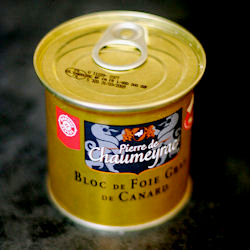 Bill Andronico
Andronico’s Markets Inc.
1109 Washington Avenue
Albany, CA 94706
Dear Mr. Andronico:
I have been a long-time shopper at your Irving Street store in San Francisco. Although I no longer purchase meat at the supermarket — preferring to buy my meat and eggs directly from farmers who make a point of their humane and ethical practices — I have always been very impressed by the knowledge and skill of your butchers in the past. Which is why I am stunned to read about your ill-informed, reactive policy regarding foie gras sales.
I don’t generally eat foie gras myself — I don’t care for its richness, nor its cost — but from rather extensive reading on the subject, I think it’s quite plausible that the “cruelty” of its production is overrated. On the other hand, I fully believe that standard, everyday conditions for commercial hens, pigs, cows, and other factory-farmed animals are grossly inhumane by any realistic measure.
If you and your company truly cared about animal welfare, you would stop selling battery-hen eggs and feedlot pork. Intensive factory farming is far more cruel — and thousands of times more pervasive — than the process of “force feeding” geese and ducks.
I suggest you do some additional homework about the realities of what goes into the meat, eggs, and dairy you sell before zeroing in on such an easy knee-jerk target. (The movie Food, Inc., which opens next month, might be a good starting point.) Otherwise, you run the risk of looking like a publicity-hungry hypocrite.
Bay Area, meat, shopping
9 Comments »


Posted by Anita on 05.11.09 7:18 PM
 It’s hard to believe that in just two months — July 8 through 12 — we’ll be back in New Orleans for this year’s Tales of the Cocktail. Cameron and I are both participating in this year’s TalesBlog group, and {gulp} I’m moderating a Saturday-morning seminar called “Secrets of Cocktail Photography“.
TalesBlog is already up and running with previews of many of the interesting sessions, tasting rooms, events, and meals that make Tales the must-do event for anyone who loves cocktails. The contributor list is pretty much a Who’s Who of top cocktail bloggers, so it’s worth adding to your feed-reader even if you’re not planning to attend.
In other Tales-related news, host venue Hotel Monteleone is celebrating the 60th anniversary of the Carousel Bar, and they’re celebrating with a contest open to all bloggers. Here’s the gist: From 1949 until sometime in the late 60s or 70s there was a drink on the Carousel Bar’s menu called the Monteleone Cocktail. Unfortunately, the hotel folks have no idea what the exact recipe or ingredients were.
Here’s where you come in: Submit a recipe for your best idea for the new official Monteleone Cocktail. Entries will be judged by VIPs at the Carousel anniversary celebration on May 21. There are no requirements on types of liquor or style of drink, but all entries must be posted on your blog and emailed to the sponsors no later than May 18. (Send your drink recipe, along with your name, address, and phone number, to athornton@hotelmonteleone.com.)
The winning entry will become the new official Monteleone Cocktail, and the winner will receive four free nights at Hotel Monteleone during Tales of the Cocktail 2009.
bar culture, drinks, New Orleans, Tales of the Cocktail, travel
5 Comments »
Posted by Anita on 05.01.09 8:14 AM
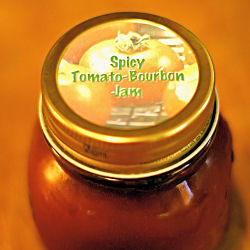 Thanks to Sandy Gluck from Martha Stewart Living Radio‘s Everyday Food. She gave her listeners a shout-out to our Tomato-Bourbon Jam. We use it as a homemade replacement for ketchup, or as the secret ingredient in wintertime BLTs.
It’s still a little early for tomatoes, but if you’ve got hothouse tomatoes at your farmers market, as we do, this is one place where they do pretty well.
preserving & infusing
5 Comments »
Posted by Anita on 04.22.09 4:00 PM
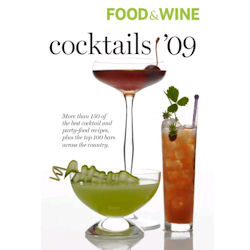 For the food-obsessed, there are a lot of exciting things that pop up in the spring. The first tender favas, skinny spears of asparagus, and fruit-tree blossoms that promise a sweet summer ahead. But in our circle of friends, there’s been another anticipation afoot: The long wait for the new edition of Food & Wine’s Cocktails annual.
You may recall our “Book Club” making visits to Range, Forbidden Island, and Bar Drake last year; in fact, our crew managed to hit every San Francisco bar listed in the 2008 edition, sampling a few gems amid a stunning number of failures. (Not to mention the many AWOL contenders; I wish we had a dollar for every time we heard “Oh, that? Nobody liked it, so we took it off the menu.” Sigh.)
When I crossed paths with the book’s compiler, Jim Meehan, at his NY speakeasy PDT, I gave him a fair bit of good-natured grief for our trouble. He allowed that the fleeting nature of drink recipes could be a bit of a problem, but assured me that big changes were in store for 2009, and seemed confident we would like the new direction he’d taken.
It’s still the same book — digest sized, with a clean and colorful layout. But in the biggest change from previous years, where chapters were organized by base spirit, this year’s book focuses on themed chapters: aperitifs, Latin drinks, seasonal drinks, frozen drinks, pitcher drinks, after-dinner drinks, classics, mixologists’ drinks, and mocktails. Each section has a patron bartender, who is briefly profiled and provides all the recipes. Bar celebrities like Jamie Boudreau, Julie Reiner, and (the book’s co-editor) Joaquin Simo take their turns, as do lesser-known mixmasters such as Jeff Grdinich.
The mixologists’ section is like a miniature version of previous editions of the book, a compilation of 18 drinks from top bartenders across the country. Although it’s hard to tell without actually mixing them, the drink recipes from San Francisco shakers — Absinthe’s Jonny Raglin, Neyah White of Nopa, and Jacques Bezuidenhout of Bar Drake — look great on paper. But better still, they come from bartenders who we know understand what works, not just in a highly controlled test-kitchen environment, but in everyday drink-slinging bars. It’s no surprise that some of the cocktails we liked best from last year’s Book Club came from these gentlemen; I can’t wait to give their recipes a test drive.
As before, there’s a directory of top bars listed in the back. This time, the list is explicitly titled “Top 100 Bars”, though they are not necessarily correlated to the included recipes. Frustratingly, other than hat-tips to chapter hosts, there’s no cross-reference to each establishment’s recipes by page number, a detail from past editions I will definitely miss. Cantina’s blurb, for example, mentions Duggan McDonnell by name, offering that “Many of his creations are featured in the Pitcher Drinks chapter (p. 94).” But Absinthe’s listing neither mentions Jonny Raglin, nor directs readers to his recipe on page 135, opting instead for a quizzical mention of Top Cheftestant Jamie Lauren.
As far as the local bars in the Top 100, there’s only a couple of quibbles. Everyone I’ve asked is surprised by the omission of Oakland’s lovely Flora, and it’s odd that Bar Drake didn’t make the cut this year when Jacques’ recipe did. Bix, however, is a total head-scratcher. Despite reviving the classic-cocktail genre a full decade before almost anyone else in town, this stalwart has long been eclipsed in both technical merit and outright hospitality.
The visuals, always a strength of this series, continue to impress. In addition to ace prop styling and eye-popping photography found in previous editions, this year’s version includes more infographics, which should help users navigate now that the book is not organized by spirit type. Graphics show ease of construction and base spirit, in addition to the glassware icon of the past editions. The front matter is perhaps a bit basic for experienced bar aficionados, although there is some good stuff about ice, must-have spirits, and best brands taste-test winners.
Do you need Food & Wine Cocktails ’09 in your bar library? Probably not. But at $10, it’s less than the price of a drink at nearly any of the places it trumpets, and it’s bound to be a fun souvenir of the way we’re drinking in the late aughts.



Bay Area bars/restaurants in the Top 100
There are 13 of them this year, which — for those of you keeping score at home — is more than any other city except NYC (home to 14). Mixologists mentioned by name in their establishment’s blurb are shown in brackets.
– Absinthe
– Alembic
– Beretta [Thad Vogler]
– Bix
– Bourbon & Branch
– Cantina [Duggan McDonnell]
– Clock Bar
– Elixir [H Ehrmann]
– Forbidden Island
– Heaven’s Dog [Erik Adkins]
– Nopa [Neyah White]
– Range
– Slanted Door
San Francisco cocktail recipes in the Mixologists’ Drinks chapter:
– Jonny Raglin, Absinthe
Villa Flores: jalapeno, tequila, egg white, grapefruit, agave, orange-flower water, Sichuan pepper garnish
– Neyah White, Nopa
Cherry Samba: cachaca, cherry Heering, Islay Scotch, lemon, simple, egg white
– Jacques Bezuidenhout, Bar Drake
Black Friar’s Pint: gin, cardamom-cinnamon Guinness, sherry, bitters, agave, egg white, cinnamon garnish
San Francisco recipes for Party Food:
– Warm Marinated Olives, Seasons Bar & Lounge
– Queso Fundido, Tres Agaves
– Polpette in Spicy Tomato Sauce, Beretta
And one San Francisco chapter host: Duggan McDonnell of Cantina
bar culture, Bay Area, books & media, drinks, restaurants
6 Comments »
Posted by Anita on 03.16.09 8:45 PM
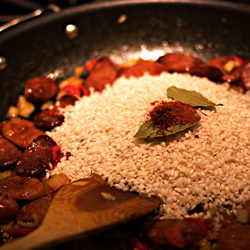 Daylight Saving Time arrived this week, and with the longer days come the final few nights of the Dark Days Challenge. We’re also deep into the second full week of our “no new meat” freezer clean-out plan, which is going remarkably well.
Work’s been keeping us both insanely busy, so it’s a treat to be able to eat a home-cooked meal even on the nights when we don’t make it home until well after dark. And, as a side benefit, we’re finally able to see our freezer shelves again.
This week’s dinners included successful renditions of cassoulet, spaghetti and meatballs, and posole verde. But lest you think it’s been an endless buffet of effortless delights, I’ll admit that one night’s dinner — reputedly lasagne — resembled nothing more than a watery bowl of soggy, sausage-flecked dough. (Not sure what happened there; baked pasta always freezes well… or at least always has in the past.) It didn’t taste bad, but it certainly doesn’t count as one of the successes.
As nice as it is to work our way down the freezer inventory and pull a ready-to-heat meal out of storage, it does feel a little anticlimactic. After a few days of thaw-and-reheat, I begin to miss the prep, not to mention the actual cooking. Happily, most of the stuff in the freezer is bits and pieces, not entire prepared dishes, which means that there are plenty of chances to create a dish out of old leftovers or combine assorted remnants with a fresh ingredients to make a dinner that’s more than the sum of its parts.
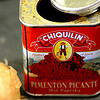
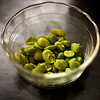
 Our favorite meal this week: A simple paella that used up some orphaned chorizo, leftover roast chicken, and red pepper strips we froze last summer. It’s not the most authentic Spanish dish, but it’s easy enough to get on the table for a midweek meal, and undeniably delicious. And, as an added bonus, we got to sample the season’s first fava beans — a little dash of spring in our final Dark Days meal. With the exception of the pimentón and the saffron, everything came from within our 100-mile radius.
When it comes to paella, the sausage you want is firm Spanish chorizo — the refrigerated sort that’s a similar texture to andouille, definitely not the soft Mexican kind, nor the dry charcuterie style. The Spanish Table in Berkeley sells an assortment of brands; we used the locally made Neto’s.



Weeknight Paella
– makes 6 to 8 servings
1 tablespoon vegetable oil
1 pound Spanish chorizo, cut into 1/2 inch slices on the diagonal
1 small onion, chopped
1 red bell pepper, chopped or 1/2 cup bottled red-pepper strips
2 cloves garlic, chopped
1/2 teaspoon pimentón, or to taste
2 cups short-grain rice
1 pinch saffron threads
2 bay leaves
4 cups chicken stock
8oz roast chicken, skinned, deboned, and torn into chunks
1/2 cup peas or shelled fava beans
Salt and freshly ground black pepper, to taste
Heat oven to 400°F.
Heat oil in a very large skillet (ours is 14″) or paella pan over high heat. Add chorizo and cook until browned and fragrant. Drain off most of the chorizo fat, leaving just enough to saute the vegetables. Add onion, red bell pepper, and garlic. Cook, stirring occasionally, until vegetables are tender, about 3 minutes.
Add rice, pimentón, saffron, and bay leaves. Stir to combine and coat the rice, about 1 minute. Add chicken stock and bring to a boil. Add chicken, peas (or favas); stir to combine.
Transfer skillet to oven. Cook uncovered until rice is tender and no liquid remains, about 20 minutes. Remove from the oven. Fluff with a fork and serve immediately.
Dark Days challenge, locavore, recipes
15 Comments »
Posted by Anita on 03.11.09 11:49 AM
 Two weekends ago, I nearly lost a toe.
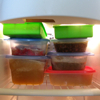
I’d been rooting around in the upstairs freezer (yes, we have two — doesn’t everyone?), looking for some mysterious recipe ingredient, when the Jenga pile that is the meat shelf gave way. Luckily, I jumped back just in time to avoid an avalanche of frozen bricks, but it was a near thing.
With no time to spare, I shoved everything back in as neatly as I could, and added “re-organize the freezer” to my to-do list. It took me a while to get there, but one cold and cloudy morning, I tackled this long-overdue task. I took everything out of both freezers, inventoried the contents, and put it all back in the least-precarious and most-logical way possible. Admiring my newly tidy spaces, I felt so virtuous.
But as I surveyed the inventory list, that virtuous feeling vanished. How in the world had we managed to squirrel away enough food to fill two standard freezers? Just the list of our frozen fodder filled an entire letter-size page!
Happily, this is one embarrassing problem we can literally eat our way out of.
I sat down and quickly mapped out 14 meals we could easily make by combining two or more components of the freezer. (Beef plus chorizo plus buns equals Sloppy Joes. Beans plus pork plus sausage equals Cassoulet.) And that wasn’t even counting the dozen or so ready-to-eat meals — like beef stew, coq au vin, and chili — that we’d set aside. I quickly realized we could go for weeks, eating very well without buying anything but fresh vegetables.
So, just in time for Lent — which we don’t celebrate, but definitely respect — I floated a new house rule: No new meat until we eat down our glut. Which, if we’re diligent, I predict will happen right about Easter Sunday. Cameron happily agreed, with one exception: Bacon. There will be bacon. Because it’s just not the weekend without everyone’s favorite cured meat.
So far, I have to say that our experiment’s been a wild success. We’re clearing out the freezers — I can see shelves! — while we save time and money, which are never abundant, but seem to be in even shorter supply this month. The oldest thing we’ve eaten so far? A bag of Rick Bayless’s ancho beef chili dated 6/07, which tasted surprisingly fine.
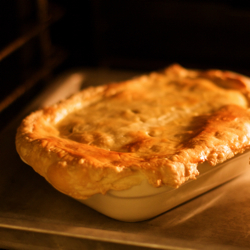
One of the winningest put-togethers so far is a new variation on an old favorite: chicken pot-pie. With a bag of pie-crust scraps begging to be used, we decided to take a break from our usual biscuit-topped recipe. I’m glad we did, because the rich, warm flavor of the sherry and the savory pop of mushrooms in this version make it a worthy variation.


Chicken Pot Pie
— adapted from Kitchen Sense
3-1/2 cups cubed cooked chicken (a generous pound by weight)
1/2 cup (1 stick) unsalted butter
1 medium onion, chopped
1 medium carrot, sliced
1 celery stalk, chopped
6oz small mushrooms, quartered
1 tsp thyme leaves (stripped from the stem)
1/3 cup peas (not in season yet, so we omitted)
freshly ground black pepper
1/2 cup sherry or dry white wine
5T all-purpose flour
2 cups poultry stock
1 bay leaf
1T chopped flat-leaf parsley
1/2 recipe of your favorite pie crust (enough to cover a 9-inch pie pan)
1 small egg, beaten with 1 T cold water
Preheat the oven to 425°F.
Melt 3T of the butter in a large skillet over medium heat. Saute the onion until soft, the add the carrot and celery and continue cooking for another 3 to 5 minutes, until soft. Add the mushrooms and thyme and cook until the mushrooms give up their liquid. Add the peas, 1 tsp of salt, and pepper to taste; stir and cook for a couple of minutes. Deglaze the pan with half of the sherry; remove the cooked vegetables and their juices to a bowl and set aside.
Melt the remaining butter in the skillet, then whisk in the flour to make a roux. Cook for 3 to 5 minutes until the paste takes on a blonde color, Whisk in the stock and the remaining sherry, then add the bay leaf, thyme, 1 tsp salt, and pepper to taste. Simmer until thickened.
Add the cooked chicken and sauteed vegetables to the sauce. Transfer the mixture to a 1-1/2 quart baking dish (such as a deep-dish pie pan) and set aside in a warm spot near the oven.
Roll out the pie dough about 1 inch larger than the diameter of the baking dish and about 1/4-inch thick. Place the dough atop the pie filling, and press the overlap to the outside of the dish. Place the filled and covered pie on top of a rimmed baking sheet. Brush with the beaten egg, then make a few slits to allow steam to escape.
Bake for 20 minutes at 425°F until the crust has risen and begun to take on color. Reduce the heat to 350°F and bake for another 15 to 20 minutes, until the crust is a deep golden brown. Remove from the oven and serve.
Dark Days challenge, locavore, recipes
16 Comments »
Posted by Anita on 02.24.09 9:40 PM
 Now, I don’t know where you go for good Cajun and Creole recipes, but my first (and last) source is Chuck Taggart’s fabulous Gumbo Pages. Chuck’s site covers a whole lot more than just food. It’s a true mélange of everything that’s wonderful about the culture of New Orleans and the surrounding area — recipes, dining recommendations, cocktails, music, and so much more.
A native New Orleanian, Chuck saved our collective asses at Tales of the Cocktail last year: You pretty much couldn’t leave the Monteleone without running into a cocktail blogger clutching a printout of Chuck’s French Quarter restaurant recommendations; it was the most-viewed page on the Tales Blog, gathering more hits than all the other pages put together. Uh-huh.
But back to the food. Over the years — even before we’d had the pleasure to make his acquaintance — we’ve used Chuck’s recipes for everything from turkey gumbo to creole hot sausage to dirty rice, all with uniformly excellent results.
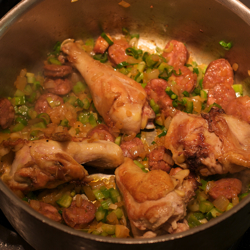
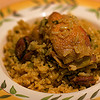
For our Mardi Gras celebration, we made Dee Gautreau’s World Championship Jambalaya. Because we just don’t feel complete without pork, we took the liberty of adding andouille sausage. (A quick chat with Chuck revealed that sausage was likely in the original, but somehow disappeared from the printed recipe.)
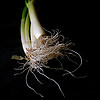
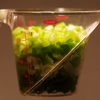
No offense meant to the original recipe, but we’ve made a few minor tweaks to make things a little clearer. I’m sure any Louisiana native would know exactly what Dee meant, but there’s a fair bit of ambiguity there for anyone who wasn’t lucky enough to grow up watching jambalaya being made on a regular basis. You’ll see in the photos that I’ve halved the recipe; it still made four exceptionally generous servings.


Championship Jambalaya
– adapted from Gumbo Pages
3-to-4 pound chicken, cut into 8 serving pieces (with neck, back, and wingtips reserved)
6-1/2 cups water
1/4 cup cooking oil
3/4 pound andouille sausage, sliced 1/2-inch thick
3 medium white onions, chopped
1 tablespoon salt, or to taste*
2-1/2 teaspoons granulated garlic
1 cup sliced green onions
1/2 cup chopped green peppers
1/2 cup chopped celery
1/4 teaspoon black pepper
Red pepper to taste*
2 tablespoons Louisiana hot sauce (such as Crystal)
3 cups uncooked long-grain rice
Place the chicken neck, back, and wingtips in a saucepan with 6-1/2 cups of water. Bring to a boil, then reduce heat and simmer, covered, while prepping the rest of the jambalaya.
Heat the oil in a heavy Dutch oven over medium heat. When the oil is hot but not smoking, add the chicken parts, skin side down. Fry, without disturbing the chicken, until the skin is a nice golden brown, then turn to brown the other sides equally well. Remove the chicken from the pan and set aside in a warm place near the stove.
Pour off the oil, leaving just enough to coat the bottom of the pan. Add the chopped onions and cook until golden brown, adding a little water if necessary to keep sticking to a minimum. Add the andouille and saute until the fat begins to render. Return the chicken to the pan with the sausage and onions.
Remove the neck, back, and wingtips from the quick broth. Measure the remaining liquid in a heatproof measuring cup, add enough water to make 6 cups, and add this liquid to the sausage/chicken pan. Note the liquid level in the pan; this will be important later.
Add the remaining ingredients except the rice to the pot, and simmer, well covered, until the chicken is cooked through (10 to 15 minutes). Check the liquid level, and add water to return it to the same point it was before simmering, if necessary. Bring back to a rolling boil, and add the rice. Reduce heat to a slow simmer and cook, uncovered and without stirring, for 10 to 15 minutes, until the water level is below the rice. Turn the rice (see notes below), reduce heat to low, and cover with a tight-fitting lid; cook for 15 minutes until the rice is tender. Turn the rice again, turn off the heat, and let the rice steam on the warm burner for 10 minutes more.
* The amount of salt and red pepper needed will depend on the age and strength of your spice, as well as the seasoning in your andouille. I used 1/2 tsp of cayenne pepper for a medium-hot result.
———
Chuck’s jambalaya notes:
– This recipe produces a brown-style jambalaya rather than the red tomato-based jambalayas you see in New Orleans.
– Jambalaya should never be stirred. Turn, rather than stir, to prevent the grains of rice from breaking up, scooping from the bottom of the pot.
Dark Days challenge, holidays & occasions, other blogs, recipes
7 Comments »
Posted by Anita on 02.22.09 8:54 PM
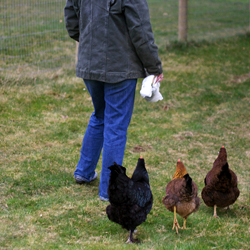 It’s such a treat to travel around the country (and the world), enjoying all sorts of things that we don’t get here in San Francisco, so we usually put our locavore ways on hiatus when we’re on the road. Occasionally, we’re able to enjoy the best of both worlds, either by visiting a restaurant where the chef sources his ingredients locally, or by shopping for local ingredients and cooking our own meal.
But during our Seattle trip over President’s Day weekend, we did one better: We wrangled an invitation up to the (Not So) Urban Hennery for dinner with Laura and her husband Mike.
Despite a persistent drizzle that followed us up I-5 from the city, we arrived in Arlington with just enough sunlight left for a quick farm tour. We put on our boots and headed out to visit the hens. As soon as they saw us (or, really, Laura… she’s definitely at the top of their pecking order!), the girls started up with such a symphony of cackles, chortles, and clucks that we couldn’t help but laugh. They know that the bag in Laura’s hand is full of kitchen scraps, and I suspect they have an idea that there’s cracked corn on offer, too.
As the light waned, we watched Jake and Sam play in the yard as the chickens devoured the goodies Laura had brought them. (Talk about sustainability! Table scraps in, eggs out.) We talked about the plans for the rest of the acreage behind the house, admired Mike’s new fence, and then retreated into the warm kitchen for a snack of local cheeses and a basket of homemade crackers, along with some locally produced hard cider.
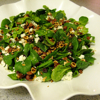
We gathered around the table in the stylishly cozy dining room for an all-local — and pretty much all-homegrown — supper of home-farmed chicken (naturally!) grilled to golden perfection by Mike, along with local wines, pan-braised purple carrots, and a stunning salad of garden spinach topped with local hazelnuts and dried cranberries. It was all delicious, but my favorite part was an amazingly simple potato gratin that showcased Laura’s earthy home-grown potatoes.
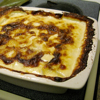
The recipe — which Laura’s adapted over the years from Nigel Slater’s Appetite — calls for what the author rightly calls an “almost obscene quantity of cream”. Laura says she’s had relatives refuse to eat it after they watched her make it! But really, without any cheese or extra butter, it’s probably not much more decadent than the gratin that you likely already call your favorite. The recipe serves 6 at least, maybe 8 (unless they’re shameless potato gluttons like me).
Back home amid the rain and the beginnings of our spring-cleaning project, we decided to make a whole batch just for the two of us — they’re that spectacular. “They’re even better left over,” says Laura, “Especially if you warm them back up in the oven with a bit of foil over the top.”



Dreamy Potato Gratin
– adapted from Appetite
2 pounds potatoes (about 3 large)
1/2 medium onion (or a leek), sliced very thin
4 cloves garlic, minced
salt & pepper to taste
1 to 2 pints heavy cream, as needed*
Preheat the oven to 400°F.
Peel potatoes and slice thin (about 1/8-inch or 3mm). Toss with the sliced onion and minced garlic, and salt and pepper to taste. Layer the mixture in a well-buttered 9×9 pan and top with enough cream to come halfway up the top layer of potatoes but not submerge them completely. Sprinkle with a little more salt and pepper.
Put the baking pan on top of a rimmed cookie sheet as insurance against a huge oven mess in case of bubbling over. Bake in the preheated oven, pressing the potatoes down into the liquid when the cream starts to expand. At the 20-minute mark, press the potatoes into the cream again and reduce the oven temperature to 350°F.
When the gratin starts to color and smell good — about the hour mark — check the potatoes for doneness by inserting a knife into the center. Continue to bake until the potatoes are no longer at all crunchy but not yet mushy. If the top begins to get too brown, move the gratin to a lower rack and turn the temperature down to 300°F. When done, remove from the oven and let sit for a few minutes to allow the gratin to set.
* The quantity of cream needed will depend on how close you’re able to get your potatoes to the 2-pound mark, how much potato you lose to peeling and trimming, and the exact dimensions of your pan. Laura’s dish is closer to 10×10 and fairly deep, so she uses 2 whole pints. 1 pint was perfect in my standard 2-quart 9×9 pan.
Dark Days challenge, locavore, other blogs, recipes, Seattle
9 Comments »
Posted by Anita on 02.20.09 1:48 PM
 It’s always an thrill to discover that one of your idols admires your work, and a huge honor for another blogger to trust you with their “baby”. So you can imagine my elation — and perhaps even sense my panic? — when the lovely Tartelette asked me to guest-post over at her place this week.
I’m beyond flattered to be asked to contribute to Tartelette’s incredible site, winner of Food Blog of the Year in the 2008 Well Fed Awards and — just this week! — placed at #43 on the Times Online list of the World’s 50 Best Food Blogs.
After a lot of hemming and hawing about whether I had the chops to showcase my meager pastry skills on such a gorgeous site, I finally mustered enough courage. With some spirited inspiration from David Lebovitz‘s fabulous book, The Perfect Scoop, not to mention a healthy dose of chocolate, I think I managed to bluff my way through without too much embarrassment with a recipe for Profiteroles with Chartreuse Ice Cream.
Be sure to head on over to Tartelette‘s place to read the story, get the recipe, and enter for a chance to win a copy of The Baker’s Odyssey by Greg Patent.
baking, other blogs
9 Comments »
Posted by Anita on 02.17.09 11:46 PM
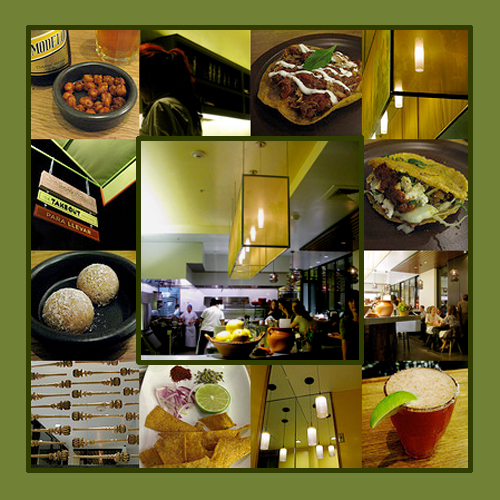
I don’t think it’s any secret here that we’re big fans of puns, wordplay, and other clever banter, so you’ll probably guess that I’ve been gaga about the wittly named Nopalito — the casual Mexican offspring of our beloved Nopa — since the day I first learned it was coming to town.
It’s also no great surprise that an authentic Mexican restaurant would be a huge draw for me, the girl who would happily scarf chilaquiles for breakfast, tortas for lunch, and a big cheesy combination platter for dinner. But here’s the icing on the cake: Nopalito follows the same local-seasonal-sustainable-organic-ethical blueprint as its older sibling, and it does it in style.
Now, we’re not much for restaurant reviews these days, but I will say this: Nopalito is off to a running start, and we’re looking forward to many return trips. As Cameron said: “This place is pretty much the restaurant you’ve been waiting for… forever.” He’s right: There’s very few places like Nopalito in the Bay Area — Doña Tomas is about the nearest equivalent — and certainly nothing of its type within The City proper.
Do I like the hour-long waits? No. (But I’m soothed by being able to call ahead and put my name on the list.) Do I like perching on barstools, elbow-to-elbow with perfect strangers at a communal table? Not one bit. (But on the other hand, it’s prime Eatsdropping territory, and a not-bad way to decide what you want to order next.) Am I enthralled with everything I ate on our first visit? Not by a long shot.
But there were enough promising tastes on our first visit — the gordita de picadillo first among them — that absolutely transported me. I’m looking forward to seeing what else they have in store, especially once the weather warms up enough to enjoy a Michelada or two on the covered patio.
Nopalito
306 Broderick Street
(x Fell/Laguna)
San Francisco, CA
415-437-0303
Dark Days challenge, locavore, Mexican, restaurants
5 Comments »
