Posted by Anita on 11.20.07 11:48 AM
 In lieu of my usual meal recap, this week’s Dark Days post touches on the retail side of the equation. Despite our weekend in Los Angeles — which obviously kept us away from our beloved farmers market — and Cameron’s four-day business trip, I managed a number of 100-mile meals.
I’m sure you’re not particularly interested in the details thrown-together dinners of lazy mac & cheese, wintertime BLTs (with tomato bourbon jam as the “T”), mushroom omelets, or another rehash of Friday spaghetti night… but if you’re feeling left out, I’ve put a few photos on Flickr.
——
As good as we Bay Area locavores have it when it comes to restaurants and farmers markets, the notion of shopping with local products in mind seems to have gained very little traction in the retail world. Awareness of the benefits of locally grown and locally produced foods is spreading rather slowly beyond the rarefied world of the farmers-market set. It’s a difference that’s become more obvious as we seek out a wider variety of local ingredients as part of the Dark Days Challenge.
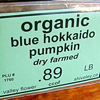
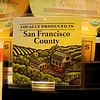
As I mentioned last month, Whole Foods recently made a much-publicized commitment to support local farms and purveyors. Rather than funneling all orders through a regional warehouse (where demands might be too great for any small farmer), Whole Foods produce managers can now literally buy produce off their loading docks from the people who raise it. Our local Whole Foods stores are following through on the consumer side, with little laminated signs touting the county of origin of most fruits and vegetables. Although the produce is far from exclusively local — a good deal still comes from the southern hemisphere — at least the labels allow consumers to make an educated choice.
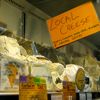
Better yet, Whole Foods’ signage has been spreading beyond the boundaries of the produce section. Locally made cheeses are tagged at the service counter; locally produced pastas and sauces are flagged in the deli case, and locally sourced milk and butters get their due in the dairy aisle. PR spin or no, it’s an invaluable resource for those of us trying to reduce our food-footprint without turning into obsessive research nuts.
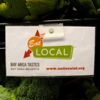
Even more amazingly, I noticed similar signs dotting the shelves at local supermarket chain Mollie Stone’s California Street location. Placed by an organization called Eat Local SF, these ‘shelf talkers’ are a little more generic than those at Whole Foods — they simply say “eat local”, with no point of origin listed. They’re also a bit less exclusive: Any prepared or processed food made within 250 miles is fair game, regardless of where the ingredients were sourced. (I also noticed a tag under olives bottled by a Southern California company with ‘Napa’ in its name, which were clearly labeled “Product of Spain”.)
But still, it’s baby steps in the right direction, and a stunning turnaround: The same chain didn’t even bother to respond last spring when I wrote them to explain why I was taking my business elsewhere (their employees couldn’t provide information on where their food was sourced). They may not be stocking their shelves any differently than in the past, but this one small bit of communication is making a visible impact on my customer satisfaction.
 If a mainstream chain like Mollie Stone’s can improve, why not the little guys, the ones who painstakingly cultivate an aura of hippie chic? Our neighborhood market — a crunchy outpost called Good Life Grocery — features a decent produce section given the store’s diminutive size. But on a recent trip, we spied exactly one tag from a local farm, and not a single store-placed mention of distances or purveyors. The new-ish Canyon Market, a similar shop over the hill in Glen Park, is similarly bereft of locavore-friendly signage. Which begs the question: When your produce section includes just a few dozen items, would it really be a lot of extra work to let folks know where their food’s grown?
My current benchmark for locavore signage is Rainbow Grocery, a SOLE shopper’s paradise. Their produce bins sport detailed signs outlining each product’s farming methods, organic certification authority, farm name, and place of origin. Their bulk-foods section includes information about not just the origin and ownership of local products, but the milling location of dry goods like flours and meals (most of which are sent out of state for processing, alas). An entire shelf in their justly famed cheese case is devoted strictly to local products, and a detailed list on their site outlines distances, dairies, and varieties stocked. Even their vast herb, spice, and tea bins are stocked primarily with products harvested in Washington, Oregon, and the California coast.
In time, as customers demand it, perhaps we’ll see the locavore focus move more deeply into the mainstream, much like organic vegetables did over the last decade. In the meantime, we’ll direct our food dollars toward the farmers market, direct-supplier shops like Prather Ranch and Cowgirl Creamery, and the handful of retail outlets that support the choices we’re making.

Whole Foods, Potrero Hill
750 Rhode Island Street (x 17th Street)
San Francisco CA 94107
415.552.1155
Mollie Stone’s Market, Pacific Heights
2435 California Street (x Fillmore Street)
San Francisco, CA 94115
415.567.4902
Good Life Grocery, Bernal Heights
448 Cortland Avenue (x Andover Street)
San Francisco, CA 94110
415.648.3221
Canyon Market, Glen Park
2815 Diamond Street (x Bosworth)
San Francisco, CA 94131
415.586.9999
Rainbow Grocery Cooperative
1745 Folsom Street (x Division/13th)
San Francisco, CA 94103
415.863.0620
locavore, shopping
8 Comments »


Posted by Anita on 11.16.07 7:22 AM
 On our trip to L.A. last weekend, we found ourselves driving west down Sunset Boulevard. As we rumbled out of Silverlake and into the fringes of Hollywood, we passed a cheerless cinderblock bunker in the middle of a barren lot.
“Oh, look,” I exclaimed, “It’s the Tiki-Ti!”
“What’s a Tiki-Ti?” Cameron asked.
“Oh, it’s this goofy bar we used to go to in college. It’s incredibly tiny and packed to the rafters with tropical crap.”
Alas, it was only 3 in the afternoon, so we couldn’t go in for a peek at the place I enjoyed some of my first drinks.
As dinnertime rolled around, we found ourselves strangely un-hungry. (Could it have been the massive plates of chicken and waffles we’d eaten for brunch?) Wanting to get out of the hotel but not yet ready for food, Cameron suggested we go for a cocktail. We ran down the short list of bar suggestions we’d gathered from friends and blog-buddies; nothing seemed appealing.
“Hey, I know: Let’s go back to that tiki place,” Cameron suggested. Hm, not a bad idea. It’s nowhere near the restaurant, but this is Los Angeles… nobody thinks twice about driving 45 minutes to dinner, after all.
As we walked in the door at 6:30p, there was exactly one seat left at the Tiki-Ti’s tiny bar. Just as I remembered, every surface was covered with float lights, tiki idols, and tropical kitsch. Behind the bar were two bartenders, working at a furious pace pouring brightly colored drinks for a festive group of customers. One of the regulars, an animated guy named Jim, welcomed us to the bar, quizzed us about the last time we’d been to the Tiki-Ti, and congratulated Cameron heartily when he heard this was his first visit.
“Tonight, you’re a tiki virgin!” he shouted, with a hearty back-slap and a giggle.
We ordered the drinks we usually save for tropical vacations: A Painkiller for me, and a Mai Tai for the bald guy. We chatted with the bartenders, inspected the amazing decor, drank our drinks, thanked everyone for a good time, and headed off to dinner.
Back home the next week, I cracked open the copy of Sippin’ Safari that I won in Kaiser Penguin’s tiki cocktail photo contest, searching for a trustworthy Mai Tai recipe. Beachbum Berry’s version looked interesting, although it certainly bore no resemblance to the fruity concoctions we’ve enjoyed in the islands. Imagine my amusement to discover that an old-school Mai Tai is really just a complicated daiquiri: No jumble of fruit juices, no bright tropical colors, and no goofball spirits… not even a pineapple wedge! It was a bit of a shock, but one I could easily digest — a well-made daiquiri is a thing of beauty.
But there was a bigger surprise awaiting me. Flipping to the index to look for possible mentions of the Tiki-Ti, I found neither a passing reference nor even a longer sidebar. In fact, the entire first section of the book was devoted to a man named Ray Buhen, one of the original Filipino back-bar “boys” at the legendary Don the Beachcomber — the world’s first tiki bar. In the early 1960s, Ray opened the Tiki-Ti in the space that used to house his father-in-law’s violin-repair store. He passed the torch to his son Michael and grandson Mike — the very same pair we’d met — when he retired in the late 90s.
Better yet, it turns out that this shoebox of a bar, which I’d naively assumed was an ironic hipster invention, was one of the vanguards of the Hollywood exotic-drinks craze at the height of its popularity. We had sat on the same stools that once propped up movie stars and millionaires, oblivious that our drinks were being made by the son and grandson of one of the original big kahunas.
Needless to say, it’s entirely surreal to discover that one of your old haunts is a cocktail landmark of this magnitude. It’s like finding out that your cousin is touring with Van Halen, or your next-door neighbor used to date Alice Waters. I’ve been chuckling to myself for the last couple of days, wondering what other legendary locations we’re breezing by with no more than a passing glance, and how many other legends stand unnoticed in our midst.
—–
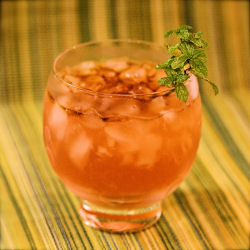
But back to that vintage Mai Tai recipe: It’s a curious thing. It tastes delicious, but it looks a little wan if you’re expecting a tropical icon. Adding a splash of good-quality grenadine — a fairly typical touch in most recipes — warms the drink’s appearance, and the popular dark-rum float adds a whiff of warmer latitudes.
But hey, it’s the weekend: Try it both ways, see which you prefer, and raise a toast to Hollywood’s last great tiki bar.




Mai Tai
1 oz fresh lime juice
1 oz light rum
1 oz aged rum
1/2 oz orange curacao
1/4 oz orgeat syrup
1/4 oz falernum (or simple syrup)
splash of grenadine (optional)
dark rum
Shake all ingredients except the dark rum with ice, and strain into an old fashioned glass. Top up with crushed ice, float a bar-spoon of dark rum on top, if desired, and garnish with a sprig of mint.
One year ago: Cape Codder
bar culture, Drink of the Week, drinks, recipes, SoCal
8 Comments »
Posted by Anita on 11.14.07 12:03 AM
 Before we dive into our week in local eating, I want to give a big shout out to our friend Jen over at Life Begins at 30 and Eat Local Challenge. Although she and her crew weren’t the first to come up with the idea of supporting local farmers, ranchers, and producers by eating within a given radius of one’s front door, they were the first to use the term “Locavore”, way back in 2005.
And now, no less a light than the Oxford University Press — editors of the New American Oxford Dictionary — have dubbed ‘locavore’ their word of the year for 2007, beating out such other contenders as ‘cougar’ (hint: not the big, spotted cat) and ‘colony collapse disorder’ for the big prize:
“Locavore” was coined two years ago by a group of four women in San Francisco who proposed that local residents should try to eat only food grown or produced within a 100-mile radius. Other regional movements have emerged since then, though some groups refer to themselves as “localvores” rather than “locavores.” However it’s spelled, it’s a word to watch.
And a movement to be reckoned with, y’all.


Last week was a little nuts. We both logged ridiculous hours at the office, cramming a week’s worth of work into four days as we prepped for a long weekend in Los Angeles. (More on that soon.) There was not a smidge of high-falutin’ cooking going on, but we still managed to rack up four meals for the Dark Days Challenge:
Zuni chicken & bread salad
– Marin Sun Farms chicken, Star Route frisee, Acme sweet batard, Bariani olive oil, O vinegar, Chue’s green onions
– Jory Winery Santa Clara Valley chardonnay
Pasta alla Gianni and Bouchon’s heirloom apple salad
– Pasta: Eduardo’s linguine, Three Sisters Serena cheese, Chue’s garlic, Bariani olive oil, local cauliflower (sorry, I blanched and froze this a month ago, and didn’t keep my notes)
– Salad: Apple Farm apples, Point Reyes Farmstead white cheddar, Cowgirl creme fraiche, candied nuts from Alfieri, Fatted Calf bacon, and endive from that farmer I swore I would never buy from again
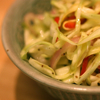
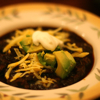
Rick Bayless’s “Very, Very Good Chili”, Carolina cole slaw, cornbread
– Chili: Prather Ranch beef, Rancho Gordo Mexican oregano and tortilla chips, Spring Hill colby-jack cheese, Will’s avocado, Clover Organic sour cream
– Slaw: Happy Quail red pepper, heirloom torpedo cabbage from Dirty Girl, Eatwell Farm onion, O vinegar
– Cornbread (a miserable failure): Flour and cornmeal from Full Belly Farm, local eggs, Clover Organic butter
Pasta night
– Sean’s marinara, Eduardo’s rotini, grilled Fatted Calf Caprese sausage
– Little‘s romaine with leftover cheddar dressing
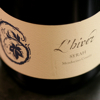
– Copain L’hiver Syrah, Mendocino County
locavore, other blogs
6 Comments »
Posted by Anita on 11.09.07 7:02 AM
 What the heck is up with all that alphabet soup in the title?
First, there’s DOTW: Drink of the Week, our regular Friday diversion into the world of mixed drinks.
And then there’s MxMo: Mixology Monday, the monthly cocktail event created by Paul Clarke. This session’s topic, Gin, is hosted (appropriately enough) by an Englishman: Jay of Oh Gosh.
DOM, though: It’s a bit of a mystery, innit? Somewhere in the depths of cocktailian history, some wiseacre decided to spread the rumor that these three letters on the label of every bottle of Benedictine stood for Dominican Order of Monks. Which is kind of ridiculous if you have even the most cursory knowledge of religious orders. For those of you without the benefit of a parochial school education, Benedictines and Dominicans are two different brotherhoods.
The whole Dominican business is one of those bits of cocktail lore that you see debunked in plenty of places. DOM, as our good Professor Embury correctly defines, is an abbreviation for the Latin phrase Deo Optimo Maximo: “To God, the best, the greatest” — a prayer on every bottle that those clever monks sent out into the sinful world.
Rather tidily, there’s a cocktail of the very same name that’s a perfect fit both for MxMo XXI and RotLC #2 (which I’m happy to announce has popped up over on The Spirit World this morning).


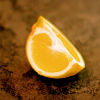


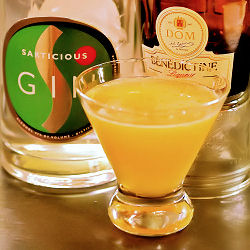
The DOM
1-1/2 oz dry gin
1/2 oz Benedictine
1/2 oz fresh orange juice
Shake all ingredients, and strain into a chilled cocktail glass.
As written, I found the DOM lacking a certain something. A splash of orange bitters brought out the Benedictine’s citrus and vanilla notes; Cameron pronounced it Creamsicle-esque, although not as sweet. Aromatic bitters highlight the gin’s bite and the liqueur’s spicy overtones — a better match, methinks. Should you find yourself in possession of a Meyer lemon, its juice makes lovely substitution for some, or all, of the OJ.
Drink of the Week, drinks, Mixology Monday, other blogs, recipes
2 Comments »
Posted by Anita on 11.06.07 4:18 PM
 I don’t know about you, but it seems lately like my life is exploding with insanity. It’s not just work, either; it’s home and dogs and life in general. It’s all rush-rush, crazy nonstop chaos… and it’s not even the holidays yet.
I knew things had gotten out of hand when I realized we hadn’t seen Paul & Sean — friends we saw nearly every week in the summertime — in more than a month. Worse yet, we hadn’t hosted a dinner party in so long that I couldn’t even remember who had come, or what we’d served. Clearly, something had to give.
Now, the last thing any frenzied soul needs in the midst of a swirling storm of busy-ness is the stress of planning a soirée. So we resolved to keep things simple: A small guest list, a casual menu, and an early start time so as not to keep folks up late. Ah, autumn entertaining… the very best kind, don’t you think?
Contorting our weekly menus into the Dark Days Challenge hasn’t been much of an effort, truth be told. But then, it’s hard to feel too smug when your whole meal plan involves soups, pastas, and meat-potatoes-veg plates with a green salad to start. Weekday dining is pretty fanfare-free at our house, and we like it like that.
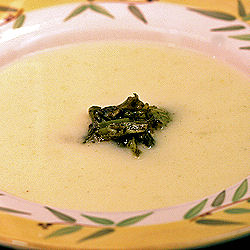
But for company, it seemed like a nice touch to try at least one recipe that was just a little more haute than humble. For months, my recipe file has held a strange-sounding starter — Leek & Potato Soup with Melted Leeks in Ash — from rising star chef James Syhabout (of PlumpJack Cafe fame when the article debuted, now chef de cuisine at two-star Manresa… ooh-la-la!). Just as I’d hoped, the soup was special but not too fancy for the casual entree of braised lamb alongside bean-and-rice salad. And then there was that dreamy spice cake, frosted with icing made from local cream cheese and butter… a lovely kickoff to fall, if I do say so myself.
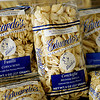
Thanks to the generosity of party guests Cookie and Cranky, we are now in possession of a bag each of whole-wheat flour and cornmeal, both grown by Full Belly Farm in Capay Valley. And — wonder of wonders — I found locally made dried pasta. Although neither organic nor sustainable in any discernible fashion, Eduardo’s Pasta Factory could hardly be more local: They’re just over the neighborhood line in Bayview, pratically visible from our back deck. Better yet, they make a pretty nice assortment of pasta types; this week we bought rotini, linguine, and penne, and there’s a few more shapes awaiting our next shopping trip. All in all, a good week for local carbs.
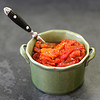
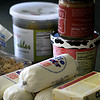
New to our pantry this week, sorted by distance:
Eduardo’s Pasta Factory dried pasta – San Francisco
Molinari Sicilian-style hot Italian sausage – San Francisco
Mastrelli house-made cheese raviolini – San Francisco
Divinely D’Lish granola – San Francisco (+local farms)
Guittard milk chocolate chips – Burlingame
Amy’s Organic canned split pea soup – Petaluma
Jimtown Store deli artichoke spread / pasta sauce – Healdsburg (Sonoma County)
Alexander Valley Gourmet Manhattan-Style Pickles – Healdsburg
Full Belly Farms certified organic flour and cornmeal – Guinda (Capay Valley)
Sierra Nevada Cheese Gina Marie cream cheese – Willows (near Chico)
Last week’s Dark Days Challenge meals included:
Beef stroganoff
– Prather Ranch beef chuck, Far West Fungi white mushrooms and dried porcini, Eatwell onions, Clover Organic sour cream, homemade stock
– Eduardo’s Pasta Factory rotini and Dirty Girl haricots verts
Sunday lunch with friends
– Leek-Potato Soup: Little‘s potatoes, Eatwell leeks, homemade veggie broth
– Braised Lamb: Marin Sun Farms leg of lamb, Hedonia preserved lemons, Eatwell onions, Chateau Souverain sauvignon blanc, homegrown thyme, Happy Quail roasted peppers
– Bean & Rice Salad: Eatwell onions, Happy Quail sweet peppers, Rancho Gordo beans, Massa Organics brown rice
– Raita: Hamada cucumber, Chue’s cilantro, Redwood Hill goat yogurt
– Spice cake: Gina Marie cream cheese and Clover Organic butter, Alfieri almond brittle
– Wines: Chateau Souverain syrah, Merryvale Starmont sauvignon blanc
Soup & salad
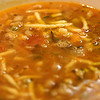
– Pasta Fazool: Home-canned Mariquita tomatoes, Rancho Gordo heirloom beans, Fatted Calf pancetta, homemade chicken stock
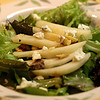
– Pear salad: Little‘s lettuce, Apple Farm pears, Point Reyes blue cheese, Glashoff walnuts, Bariani olive oil, O vinegar
Stacked chile verde enchiladas
– Prather pork, Quail Hollow chiles and tomatillos, Eatwell onions, homemade stock, Rancho Gordo tortillas and beans, Spring Hill colby-jack cheese
Friday (…is always pasta night)
– Mastrelli ricotta raviolini topped with Hedonia marinara sauce
– Molinari hot Italian sausage, grilled
– Salad: Little’s lettuce, Glashoff walnuts, Three Sisters Serena cheese, Chue’s green onions, Bariani olive oil, O vinegar
– Rosenblum 2005 San Francisco Bay Zinfandel (from Alameda!? Who knew!)
cooking, entertaining, locavore, other blogs
8 Comments »
Posted by Anita on 11.04.07 10:16 PM
 Remember last month, all those Strega concoctions we resurrected for Raiders of the Lost Cocktail? Well, it seems yours truly has been anointed the winner of said challenge, and therefore the decider of this month’s challenge ingredient.
Don’t be too impressed by my gold-medal status: I was the only entrant who actually followed the rules. So paltry was the attendance that I actually managed to take both first and second place. Of course, the scanty turnout might just could possibly sorta have been due to the relative obscurity of the target ingredient and the mysterious lack of published Strega recipes.
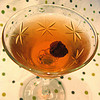
So in the spirit (hardy-har) of opening up the challenge to wider participation, let me propose a slightly more-mixable subject: Benedictine. It fits the bill quite neatly: A widely available product that has been known to gather dust, but one that well deserves a broader audience.
Like the now-trendy Chartreuse, Benedictine began its life behind abbey walls, the proprietary elixir of the monastic order that shares its name. A sweetened cognac base infused with 27 secret herbs and spices — the Colonel has nothing on those monks! — amber-hued Benedictine conjures up a set of heavenly flavors and aromas. It’s also the kind of spirit that makes curmudgeonly drinkers (and drink-makers) giddy. Here’s David Embury waxing poetic on the subject in The Fine Art of Mixing Drinks:
One of the oldest and best of all liqueurs, highly aromatic, and having a base of the finest cognac. It is made with consummate skill and is thoroughly aged. There are few liqueurs in the world that can compare with it.
Indeed, its balance and complexity has kept Benedictine from ever falling completely out of fashion. Although sales of herbal liqueurs rapidly declined after Prohibition, most every cocktail book in our library boasts at least one recipe for this concoction.
Certainly, it’s no stranger in this parish: We’ve mixed up no less than four recipes bearing the blessed tipple: Erik‘s guest-sermon on Bobby Burns, the Pegu Club’s Prince of Wales variation, a post-MxMo stab at the Cabaret, plus last Friday’s very own Widow’s Kiss.
One last word of warning, my children, before you venture forth in the world: Be not led astray. As the reverend Dr. Bamboo wisely cautions, the labeling of premixed “B&B” appears nearly identical to that of the pure liqueur. The wise man seeketh the right label.
Go now, and mix some more.




(Stay tuned to The Spirit World for the formal announcement and directions on how to enter, or check back here for a link in a day or so.)
drinks, other blogs, recipes
3 Comments »
Posted by Anita on 11.02.07 8:59 AM
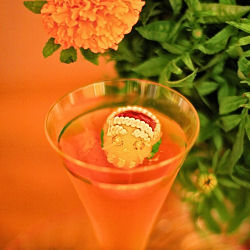 Dia de Los Muertos, or the Day of the Dead, is a bit of a misnomer, especially in Mexico where the festivities are often spread out over two or more days. Like most Latino holidays of a spiritual sort, this fiesta integrates indigenous traditions alongside Catholic feasts, blending traditional pre-Hispanic ancestor worship with the Europeans’ All Saints Day and All Souls Day. Children and other innocents are remembered on November 1, and those who died as adults are honored the next day and night. As someone for whom death is a relatively fresh memory, setting aside a few days to remember those we have lost seems eminently wise, a useful way of mourning together and acknowledging individual loss as part of a universal experience.
The celebration — somehow more intimate and yet more festive than Halloween — gives people time to openly remember their dearly departed, and many Mexican and Mexican-American families erect memorial altars in their homes. These ofrendas typically feature a photo of the deceased surrounded by candles, glasses of water, vases of marigolds, small statues of saints or skeletons, decorated sugar skulls, and plenty of food. In addition to the rich bread known as pan de muerto, altar offerings often include moles or other fragrant dishes, bottles of beer or tequila, and other treats to tempt the spirits of the departed to return for a visit home.
Not far from our house, the streets around 24th and Mission are filled with shoppers stocking their altars: The craft stores sell skeleton figurines and papel picado, the florists put out bunches and buckets of marigolds, the panaderias set up tables of pan de muertos on the sidewalk, and the smell of incense fills the air. The mood is festive and the decorations colorful, and tonight, there’ll be a festive parade through the heart of the Mission. What a civilized way to celebrate life’s ultimate certainty.



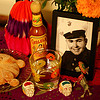

One of the most recognizable symbols of the fiesta is La Calavera de la Catrina, the fancy-lady skeleton. As with many macabre figures in Mexican folk art, La Catrina serves as a reminder that death comes for us all, even the well-to-do and the beautiful. But La Catrina doesn’t let her mortality stand in the way of a good time: She dons her best plumed hat and heads out for a jaunty stroll. Although La Catrina is, herself, dead, she looks so much like a storybook widow-in-black that it’s hard to remember that she’s actually the deceased, not the mourner. No wonder she feels so festive! If you catch her in the right moment, she might just give you a…
Widow’s Kiss
1-1/4 oz Calvados or other apple brandy
3/4 oz Benedictine
3/4 oz yellow Chartreuse
2 dashes aromatic bitters
Stir all ingredients with ice, then strain into a chilled cocktail glass. Garnish with a brandied cherry, or a sugar skull.
Drink of the Week, drinks, holidays & occasions, recipes, The Mission
4 Comments »
Posted by Anita on 11.01.07 8:12 AM
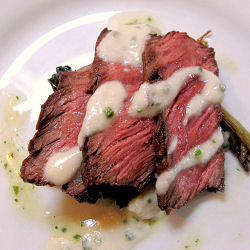 The Bay Area is blessed not only with an abundance of seasonal, local, sustainable food, but also with a cadre of chefs who have jumped on the locavore bandwagon with both feet. In fact, many of the places we eat on a regular basis have been actively supporting some of our favorite local farmers for even longer than we have.
A few weeks ago, we were chatting with our server at Range, marveling at how they always have such spectacular beef. (And pork, and fish… but I digress.) “Oh, yeah,” he countered, “They get it from a local outfit called Prather Ranch.”
Our Prather Boys? Well, that sure explains a lot. I mean, we knew Chef West bought much of his raw materials from local sources; our friend Steve sells him sacks of heirloom beans and hominy, after all. But, man, when we found out their little bovine secret, we felt like the chef and his entire staff had been holding out on us.
I kid. Mostly. But we did try to impress upon the waiter that this was information we could have used. Not that we could eat at Range any more than we already do and still manage to pay the mortgage, but now we can count our dinners there as locavore meals, too? Heck yeah, sign us up.
Our server explained that the chef wants to avoid the plague of a supplier-studded menu, preferring to let his food speak for itself without a litany of ‘So-and-So Farms’ and ‘Those Guys Ranch’ cluttering up the joint. Grudgingly, I concede the point — all that namedropping can be distracting.
But elsewhere, we’re starting to see evidence of a happy medium.
Many newer entrants to the San Francisco restaurant scene fly their locavore flag high. Last week, we had the coincidental pleasure of dining at two of them: Nopa — a widely hailed anchor of its eponymous neighborhood’s revival — and Fish & Farm, a newly minted upscale experiment on the dodgy fringes of the Tenderloin. Both dinners were delicious, interesting, and varied; both menus made clear statements of their chef’s intention to support local farms, and listed their suppliers by name… not in the description of each dish, but in a separate section. The two restaurants couldn’t have been less similar in most other ways: Decor, plating, service, vibe, pacing, wine program, and clientele; no cookie-cutter knockoffs here. Praise the Lord and pass the (locally pastured) pork chops.
Most locavores would be thrilled to have even two hot, newish restaurants to add to their repertoire. But it’s better that that, by a mile. Nopa and Fish & Farm are just two members of a sizable and ever-growing subgenre of Northern California dining. Witness this extensive list of Bay Area chefs and restaurants committed to sourcing at least some of their ingredients locally (Tana from I [heart] Farms kicked it off two years ago, when “locavore” and “foodshed” were about as widely understood as quantum physics). Clamoring for more options? Pick up or download a copy of the newly published ‘Buy Fresh, Buy Local‘ guide, highlighting area restaurants alongside farms, purveyors, and other member businesses.
And the list is growing all the time. Over at In Praise of Sardines, our friend Brett is documenting the process of designing, building, and otherwise launching his as-yet-unnamed Noe Valley restaurant. He describes his project as “seasonal, sustainable California fare with a Spanish flair”. A cool concept, to be sure, but he could use your help with choosing a name. Some of the ideas he’s tossing around have legs, but perhaps you’ve got a better one. Did I mention there’s a list of prizes? And some great writing? Why are you still here? GO, make your mark on our locavore restaurant scene!
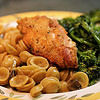
What, you’re still here? Ok, ok… here’s our Dark Days Challenge wrapup. Despite last week’s unintended focus on dining out, we did still manage to make a number of locavore meals at home:
Pan chicken with mushroom sauce
– Marin Sun Farms chicken, homemade stock, Far West Fungi mushrooms
– orecchiete (non-local; exempt)
– Ella Bella Farm broccoli di ciccio
Steak and potatoes
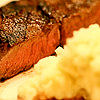
– grilled Prather Ranch spencer steak
– mashed potatoes (Little’s)
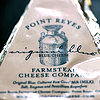
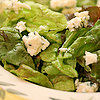
– red-leaf lettuce (Little’s) with Point Reyes Bleu, Bariani olive oil, O cabernet vinegar
Friday night pasta
– a repeat of the salad above
– meat sauce made with Prather beef and pork, Mariquita tomatoes, Eatwell onions
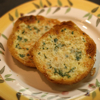
– garlic bread: Clover Organic butter, Acme pain de mie heels, local garlic, local parsley
– linguine (non-local; exempt)
locavore, restaurants
7 Comments »
Posted by Anita on 10.31.07 7:05 AM
 Once upon a time, there was a spoiled teenager named Anita who refused to eat ribs, chicken legs, or any other meat shaped like a body part.
One year, the child’s mother took ill on Thanksgiving morning, with a gaggle of relatives due to descend upon the family home in mere hours. The mere thought of sticking her hand inside (inside!) the body of a turkey made the girl turn green around the edges, but there was nothing to it but to do it: In went the hand, out came the slimey giblet bag. In a word: Gack!
Years later, the girl grew up and got over herself. A culinary school butchery class, which involved parting out cases of chickens and breaking down sides of beef, rid her of the last vestiges of meat squeamishness. The woman became secure with her place on the food chain, an unrepentant carnivore at last.
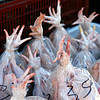
Flash forward to 2007: In a crisis over the disappearance of Hoffman Farms chickens from the local farmers market, we started buying our weekly roaster from Marin Sun Farms. We’d blithely strolled past their stand for months, seeing the signs for chickens, never venturing in to price them; our Hoffman loyalties were that strong. But the disappearance of their main competition emboldened these farmers, and they began putting their wares on more prominent display: First in bins by the edge of their stall, then moving to a large, copiously iced display — complete with protruding chicken feet — right out in the pathway. (Just the other day, I saw a group of tourists laughing nervously and taking pictures; it’s quite the sight if you’re not used to such things.)
The first afternoon of our patronage, we brought our fine-footed fowl home. The idea of cutting off chicken feet didn’t faze me a bit, I smugly noted. It wouldn’t be any worse than snipping off wingtips, really. I’d seen enough dim sum to grasp the comic possibilities of disembodied chicken feet, and I knew their gelatinous cartilage would add body to our next batch of stock.
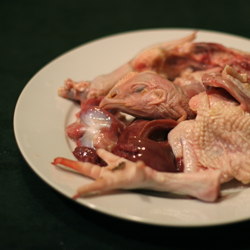
I plopped the bagged bird in the sink and turned on the water. Cutting through the rubber band that held the bag shut, I accidentally grazed my arm on a stray claw. (Note to self: Chickens — at least the ones that aren’t factory-gorged on corn — scratch for their supper.) But the sting of avian revenge was no match for the shock I got when I pulled Henny Penny out of the bag: Her frickin’ head was still attached!
Or, well, mostly attached. The neck had been slashed (quite tidily) and her noggin wobbled around on the impossibly long neck in a rather ghastly fashion. Her tiny eyes were mercifully shut, but you could quite clearly make out what her features must have looked like, mere days ago. A tiny comb was clearly visible at the crown of her egg-sized skull. Oh, my…
Snapping out of my guilt-laden reverie, I laughed aloud, amused at how a small, dead hen could rattle me so. Would I have bought her, had I know she came fully equipped? Probably. But coming upon an unexpected beaky face in the bottom of the bag was more than I was expecting. I wondered whether the farmers enjoyed imagining the shock they inflicted on unsuspecting city slickers, but most likely they never gave it a moment’s thought. It’s a chicken, to them. Their livelihood, our supper.
It gets easier, week by week, staring my dinner in the face on a Sunday afternoon. I’ve even come to see the gallows humor in the macabre ritual of removing heads, necks, and feet. I’m not sure I could ever kill a chicken, maybe not even gut a dead one (I’m still not all that happy about innards, truth be told). But if I’m going to be an ethical carnivore, I figure that looking my meat in the eye is the least I can do. And so I do, with silent thanks to the farmer and the chicken.
And then I cackle like a fiend as I throw the dismembered bits in the stockpot. Muuu-huuu-huuu-ahhh!



Chicken Stock, Simplified
4 to 5 pounds raw or frozen chicken bits (wings, backs, necks, and feet)
6 quarts filtered water
1 pound mirepoix, very large dice (1 inch or so)
– 1 large onion
– 2 medium carrots
– 2 large celery stalks, trimmed
Bouquet garni
– 2 cloves garlic
– 8 peppercorns
– 3 whole cloves
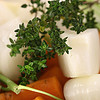
– 2 fresh thyme sprigs
– 6 parsley stems
…tied with twine in a cheesecloth bundle
In your largest pot, bring water and chicken parts to a simmer; reduce to a lazy bubble and cook for 3 hours. Add the mirepoix and bouquet garni and cook for an additional hour. Strain through cheesecloth or a very fine mesh sieve into a large bowl (or a cool stockpot). Cool to room temperature using an ice-water bath or immersible stock chiller, then chill completely overnight.
The next day, skim the fat and measure stock in 2-cup portions into quart-size freezer bags. Holding the bag upright, squeeze to remove excess air, then seal. Freeze bags flat on a rimmed cookie sheet until completely solid; they can then be stored in your freezer’s pull-out bins, filed like flip-cards along with pasta sauce and other flat-packed liquids. Any odd measures of stock can be frozen in ice-cube trays for quick use in pan sauces and other recipes requiring small amounts of liquid. Store frozen stock for up to 6 months.
cooking, farmers markets, locavore, meat, recipes
16 Comments »
Posted by Anita on 10.28.07 7:50 PM
 When my mom was growing up, homemade dessert was a regular occurrence around the dinner table. By the time I was a kid, the family tradition had lapsed; cakes and pies showed up mostly around the holidays or on someone’s birthday. Not that I felt deprived: To this day, my idea of dessert is scraping the bowl for the last spoonful of mashed potatoes, or sneaking an extra meatball from the lunch-bound leftovers.
Despite my defective sweet tooth, I love to bake for friends and family. At my office in Seattle, I belonged to a crew of hard-core amateur pâtissières dubbed the Spare Change Bakery. We all kept jars on our desks for our coworkers’ contributions, and as soon as we scraped together enough nickels and dimes, one of us would whip up a double- or triple-batch of something sweet and scrumptious for the next staff meeting. By the time we disbanded, we were collecting enough cash to bake every week — a gratifying but rather exhausting sign of our popularity.
But since we moved back to San Francisco, I haven’t had many excuses to bake. Sure, our dinner parties often need a sweet ending, but I miss those crowd-pleasing desserts: Brownies, bars, and other decidedly lowbrow sweets. So when I saw the photo of the Spice Cake with Coffee Toffee Crunch on the cover of the new issue of Sunset, I knew my path was clear. The theme for this month’s “Waiter, There’s Something in My…†event is layer cakes, after all, and there’s just something about a sky-high cake with cream-cheese frosting that sends me running for my sifter and whisk.
 Working my way through the recipe, I found it refreshingly well documented. The writer details a number of steps — creating a crumb coat, and using strips of parchment to keep the serving plate clean — that help give the final cake a centerpiece-worthy appearance. With the exception of the recipe’s lack of measurements by weight (the serious baker’s preferred method for dry ingredients like flour and sugar, especially), it was one of the best-written magazine recipes I’ve used in months.
Aside from substituting Alfieri Farms’ almond brittle for homemade coffee toffee, I followed the recipe to the letter, so click over to Sunset’s site if you want the full rundown. Although I doubt the magazine’s suggestion that this cake will replace pumpkin or pecan pie on your holiday dessert buffet, it’s got a spicy, deep flavor that would make a perfect finish for an autumn feast. While the icing’s got enough sugar to satisfy even the most intense sugar junkie, the cake itself — sweetened with molasses — keeps things moist and spicy without too much sweetness… just the ticket for a baker without a sweet tooth.




baking, dessert, magazines, other blogs
10 Comments »
