Posted by Anita on 12.10.07 12:03 AM
 Custom Mixology Service
The “cocktail geeks” from Married… with Dinner will create a pair of personalized beverages for your soiree, based on your preferences. We’ll do all the prep beforehand, then serve your signature selections to up to 12 of your closest friends.
We’ll provide all the necessaries: Ice, mixers, syrups, garnishes, plus any tools we’ll need. We’ll even bring suitable glassware: No cocktail cleanup!
(Please note: We’re happy to shop and schlep, but due to liability issues, the winner must pay for the alcohol.) This prize is limited to San Francisco Bay Area redemption — unless you’d like to pay travel expenses… let’s talk! — and is subject to a mutually convenient schedule.
This item is Menu for Hope prize UW-08.
– Click here to make a donation and enter to win.
– Read the Menu for Hope overview to learn more.
drinks, entertaining, Menu for Hope
Comments Off on Menu for Hope: Prize #3


Posted by Anita on 12.10.07 12:02 AM
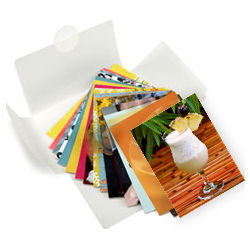 “Drink of the Week” Cocktail Notecards
Be the envy of your cocktailian friends with this one-of-a-kind set of photo-postcards featuring images from Married… with Dinner’s popular “Drink of the Week” series.
These cards feature 20 different images selected from the best examples of more than a year’s worth of tempting photos, including a number of award-winning images. Use them for thank-you notes and party invitations, or hang them in your home bar for inspiration. This set of postcards is professionally printed by Moo — the same folks who make those miniature calling cards that all the bloggers love. They’re printed on heavyweight cardstock and laminated on the front, with a final size of approximately 4×6 inches.
Worldwide shipping is available for this prize.
This item is Menu for Hope prize UW-07.
– Click here to make a donation and enter to win.
– Read the Menu for Hope overview to learn more.
Drink of the Week, Menu for Hope
1 Comment »
Posted by Anita on 12.10.07 12:01 AM
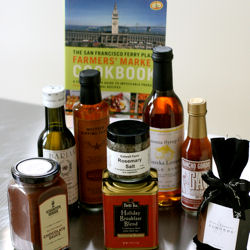 “Best of the Ferry Building” Gift Basket
An assortment of more than $100 worth of treats from San Francisco’s legendary Ferry Building Marketplace: Peet’s holiday blend breakfast tea, Scharffen Berger chocolate sauce, Recchiuti burnt caramel almonds, Bariani olive oil, Rancho Gordo hot sauce, Prather Ranch marinade, Eatwell Farm rosemary salt, lemon-infused Sonoma Syrup. You’ll also receive a copy of the popular Ferry Plaza Farmers Market Cookbook.
To give you something to remember us by when all the goodies are gone, this prize also includes the winner’s choice of an 8×10 print from our collection of market photos.
International bids are welcome, but winners outside the Continental US will be asked to pay for any shipping fees over our US$25 limit.
This item is Menu for Hope prize UW-06.
– Click here to make a donation and enter to win.
– Read the Menu for Hope overview to learn more.
farmers markets, Menu for Hope
1 Comment »
Posted by Anita on 12.07.07 7:03 AM
 After going to all that trouble to find our favorite sweet vermouths, it seems only fitting for this week’s drink to highlight vermouth’s strengths. So many recipes that call for sweet vermouth use just a splash, or drown its subtleties under a lot of strong liquor. But the Americano — essentially a highball Negroni, minus the gin — takes advantage of both vermouth’s sweetness as a foil and its bitterness as a complement to the drink’s other main ingredient: Campari.
Not surprisingly, Campari’s distinctively bitter bite pairs best with a less-herbal sweet vermouth. (Monseiur Prat, your services will not be required this evening.) Most recipes call for a 1:1 ratio of Campari to sweet vermouth, but I like my Americanos — and my Negronis, for that matter — on the wetter side. Especially when using a specialty brand like Carpano Antica, this slight imbalance helps the vermouth emerge from Campari’s assertive shadow. This is definitely one of those times to use the Cinzano, if you have it. Its sweetness isn’t as problematic here, and actually helps balance the bitterness.
A tall, cool drink may seem an odd choice for December, but consider its merits: The color’s a festive red, and the flavor’s sassy enough to hold its own alongside rich holiday hors d’oeuvres. With seltzer’s sparkle and a relatively low alcohol content, the Americano makes a savvy choice in a season that’s often filled with back-to-back parties. There aren’t any tricky measurements to remember, and the Americano’s strength is infinitely adaptable to the drinker’s taste simply by adjusting the spirit-to-soda ratio. In short, it’s the platonic cocktail-party option, a seasonal spritzer extraordinaire.





Americano
1 oz sweet vermouth
3/4 oz Campari
soda water
lemon twist (optional)
Add the vermouth and Campari to an ice-filled highball or rocks glass. Top with soda water and stir to combine. Garnish with a lemon twist, if desired.
Drink of the Week, drinks, recipes
4 Comments »
Posted by Anita on 12.06.07 6:19 PM
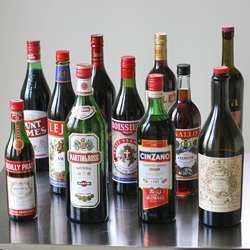 Restocking the bar in preparation for holiday guests, we found we’d managed to squirrel away no less than four half-empty bottles of sweet vermouth. Shaking our heads at our folly, we decided to figure out which one we liked best and toss the others. Sure, we needed Carpano Antica for our favorite cold-weather Manhattan, but how different could the others be?
Plenty.
After some quick sips, it became apparent that even among the big three brands — Cinzano, Noilly Pratt, and Martini & Rossi — the differences were astounding. The lone French-made bottle, the Noilly Pratt was the most herbal, and most bitter, of the three …a potent reminder of vermouth’s linguistic origins in “wormwood”. The original sweet vermouths came from Italy — you’ll often see red vermouth referred to as Italian vermouth in old recipes — so it’s not surprising that we felt the Martini and Cinzano brands were closer to our ideal. (Some day we’ll have to check whether the reverse is true: Do the French make better dry vermouth, given its historic roots on the other side of the Alps?)
On our next trip to the liquor warehouse, our eyes were opened. We’d never noticed just how many sweet vermouths were on the shelf! With most bottles priced well under $10, why not round out our collection and get to the bottom of which was best? My sister and her husband were on their way to town, and a sweet vermouth tasting seemed just the ticket for four cocktail aficionados to while away the holiday weekend.
With a stack of shot glasses and a pile of notepads at the ready, the tastings began.
Our first round featured the supermarket stalwarts: Martini & Rossi, Cinzano, and Noilly Pratt (identically priced around town at $5.99 to $7.25). Just as we’d found in our earlier un-juried tasting, the Noilly Prat stood out from the pack: Its “herbal” “bite” was pegged as “very bitter” and “medicinal” by all. Tasted neat, Cinzano’s sweetness was its downfall: We called it “cloying candy” and “marshmallow sweet”, overwhelming its less obvious “citrus and spice” notes. The Martini & Rossi became the bottle to beat, universally praised for its “smooth”, “balanced”, “fruity warmth”.
The lesser-known vermouths in our next tier proved that you mostly get what you pay for. Although the Boissiere ($7.29) was dubbed “not bad” by three tasters, the Gallo ($2.99) rated “foul”, “bad”, and “not pleasant” across the board. The true stinker was Lejon ($3.99), which sent us running for our water glasses: Strong “vinegar” notes and “artificial” flavors earned it a last-place finish: “Blech!” indeed.
Next up, a pair of boutique options. At $29, Carpano Antica’s the priciest of the lot, but it’s a house favorite for good reason. Its “very smooth” profile was noticeably more “spicy and deep” than its mainstream competitors. All of us noted its sweetness, but felt it offered a “chewy”, “caramel” complexity rather than a brash sugar assault. Our local entrant, Vya ($19) showed its “grapey” pedigree — it’s made by Quady, the winery behind the once-trendy Elysium black muscat. With “piney” hints of “juniper” and a “snappy” finish, one taster found it a bit too “menthol” for his palate.
We also tasted a flight of red-wine based aperitifs: The French-made Lillet Rouge and Dubonnet, and the Italian Punt e Mes. Too far off the beaten path to serve as straight replacements for sweet vermouth, they’re more like kissing cousins than actual alternatives. Lillet and Dubonnet were pleasant enough to drink on their own; Punt e Mes found few fans due to its very strong bitterness, although it’s a key ingredient in a handful of cocktails.
As a control, we stirred up a set of Manhattans to see if the differences between brands were too subtle to be noticed in mixed drinks. All of us agreed that the Carpano’s complexity shone through the iced-down whiskey to make a worthy upgrade. Of the non-boutique brands, the gents were aligned in their preference for Martini in their Manhattans. Meanwhile, I preferred the Cinzano — its sweetness isn’t such an issue when whiskey’s there to tame it — and my sister enjoyed both Italian vermouths equally. The Noilly Prat’s herbal tones were a little less obnoxious when mixed and chilled, but none of us cared for its flavor.
Our Manhattan-loving brother felt strongly that the only ‘proper’ drink of the bunch was the Martini & Rossi version. He allowed that the Carpano variation was lovely, “just not a Manhattan.” The dark-horse Boissiere Manhattan was deemed an acceptable option; if for some reason you find yourself in possession of a bottle, keep it… but none of us would recommend hunting it down for special purchase.
So which sweet vermouth should you buy? The Carpano Antica is our hands-down favorite for Manhattans, but it’s a pricey (and potentially unnecessary) option in many other drinks. If you’re limiting yourself to one all-purpose bottle, the Martini & Rossi does quite well. The Cinzano’s added depth makes it a natural in drinks with a strong bitter or sour component to counter its sweetness, but it’s a less-than-ideal pairing with other sugared liquors or syrups. Both are affordable enough that, if your space allows, there’s no reason to choose between the two big Italians.
Speaking of storage: Many wise folks will tell you to keep your vermouth in the fridge, and they’re right. It’s wine, after all, and vermouth can turn from ambrosial to undrinkable when improperly handled. Spoilage takes a bit longer with vermouth than table wine, courtesy of the former’s higher alcohol content, but even a fortified wine will eventually turn. Do yourself a favor and choose 375ml half-bottles when you find them — tossing half an oxidized bottle undoes any potential savings you’d see by buying the 750ml size — and keep the vermouths you really care about in cold storage as much as you practically can.





drinks
9 Comments »
Posted by Anita on 12.05.07 12:07 PM
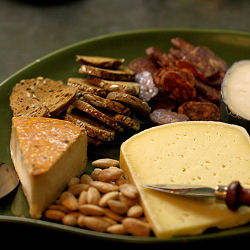 Thank goodness, we’re done with turkey. Blissfully, all of the bits and pieces made their way either into our bellies or the stock pot by early last week.
On Sunday night, we were so sick of overstuffed plates that we decided to graze. The platter pictured was our family supper: Fra’Mani salumi, Judy’s country crackers, Alfieri’s salted blanched almonds, and three cheeses: Gravenstein Gold, Matos St. George, and Midnight Moon. Every last bit was local, and all of it was delicious.
(For the play-by-play on turkey sandwiches and last week’s other local meals, check out the Flickr set.)
Of course, there’s no getting through Thanksgiving leftovers in our house without the obligatory platter of Enchiladas Suizas. This tangy south-of-the-border specialty is my favorite way to use up excess poultry, no matter the season. But my attempts to keep the dish 90% local highlighted one of the realities of the Dark Days challenge: It’s getting harder to eat as we like as the year wanes.
Unable to find tomatillos at the Ferry Plaza market, I hit up Rainbow Grocery… but theirs hailed from Mexico. I did turn up a few small specimens at the Berkeley farmers market, but they weren’t exactly plentiful. Next year, I’ll follow the lead of the Monkey Wrangler and put up tomatillos when they’re overflowing the market stalls.
But no matter the shopping conundrum, there are few things that make me happier than sitting with my clan around a table full of gorgeous Mexican comfort food. We rounded out the meal with a pan of sopa seca (Mexican rice) and a pot of heirloom beans. We even managed a small bowl of guacamole courtesy of our friend Tea, who gifted us with a trio of the season’s last avocados on her way out of town.
It’s becoming clear that locavore meals are going to require additional creativity in the coming weeks. (Is it cheating to call dried chiles a spice when you’re using them by the bagful to make enchilada sauce? Hmm…) Thankfully, we’ll be able to get our Lundberg rice and our Rancho Gordo tortillas and beans year-round. In the meantime, Rick Bayless assures us that his recipe’s just as good with canned red tomatoes as it is with fresh tomatillos; it might just be the sort of project worth a dip into our pantry stash.
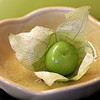

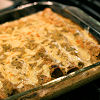

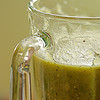
Enchiladas Suizas
– adapted from Mexico One Plate at a Time
3 pounds tomatillos, husks removed, washed to remove sticky residue
– or substitute two 28-oz cans whole tomatoes, drained
2 serrano or jalapeño chiles, stemmed
2T pork fat, chicken fat, or oil
1 medium onion, chopped
2 cups chicken or turkey broth
1/2 cup sour cream, thinned with 2T cream or milk
3 cups shredded meat, such as leftover roast chicken or turkey
2/3 cup shredded melting cheese, such as Jack
12 corn tortillas
For garnish: sliced purple onions, cilantro springs, radish slices
Roast the tomatillos and chiles under the broiler until charred and soft on both sides. Transfer to a blender along with the pan juices and puree until no large pieces remain. (If using canned tomatoes, roast the chiles in a skillet, blend them with the drained tomatoes, and proceed.)
Heat the oven to 350°F.
In a Dutch oven, heat the pork fat over medium heat. Add the onion and saute until golden. Raise the heat a notch and add the puree; cook until thickened to the consistency of porridge, 10 to 15 minutes. Stir in the broth and season to taste with salt. Cover partially and simmer 15 minutes until the sauce is still slightly soupy. Keep warm until ready to use, thinning with more broth or water as needed to keep relatively loose.

Just before using, stir the thinned sour cream into the sauce. In a large bowl, combine the meat with about 1/2 cup of the sauce, or enough to coat it without making too wet. Season to taste.
Lay the tortillas out on two baking sheets, and brush lightly both sides with corn or vegetable oil (or more pork fat). Heat in the oven for about 3 minutes, until tortillas soften enough to roll without breaking. Remove from oven and keep warm, wrapped in a towel.
Spread 1 cup of the sauce on the bottom of a 13 x 9 pan. Roll up a portion of the chicken mixture in each tortilla, then arrange the filled enchiladas in the pan in a single layer. Cover with the remaining sauce, then top with the cheese. Bake until the dish is heated through, about 15 minutes. (Depending on your oven, you may need to cover the top to prevent overbrowning, or turn on the broiler at the end to give the cheese a golden crisp.)
Serve, 2 or 3 to a plate, garnished with onion slices, radishes, and/or cilantro sprigs.
Note: Leftovers are delicious, but because the tortillas lose their shape and consistency, it’s more like a casserole on the second day.
cooking, family, locavore, Mexican, recipes
1 Comment »
Posted by Anita on 11.30.07 7:02 AM
 A few months ago, the New Yorker ran a ‘briefly noted’ blurb about Michael Lerner’s book Dry Manhattan: Prohibition in New York City. The review’s blasé tone must have dissuaded me from rushing out to buy a copy; instead, I patiently waited months for my chance to read our library’s single circulating print.
Had I known what a compelling read Dry Manhattan would be, I probably would have spent 20 bucks for the luxury of getting my hands on it sooner. True, it’s a bit scholarly, weighed down with inconvenient end-notes and a tendency toward expository repetition. But I can forgive the academic author’s shortcomings, given how entertaining the final story becomes, even when you know the ending.
Despite his geographic focus on New York City, Lerner illuminates the entire era by throwing a cosmopolitan light on the social changes that led both to Prohibition and its eventual Repeal. Although the book steers clear of drawing any overt parallels to current politics, readers who possess even a passing familiarity with modern-day prohibition movements — foie gras bans and the war on medical cannabis come to mind — will recognize plenty of eerie echoes from 80 years past. The story here makes a stark reminder of how a vocal, conservative, puritan minority swept away the freedoms of an entire country as their city-dwelling counterparts complacently boasted “it can never happen here”. Until it did… and it stayed that way for 13 long, dry years.
Honestly, it’s enough to send you straight to the bar in search of a sedative.
Perusing my library for appropriate Prohibition-era cocktails to salve my nerves, I stumbled upon a drink called the Ampersand in the Old Waldorf-Astoria Bar Book. How could I help but love a drink named after my favorite typographical glyph? (I suppose I just outed myself as a font geek. So be it.) Plus, it just sounds like a winner: Gin, brandy, sweet vermouth, plus a pair of orange-scented grace notes… What’s not to like?
But why “Ampersand”?
Although the compendium is rife with anecdotes — no great surprise, given that it was laid down by the hotel’s official historian — the origins of this particular drink’s name are lost to the mists of time. It’s possible that the typographical moniker’s a nod to Martini & Rossi, the still-popular Italian sweet vermouth, and one of the drink’s key ingredients.
Whatever the namer’s original intent, it seems particularly appropriate as cocktail bloggers around the world are celebrating both this month’s Mixology Monday & this year’s Repeal Day festivities next week. Wednesday evening, be sure to raise a glass of your favorite beverage in honor of those who fought the good fight in the 1930s, restoring the pursuit of mixological happiness to us all.





Ampersand
1 oz Old Tom gin (see note)
1 oz brandy
1 oz Italian sweet vermouth
2 dashes orange bitters
orange curaçao, to finish
In an ice-filled mixing glass, stir the gin, brandy, vermouth, and bitters until very cold. Strain into a chilled cocktail glass, then add two drops of curaçao.
Note: Old Tom was a sweetened gin of yore, a popular ingredient in many pre-Prohibition cocktail recipes. Although there are no ready sources for such a beast, fruit-derived gins such as G’vine are not bad stand-ins. Alternately, David Wondrich recommends slightly sweetened Plymouth or Junipero as acceptable substitutes; a drop or two of simple syrup seemed to do the trick in the Ampersand samples we tried. Given its lore, I suspect the original Old Tom gins were a fair deal harsher than anything on the shelves today, but we’re going for delicious approximations here, rather than slavish authenticity.
My neighbor Erik (proprietor of Underhill Lounge) was kind enough to let us sample from his personal stash of Death’s Door gin, a product that may be the closest modern Old Tom equivalent. Its flavor is noticeably sweet, a trait that the distillers assured Eric was intended rather than accidental. Alas, it’s not widely available outside the upper Midwest, but we didn’t find a drastic difference in mixed drinks made with Death’s Door compared with those made from sweetened dry gins.
bar culture, Drink of the Week, drinks, holidays & occasions, literary, Mixology Monday, other blogs, recipes
15 Comments »
Posted by Anita on 11.28.07 1:03 PM
 First, a fun bit of good news: My photo of Sweeney’s cocktail was recognized for a host’s award in last month’s edition of Does My Blog Look Good in This. Considering all of the amazing entries that were submitted — more than 100 in all — I was stunned and flattered to be chosen again as a Good Looking Blog. (Seriously, I’m not just being gracious: Go check them out, and be prepared to drool.)
But now I’m faced with a classic dilemma: How can I top my last success? October’s posts featured such a bumper crop of (strangely similar) photos that I can’t decide which I like the best. Or, more to the point, which one might catch the judges’ eye.
Would it be the ghoulish (but oddly gorgeous) chicken still-life from Murder Most Fowl? Perhaps the sinfully creamy, toffee-topped cake as seen alongside Sweet & Spicy? Or maybe the fascinating rhythm of a bowl of Brussels sprouts, a la Dark Days Ahead? Might they prefer the rustic crate of heirloom apples illustrating Seasonal Stealth?
Oh, decisions, decisions…
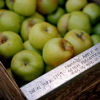




Wanna help? Aces, I knew I could count on you. Here’s how:
First, consider the DMBLGiT rules. It’s not just all about the best photograph, so it pays to know what the judges are looking for. Prizes are awarded for edibility, originality, and aesthetics, plus an overall set of winners.
Next, click through to the Flickr set and check out each image at its full 350-pixel submission size. Then, pop back over here and vote in the poll below.
But we’ve got to hurry: The submission deadline for this month’s DMBLGiT is Friday, 11/30. I’ll leave the poll open until Friday at noon, then send in my entry under the wire. Feel free to leave comments explaining your vote, or even suggest an alternate image from the October archives, if you prefer.
Update: Thanks to everyone who voted!
The final tally was: Chicken 12, Sprouts 5, Apples 2, Cake 1.
other stuff
4 Comments »
Posted by Anita on 11.28.07 10:57 AM
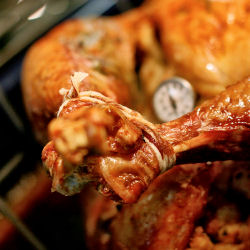 Come on, people, say it with me:
“Ugh, not turkey again!”
I know, I know — you’re probably as sick of reading about turkey as I am of eating it right about now. But, alas, that’s one of the perils of being the hostess: A house full of family and a fridge full of food seriously cuts into your blogging time. But now they’re all on their way — the relatives to the airport, the leftovers to the freezer or compost bin — and I’ve got a moment to get caught up.
(And I promise if you stick with me to the end, there’s a treat.)
I’d been noticing the steady disappearance of some of our autumn staples from the farmers market — bye-bye avocados, so long green beans — but at least when it came to our Thanksgiving feast, nearly everything came from within a 100-mile radius of home. As I wrote out my shopping list, I realized that I didn’t have to eliminate many favorites, and it occurred to me that Thanksgiving may be one of the few times of the year that most Americans are eating seasonally. With the exception of the cranberries in the relish, the bowl of buttered corn niblets (which I zipped and froze a few months ago), and a bit of commercial flour, everything on our plates came fresh from the farm, ranch, or dairy just a few days before they were eaten.
Rather than list a page-long litany of producers and distances here, I decided to create a GoogleDocs spreadsheet. (Geek is the new black, they tell me.) I was so pleased that we inadvertently managed to do even better than usual for this one meal — our turkey was the only significant item that came from more than 100 miles away, although still very much inside our 200-mile protein foodshed. We also managed three other 99%-local meals this week: Lasagne served with beet and bleu cheese salad, pork chops with risotto and roasted cauliflower, and the ever-popular family tradition of a “(Not)-Spam and Eggs” holiday brunch.
—–
But enough about that; let’s skip ahead to dessert.
Longtime readers may recall my earlier confession that neither Cameron nor I enjoy eating squash. Amusingly enough, this even extends to pumpkin pie… or at least it did until a few years ago. In deference to holidays guests — for whom Thanksgiving would not be complete without a slice of crusted Curcubita custard — I grabbed a handy recipe and whipped it up.
The recipe’s unique twist was the use of pumpkin puree, rather than solid-pack squash, a tricky thing to find outside of health food stores in those days. (It’s since become ubiquitous at Whole Foods and the like, so you shouldn’t have to hunt.) My guests raved about the pie with such genuine eye-rolling pleasure that I reluctantly tried a small sliver. And wouldn’t you know it: This pie, for some reason, had no trace of the abhorred squashiness, just a luscious, pumpkin-y goodness.
I suspect that there’s something about the solid-pack processing that makes pumpkin especially gag-worthy, and that choosing puree keeps the texture light and the flavor fresh. This year, we steamed our own Sugar Pie pumpkins from Mariquita Farm, pureed the flesh, and used it in place of the canned variety. If anything, the result was even better than usual — a pumpkin pie that even squash-haters can love.


Classic Pumpkin Pie
single-crust pie dough, chilled 1 hour
(I use Martha’s pate brisee, replacing half of the butter with home-rendered leaf lard)
1/2 cup granulated sugar
1/2 cup loosely packed brown sugar
1-1/2 tsp. ground cinnamon
1 tsp. ground nutmeg
1/2 tsp. table salt
2 large eggs
4 large egg whites
1 pound pumpkin puree, or a 15 oz can (not solid pack)
1 cup cream
1 tsp vanilla extract
Position rack in lower third of oven, and preheat to 425° F.
In a large bowl, whisk sugar, brown sugar, cinnamon, nutmeg, and salt. Add eggs and egg whites, and whisk until well blended. Add pumpkin, whisking until smooth, then cream and vanilla; continue whisking until well combined.
On a lightly floured surface, roll out the dough into an 12-inch circle. Drape dough over rolling pin and fit into a 9-inch pie pan. Fold edges under and crimp. Place crust on a baking sheet.
Pour filling into crust, and bake for 10 minutes. Reduce oven temperature to 325° F, and continue to bake 55 to 75 minutes more, until center barely jiggles when the pan is tapped. If needed, cover the crust with foil strips or a shield to prevent over-browning.
Transfer pie to a wire rack, and cool. If not serving within the hour, loosely cover and refrigerate. (The crust suffers slightly, but the filling is even better when chilled.)
baking, dessert, holidays & occasions, locavore, recipes
6 Comments »
Posted by Anita on 11.23.07 7:14 AM
 When DPaul asked me to tend bar at Sean‘s birthday cocktail party, I jumped at the chance. All the fun of planning and serving drinks to our friends, but none of the mess? Sign me up! In all honesty, it seemed a simple enough assignment. My only limitations: Neither Sean nor Paul is a fan of gin (something we’re planning on addressing next year), and Sean has a well-known horreur of orange.
I wanted to keep things interesting without going overboard — no complicated lists of ingredients to be purchased, schlepped, and mixed. I also wanted drinks that were flavorful but not too strong. Drinking Martinis and Manhattans all night leaves a dreadful impression the next morning, especially for folks who aren’t used to anything stronger than a glass of red wine.
Paging back through a year’s worth of Drinks of the Week, I was astonished by how many were gin based. (Well over half, can you believe it?) Most of those that remained were either seasonally inappropriate, or not suited to serving in quantity. The lone successful candidate was a variation on our own Rosemary Five, tweaked ever so slightly by substituting lemon juice for the original lime. The birthday boy’s a big fan of pears, and the other ingredients are common enough that none of the guests would be spooked.
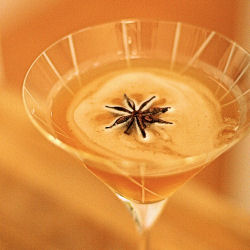
I wanted another effervescent drink for a second option, but none of the bubbly drinks in our repertoire seemed like a good fit for the occasion. Flipping through cocktail books, I noticed a few mentions of a tipple called the Oh, Henry! — a blend of ginger ale, Benedictine, and Bourbon (or whiskey, in some Continental sources). Mixed in equal proportions as some books suggested, the drink was far too sweet and overpowered by the Benedictine’s spice. But dropping the ratios to 2:2:1 worked perfectly when using a saucy Bourbon and a fiesty ginger ale. (We paired Knob Creek and Blenheim for the party, although Fever-Tree works fine if you prefer a subtler variation.)
If I do say so myself, both drinks were well received. The Oh, Henry!’s bourbon base made it a tougher sell, but I spied a number of folks being converted by a sip of their neighbor’s drink, and coming back for the darker cocktail on their second round. Could this be a gateway drink for the bourbon-averse?
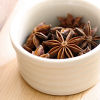
Not surprisingly, this simple mix has become a favorite in our house, too. It’s a perfect autumn-into-winter blend of sugar and spice, with just enough herbal undertones to keep everything grounded. The star anise garnish — stolen from the Falling Leaves — is our own touch, a complementary (and attractive) addition to the drink’s aromatic profile.




Oh, Henry!
1-1/2 oz bourbon
1-1/2 oz ginger ale
3/4 oz Benedictine
Stir all ingredients in an ice-filled mixing glass, and strain into a cocktail glass. Garnish with a piece of star anise, if desired.
Drink of the Week, drinks, holidays & occasions, other blogs, recipes
10 Comments »
