Posted by Anita on 04.06.08 12:03 PM
 Before Niman Ranch started raising their herds on Iowa feedlots, their marketing materials bragged about “happy cows with ocean views”. Last Sunday, as we popped over the crest of Pierce Point Road and saw limitless green pasture dotted with black steers overlooking the deep blue waters of the Pacific, I gasped: It was exactly the scene that I’d held in my mind’s eye all these years. Only this land and these cattle belong to Marin Sun Farms, the ranch that supplies us with most of our eggs and meat.
Even a week after our visit, I’m having a hard time expressing the depth of my awe for what David Evans is doing out on his Historic H Ranch, just 50 miles north of San Francisco. David’s family has farmed this same land since the early 1900s, although they were forced to sell it in the 1970s under the eminent domain act that created the Point Reyes National Seashore. The family leases back the land under what seems to be very tenuous circumstances: 5 year terms and government oversight of terribly minute details like the size of chicken flocks. Needless to say, it’s not the sort of sustainable permanence that makes this consumer particularly content.
Pronounced David’s way, the enterprise responsible for much of our weekly protein is properly known as “Marin Sun Farms” not “Marin Sun Farms.” Like his mentor Joel Salatin — who famously explained to Michael Pollan that he was a “grass farmer” — David takes pains to emphasize that his husbandry converts solar energy, by way of living pasture, into proteins that humans can digest. It’s half clever and half hokey, but undeniably true.
We started our tour overlooking the pasture where cows and calves ambled up and down spring-green hills, lolling in the lush grass or drinking from a large, clear pond. David talked at length about his ideology and his farming methods, explaining how herds — both chickens and cows — are moved to a different patch of land each week, preserving the pasture from over-grazing and enhancing the soil with their manure.
We peeked into a converted freight trailer turned chicken nursery, spying four gaggles of Easter-perfect chicks peeping around under heat lamps, pecking away at their feed. From there, we strolled down a wide lane to look in on David’s sister’s goat herd, busily clearing a scrubby yard where vegetables had been grown over the previous winter.
Beyond the goat yard, we saw two quonset hut-shaped structures on a distant hillside, our first glimpse of the farm’s egg-laying operation. Built of canvas-like material stretched over simple wood frames, these chicken houses open directly onto open pasture, without any physical barriers to any one of the chickens flying or wandering off. Apparently their social structure makes that unlikely; they’re much more apt to leave in the clutches of a predator, according to David. Perhaps half of the chickens roosted inside their homes, and the remainder scratched and pecked and flapped away outside in the open air. Glancing at the wide range of breeds, I suddenly understood the diversity of the colors and sizes of the eggs in our weekly dozen.
Many of us remarked with surprise that this egg-laying flock included a fairly large number of roosters, in addition to the laying hens. “I don’t do it so we can say the eggs are fertile,” said David, “But I know that I wouldn’t be happy in an environment without females, and I don’t think any of you ladies would be happy in a world without men.” Even as an unrepentant omnivore, it’s hard to wrap your brain around someone who makes his living selling meat treating his product with such humane regard.
Up the road a piece, we called on the broiler flocks, grown-up versions of the fuzzy peeps we’d seen pecking in the nursery. Penned in movable, mesh-covered yards — half in sun, half in shade — these birds were, quite frankly, the ugly ducklings of the farm. Where the laying hens are diverse and beautiful, Cornish Cross broilers look like the freaks of nature we’ve bred them to be. Sparsely feathered, dull around the eyes, and unbelievably gawky, these aren’t birds you feel too much sentiment toward. Still, they’re cared for with the same meticulous attention. They’re fed organic cracked grain, supplementing all the insects and grubs they can forage from their patch of pasture. At the end of the week, when they’ve cleared the pests and fertilized the land beneath their enclosures, their coops are canted up on a large dolly and rolled forward to a new stretch of green grass.
Sounds bucolic, and it certainly looks that way, too. Are things 100% perfect on this pastoral land? I’m sure they’re not. I would have been happier not knowing that Marin Sun Farms broiler chicks are fed imported Chinese soy until they’re old enough to digest corn and grubs. Or that David feels that heirloom birds are just too expensive (twice the cost of the already pricey hybrids he brings to market, he says) and don’t taste any better than the ugly mutants. Or that most of the calves born at his parents’ H Ranch operation are destined for life on the feedlots of the Midwest, because there simply isn’t enough demand for pasture-raised beef. But despite all of the things that I wish they were doing more-perfectly, the simple fact is that I am in awe of the 99% that Marin Sun Farms is doing exactly right.
Rounding our way back to the main barn, David stopped to talk about the on-farm ‘processing’ — that is, slaughtering — that farmers are, thankfully, still allowed to do for their own poultry. As he explained that the next part of the tour was occasionally more than some visitors had bargained for, I finally focused beyond David’s shoulder, at last noticing a critical part of the farm that had previously escaped my notice. Having read Michael Pollan’s description of the Polyface Farms “abattoir without walls,” I knew enough to recognize it: The metal cones where chickens are killed and bled out, the plucking machine with its hundred rubber ‘fingers’, the well-worn worktables, the buckets for the blood and guts that get turned into the compost pile to amend the land. No roof, no walls; everything open to the sun and the wind, nature’s original sanitizers. It was all right there… right there for anyone to see, to understand.
I knew well enough we wouldn’t see any chickens slaughtered that Sunday — it happens on Thursdays, anyway, and the oldest of this season’s broilers were still a week from market, merrily clucking away in the pasture. Nothing had been slaughtered here since the old roosters and hens had come to market last winter; the killing place smelled of nothing but the hillside around us. And yet, it had the undeniable air of purpose. I won’t insult you by saying it felt holy, but I do know that there was no nervous laughter, no chatter, no wandering off to investigate something more interesting around the corner. Every one of us on that tour, kids included, was completely present there, standing inside the boundaries of the place where animals became food: The place where each bird experiences what David calls its “one bad day” on the farm.
—-
When the tour was over, we caravaned back over the road to Route 1. David treated everyone to lunch at the Marin Sun Farms Butcher Shop, a bountiful spread of Della Fattoria bread, the farm’s own rib eye and roast goat, bowlsful of aioli and horseradish cream and salsa verde, and buckets of German-style potato salad with flecked with rich bacon.
But the best part of the lunch was the beverage: David brought out “a gift” — which he couldn’t legally sell to us — of a few gallons of raw milk “just hours out of the cow” in oversized Mason jars. I’d shied away from buying raw milk at the stores, imagining that it would taste grassy or gamey. But oh, lord, what I’d been missing! It just tasted more milk-y, like a better version of the best milk you’ve ever had. Nuances of flavor, texture, and color are apparent even to the most casual observer.
Needless to say, we bought a quart of Claravale raw milk this Saturday, and I don’t expect to go back to the sterile, flat stuff anytime soon. Nor do I expect I will soon forget the windy spring morning when I looked my supper in the eye and made peace with my place on this sustainable food chain.





Marin Sun Farms
10905 Shoreline Highway
Point Reyes Station, CA 94956
415-663-8997
Meat CSA memberships available starting at $270 for a 6-month session
Retail sales available at the Point Reyes butcher shop, Saturday Ferry Plaza Farmers Market and Sunday San Rafael Civic Center Farmers Market
Next farm tour: May 18, 2008
Adults $30, Kids $10
(Pre-registration is mandatory)
Dark Days challenge, farmers markets, farms & farmers, locavore, meat, shopping
13 Comments »


Posted by Anita on 04.04.08 7:02 AM
 “I recommend to the Congress the passage of legislation for the immediate modification of the Volstead Act, in order to legalize the manufacture and sale of beer…”
With these words, Franklin Roosevelt fulfilled the campaign promise that propelled him to the White House. By urging lawmakers to modify the terms of Prohibition, FDR hoped to stave off social unrest while the nation impatiently waited for the ratification of the 21st Amendment. Congress followed Roosevelt’s lead, and two weeks later the president signed the historic Cullen-Harrison Act, which amended the terms of Prohibition’s legal basis — the Volstead Act — to allow the manufacture and sale of lower-alcohol beer.
On April 7, the first legal shipments rolled out of the breweries; the story goes that the first barrel from at least one factory was brought directly to the White House. Regardless of the destination of that first delivery, there were many, many more to come: More than 1.5 million gallons of beer were reportedly consumed in the first 24 hours! Although the country’s drinkers would still endure a full eight months of relative sobriety before Repeal brought about the true end of the Noble Experiment — and the re-legalization of strong beer, wine, and spirits — at last the honest working man could return to the tavern for his pint of (weak) ale. 75 years later, we’re still celebrating.
Outside of a few localities with antiquated beer laws on the books, you’d be hard pressed today to find a commercial brew that could squeak by under the Cullen-Harrison threshold: 3.2% alcohol-by-volume beer is hardly heady stuff. But technicalities aside, there’s no reason not to enjoy a pint (or two) of your favorite ale to mark the occasion of the 75th anniversary of beer’s return to law-abiding beverage status.
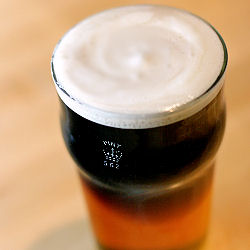
The world of beer-based cocktails is a strange and storied place, where venerable working-man’s refreshers like Boilermakers and Redeyes rub shoulders with new-fangled concoctions like Turbo Diesels and Sake Bombs. But — at least in America — perhaps the best-loved mixed-beer involves no hard liquor, no soda, no juice… in fact, no adulterants at all. The Black and Tan — a beer parfait of sorts where dark stout floats atop a golden ale — may or may not have been invented Stateside, but it owes its soul (if not its actual pedigree) to Ireland. So popular is this beverage that Ben and Jerry’s introduced a limited edition, beer-flavored Black and Tan ice cream complete with adorable foam head.
Making a Black and Tan at home is a cinch: There’s no need for a specialized gizmo, just patience. Fill a pint glass — preferably the bulbous Imperial style, rather than the tapered American sort — about two-thirds full with the ale. The glass is wider at the top, so you’ll wind up with roughly equal amounts of each beer this way. Top the ale with the stout, pouring slowly over the back of a spoon.
If you use a stout other than Guinness, be sure it offers a lower alcohol content than the ale you choose, or you’ll end up with a Tan and Black. Pour too fast, and you might get something more like a Muddled Beige. If the latter happens, assure your guests they’re drinking it the way they would in the Old Country, where the drink is better known as a Half and Half, and layering’s a trick hauled out for American tourists.
Delightful as it is, the Black and Tan’s hardly the only beer cocktail that doesn’t require a shot of booze. Of the dozens of possibilities, here are a few of our favorites.





Black and Tan
1/2 stout, preferably Guinness
1/2 bitter (aka ESB-style pale ale in the US), such as Bass
Pour the ale into a pint glass, filling approximately 2/3 of the way to the top. Float the stout on top of the ale, pouring over the back of a spoon to keep the layers separate.
—-
Shandy
1/2 ale
1/2 ginger ale
Combine both ingredients in a pilsner or collins glass. Garnish with a lemon wedge or a sprig of mint.
—-
Snakebite
1/2 stout
1/2 hard cider
Combine both ingredients in a pint or half-pint glass.
—-
Panache (aka Radler)
1/2 lager
1/2 sparkling lemonade
Combine both ingredients in a pilsner or collins glass. Garnish with a lemon wedge.
—–
More beer cocktails from Drink of the Week:
– 1/5/07 Black Velvet
half Guinness, half Champagne
– 11/24/06 Michelada
Mexican beer with hot sauce, lime, and salt
beer, Drink of the Week, drinks, recipes
4 Comments »
Posted by Anita on 04.02.08 12:14 AM
As if our constant prattling here on our own site wasn’t more than enough to keep you occupied, we’re happy to announce a few other places around the Interwebs where you can see more of our content.
 Later this month, I’ll begin a regular column for Hearst’s new sustainable-living site, The Daily Green. (The site’s technically still in soft-launch mode, so be gentle.) I already work with words in my ‘real job’, so I’d never really felt the need to pursue new outlets for my writing. But I’ll admit I was swayed by the idea of rubbing elbows with some folks whose work I greatly admire: TDG’s other “New Green Cuisine” bloggers include James MacKinnon & Alisa Smith — the 100 Mile Diet / Plenty folks — and food watchdog extraordinare Marion Nestle.
The column I’ll be writing for The Daily Green will be a roundup of Sustainable, Organic, Local, Ethical eating tips called “SOLE Food Digest”, a weekly collection that aims to show readers how to tread lightly and still enjoy what they’re eating. I’ll be recapping and linking off to as many inspiring posts as I can find. No wonky policy discussions, no alarmist scary-food nightmares — just links to constructive tips, seasonal recipes, and stories about encouraging changes in our food supply… green-eating inspiration with a can-do spin.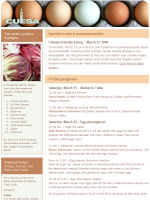
I hope SOLE Food Digest will become the perfect jumping-off point folks who are just starting down the SOLE path, and for old-time ethical eaters looking for a lighter touch. (I’ll post a link as soon as it’s live, hopefully on or soon after Earth Day.)
I’m also tickled to tell you that the good folks at CUESA — they run the Ferry Plaza Farmers Market, among other great locavore resources — have asked me to contribute photos to their newsletter and site. Those pasture-raised eggs in the banner of the March edition of the CUESA Weekly E-Letter are mine; look for my “married with dinner” photo byline, and more of my photos in upcoming editions of the newsletter, and also on the CUESA homepage in the coming months.
 A little further afield: Cameron and I are joining 30 or so of the world’s favorite drink bloggers to produce the Tales of the Cocktail blog. All of us will be live-blogging from New Orleans in July, of course, but you won’t want to wait to put the Tales blog in your RSS reader. There’ll be plenty of pre-event posts covering all sorts of topics that are sure to pique your interest, even if you’re not planning to attend the year’s most anticipated cocktail event. And if you are joining us in New Orleans, don’t forget to head over to the main Tales of the Cocktail site, where tickets
 have just gone on sale will go on sale real soon now, and discount ($99!) rooms are available for the show hotel, the venerable Hotel Monteleone.
And last but not least… I’m assured that this is not just some elaborate April Fool’s Day joke: Our post about Armandino’s Salumi is featured rather extensively in the Internet Explorer 8 Activities demo. We have no idea how this happened, and the irony is not lost on us that we’re diehard Firefox/Mac fans here at Married with Dinner HQ.
drinks, farmers markets, geekery, other blogs
14 Comments »
Posted by Anita on 03.27.08 7:57 PM
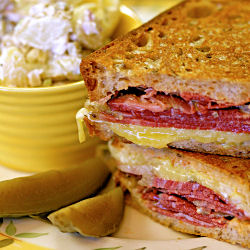 There’s a strange thing that happens in Seattle. (OK, there are many strange things that happen there, but this one is food related.) Some restaurant — usually a reasonably popular one — puts a relatively obscure but approachable item on the menu, and before you can say “hamburger with a fried egg on top”, said item pops up on menus everywhere, from divey diners to haute-cuisine haunts.
Thus it is with the Reuben, the sandwich some might call Seattle’s signature. And it’s no great mystery why: There’s something irresistibly naughty — not to mention entirely un-Kosher — about a deli sandwich that combines salty corned beef, gooey cheese, zippy Russian dressing, and crunchy sauerkraut between two slices of butter-grilled rye bread. A Reuben is the perfect antidote for drizzly, chilly Northwest weather, an overstuffed slice of golden sunshine on a plate. Served with a garlicky dill pickle and a ramekin of good potato salad, there’s hardly any better cure for grey-day blues.
Child of the sunny Southland that I am, it’s entirely possible that I had never eaten a Reuben before we moved to Jet City. I quickly made up for lost time: Fremont’s Red Door tavern used to make a pretty good example, as did our old ‘local’ pub, the 74th Street Ale House on Phinney Ridge. Once we moved across town to Madison Valley, it was only a matter of days before I discovered the heavenly Reuben — and his turkey-licious sibling, Rachel — served on just-baked sour rye at the Essential Bakery Cafe. I could probably fill an entire post with Seattle Reubens I Have Known and Loved. (Thankfully, I managed to avoid the vegan one!)
Once we moved back home to San Francisco, I don’t think I ever encountered a Reuben on a restaurant menu. I’m sure Reubens exist somewhere within our seven-by-seven grid, but so far we have yet to cross one another’s paths. It’s a sad truth that moving from city to city often means leaving behind foods (and friends) you’ve grown to love.
Luckily, once you have the right ingredients, it’s easy to make your own fabulous Reuben. Sure, you can pick up pretty good deli meats around town, but one of the the best reasons to make your own corned beef is that you’ll have plenty of leftovers. Leave the little trimmings and end bits for tomorrow morning’s hash; the best and highest use of that glistening chunk of pink, lipid-laced meat lies between two slices of good bread. Shave it thin with your sharpest blade, and don’t stop until you’ve got a goodly pile.
—-
Knowing there were Reubens in our future, we picked up a loaf New York Rye from Acme and a hunk of Spring Hill’s Portuguese cheese, which makes a better-than-decent stand-in for Swiss. We thought we would be out of luck finding local sauerkraut, until fate intervened. The good news: Not one but two of our favorite local purveyors has just recently started brining their own ‘kraut. Fatted Calf sells a chunky, tangy variety, and Alexander Valley Gourmet sells a crisper, finer-gauge flavor. Happily, both are excellent, and equally well suited to Reuben-making.
The bad news: Neither brand is (yet) available in San Francisco. Fatted Calf sells theirs over the counter at their Oxbow shop but, alas, not at their market stands. Alexander Valley is wrestling with the classic shelf-space squeeze: So far, no San Francisco shop has made room for their newest product. (There’s hope, though: Alexander Valley’s fresh pickles are already available at Whole Foods, Rainbow Grocery, and Andronico’s; if you want the ‘kraut, too, leave a note for the manager asking that they stock it. So far, the new Napa branch of Whole Foods is as close as we’ve been able to locate it.)
With two containers of locally made sauerkraut in the fridge, all that remained was the Russian dressing. We stirred together some homemade mayo, a bit of last summer’s tomato jam, a blob of local horseradish, a few chopped pickles… and got ready to griddle. Sure, Thousand Island dressing would have done in a pinch, but we decided that making a 100%-local sandwich was worth a few minutes of extra prep.
And let me tell you: It was a Reuben to make you forget all the others.

The Perfect Reuben Sandwich
Here’s the part where I would normally explain exactly how to craft the platonic ideal of a Reuben sandwich. But frankly, there’s no way I could possibly improve on the recipe we found on Epicurious, as transcribed from Arthur Schwartz’s New York City Food.
If you think the Zuni Cafe mock porchetta recipe is detailed, let me assure you: It ain’t got nothin’ on Schwartz’s step-by-step tutorial on building the proper Reuben sandwich. The devil may be in the details, but the details are in Schwartz’s Reuben.
Dark Days challenge, locavore, lunch, Seattle
14 Comments »
Posted by Anita on 03.21.08 7:02 AM
 I don’t mean to brag, but I’m a pretty macho mixer. Despite my ladylike demeanor — hey, stop that snickering! — I can get a hoary frost going on the side of a cocktail shaker with the best of the boys.
But when it comes to cocktails that include a touch of egg white, I find they need a little extra oomph to keep their pretty heads about them. Plus, the amount of time it takes to shake an egg to a crisp foam means you’re likely to wind up with a rather watery drink.
Rather than tweaking the other ingredients to make up for this mechanical flaw, it seems easier to tip the laws of physics in the bartender’s favor. When making a Ramos Fizz, for example, I find it’s helpful to add just a touch of the soda to the shaker. I’m no Harold McGee, but my guess is that this small amount of priming helps the egg loosen up a little and creates a better foam, even before the final shot of soda is added in the glass.
But when you’re mixing fizzless drinks, you can’t go this route. Luckily, there’s another way to build foam without spraining your shoulder. During an early-afternoon brunch at The Alembic last fall, we spied a bartender putting the finishing touches on her fizzes with a hand-held stick blender, after shaking the ingredients first to chill ’em. Brilliant!
You don’t have to look far to find plenty of egg-based drinks to try out this frothing trick. There’s the venerable Sherry Flip, the old-school Morning Glory Fizz, the whippersnapper Silver Lining, the newly minted French Sheets, and dozens of others. But given the season — it’s spring at last! — allow me to suggest the Clover Club cocktail, an old-fashioned libation with a festive pink hue.
Although a pair of 1911 advertisements has convinced me that the original Clover Club recipe called for grenadine, I’m equally certain that the use of raspberry syrup (or better yet, muddled raspberries) was quite well established before Prohibition. The three oldest books in my cocktail collection — the Old Waldorf-Astoria Bar Book, Cocktails How to Mix Them and The Merry Mixer — call for some manner of raspberry in place of the grenadine, and a side-by-side tasting at our house showed the wisdom of that choice. Even using good homemade pomegranate syrup, the grenadine version is literally a pale second to the fruitier upstart. Without the berry flavor, it’s just a ho-hum gin sour with a little blush around the edges.
But don’t take my word for it: Try it both ways and see. You’ll undoubtedly find plenty of eggs this week to experiment with.





Clover Club
1-1/2 oz gin
3/4 oz lemon juice (some say lime)
1/4 to 1/2 oz raspberry syrup (or grenadine)
white of 1 egg
Shake all ingredients with ice for at least a minute until very well chilled. If desired, strain into a measuring cup or a second shaker can, and buzz with a stick blender for 10 seconds to create a denser froth. Strain into a chilled cocktail glass.
Drink of the Week, drinks, recipes
7 Comments »
Posted by Anita on 03.20.08 11:44 PM
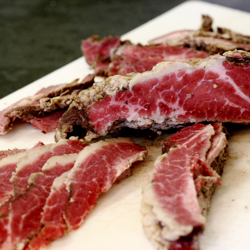 If you ask Cameron what his favorite cold-weather meal is, you might be in for a surprise. It’s not Thanksgiving turkey with all the trimmings. It’s not even a big prime rib, with plenty of leftovers for his beloved beef-and-bleu sandwiches. No, the thing my Scots-Irish husband loves best when the nights are long is New England Boiled Dinner — better known as “corned beef and cabbage” — with a hearty dollop of horseradish cream and an imperial pint of stout to wash it down.
Like most folks, we’ve reserved this marvelously meaty meal for St. Patrick’s Day feasts. But given how cheap it is, and how much we enjoy it, I’m not entirely sure why we don’t trot it out regularly. Perhaps we got in the habit back when it was difficult to find corned beef during the rest of the year. But the last few winters, we’ve taken to curing our own brisket, so getting our hands on nice corned beef isn’t so much of a problem.
I know there are at least two of you who know our little secret: Home-cured corned beef only sounds impressively arcane; it’s actually about the easiest thing you can cure at home. The only thing you need is a 4-to-6 pound piece of brisket — point cut, preferrably — plus a few easy-to-find spices and a week’s forethought. And if you use a dry cure like the Cooks’ Illustrated recipe [link removed*] we often follow, rather than the typical immersion brine, you don’t even need a lot of fridge space. Honestly, we’ve got to do this more often… if only for the crave-inducing leftovers.
 This year’s brisket came to us from Marin Sun Farms, and a glorious specimen it was. For the accompaniments, we wandered the Ferry Plaza market and rounded up a Catalan Farms cabbage, two pounds of Little’s potatoes, a bunch of Star Route Farms carrots, a pile of Dirty Girl boiling onions, and a couple of rutabagas from Heirloom Organic. Imagine our surprise as we walked by the Happy Girl Kitchen pickle stand on our way back to the car and noticed they were selling prepared horseradish! (Yes, it was local — grown at Tairwa Knoll Farms and processed in Santa Cruz County — and delicious.) On the way home, we popped by our local microbrewery, 21st Amendment, and picked up a growler of their oyster stout. Ah, it was the easiest 100% local meal of the month, to be sure, and definitely one of the tastiest.
The rest of the fortnight was full of other tasty tidbits, including six meals at restaurants that wear their locavore menus on their sleeves. You’ll recognize lots of old standbys in the list below, and a pair of newcomers. Let’s just say that Conduit seems to be still working the kinks out of their kitchen; they’ve only just opened, so we’ll keep mum. On the other hand, Ubuntu is old enough to know better. I wish we had loved every bite at this nationally fawned-upon Napa newcomer, but — as our friend and dining companion Cookiecrumb detailed elsewhere — the inventive flavors and gorgeous ingredients were so oversalted as to be nearly inedible. Ah, well… they can’t all be Range, I suppose.
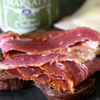
Mercifully, we did not return home hungry. There were plenty of other delicious things we discovered on our Napa field trip, including a to-die-for packet of pastrami (from Fatted Calf’s gorgeous new shop at the Oxbow Market) that had us happily gorging on sandwiches… even for breakfast. And we also discovered another secret ingredient that we’ll share more about in our next Dark Days installment.

Dark Days Ticker — March 1-15
– Dark Days dinners at home: 8 out of 15
– Locavore dining-out: Range, Primavera, ubuntu, O Izakaya, Two, Conduit
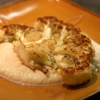
– New recipes: Jamie’s stuffed potatoes, Hugh’s milk-braised pork, cauliflower steaks
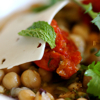
– Old faves: corned beef & cabbage, egg drop soup, bean salad, Waltuck‘s chicken paprikás, grilled rib-eye
– Freezer fodder: golden veggie bisque, potstickers, chili verde enchiladas, oxtail ragu, bolognese sauce
New local items in the pantry:
– Straus Creamery cream-top milk (2% and whole)
– Marin Sun Farms point-cut brisket
– Fatted Calf pastrami (available at their Napa store only, alas!) and bierwurst
– Little‘s “all blue” potatoes
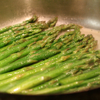
– Zuckerman’s asparagus
– Happy Girl Kitchen Co. prepared horseradish
– Andante butter
– 21st Amendment Oyster Stout (brewed with Hog Island oysters!)
– Carmel S&S Syrah (thanks, Lauren!)
– Bartholomew Park Cabernet
—-
* Edited to add: We removed the link to the Cook’s Illustrated recipe in July 2008 in protest of their bullying tactics.
beer, Dark Days challenge, holidays & occasions, locavore, meat, Napa & Sonoma, restaurants
12 Comments »
Posted by Anita on 03.17.08 8:29 PM
 In his introduction to this month’s Mixology Monday festivities, our genial host Rick describes how he came up with the idea for his theme of “Limit One“:
“Exotic cocktail spots would often advertise their potent potions by limiting a customer to one per evening. It wasn’t all gimmick, however; some recipes like the Zombie contained up to 5oz of 80-proof spirit! This phenomenon isn’t limited to just tiki drinks; in fact, many locales even have laws that forbid a bartender to create a drink with more than a specified quantity of liquor.”
Well, these sorts of potent potations may not necessarily be limited to tropical concoctions, but it’s hard to avoid the correlation: If the bar name includes an island locale and/or the word “Trader” in its name, the chances are pretty good that you’ll find some pretty strong stuff at the bottom of the menu.
 Mercifully, many of these voluminous drinks come equipped with two or more straws, and most are expressly designed to be shared by gregarious group of cocktail hounds. Among this genre, the best known — and possibly the most confusingly varied — is the Scorpion Bowl. Back in the tiki heyday of the 1950s, it seemed like every bartender had his own scorpion style; some stuck with the arguably original rum and brandy; others went straight for the jugular with gin and/or vodka, and still others just threw together any random combination of high-proof booze in a bowl with sweet syrups, colorful liqueurs, and a tropical fruit garnish. With bartenders like these, it’s a miracle that anyone survived to tell the tale, much less that the Scorpion Bowl is remembered — and reinvented — so fondly in the modern mixology world.
At Alameda’s Forbidden Island, there’s no shortage of high-octane cocktails. Yes, you’ll even find a Scorpion Bowl: Show up on Sundays, and you can share one with your friends for a mere $15. Theirs is a potent elixir, and quite the show to boot: A flaming crouton simulates lava spewing forth from the crater of the bowl’s volcano centerpiece. True to its origins, this scorpion’s sting will surely make you — and, hopefully, three of your closest friends — forget all of your cares… and maybe your name.
But for my money, the tastier option is a Forbidden Island exclusive known as the Fugu for Two. Even though it’s served in an adorable Munktiki fish-bowl, it’s hard to imagine how anyone other than a tiki fanatic would think that a couples’ cocktail served from the belly of a ceramic pufferfish is romantic. (‘Til death do us part, anyone?) But the drink itself is as delicious as it is strong: Fruity and tropical, but not sickly sweet. It’s as potent as its Scorpion sibiling, yes, but it’s more than a little civilized.
For those of you who can’t make it to Alameda, the Fugu tastes just as nice when served in a regular bowl — or even a pair of double Old Fashioned glasses, in a pinch — as it does when it’s poured into a jumbo collectible mug. And unlike its aquatic namesake, you don’t even need a special license to prepare this Fugu.



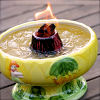

Fugu for Two
3 oz amber rum
1 oz vodka
1 oz apricot brandy
2 oz pineapple juice
1-1/2 oz fresh lemon juice
1 oz passion fruit syrup (preferably Monin)
1 oz orgeat
sparkling wine
Combine all ingredients in a blender with two cups of cracked ice and pulse twice, very quickly. Pour into a tall bowl. and add more cracked ice to fill. Top with a float of sparkling wine, and serve with two straws.
bar culture, drinks, East Bay, Mixology Monday, recipes
14 Comments »
Posted by Anita on 03.16.08 10:01 AM
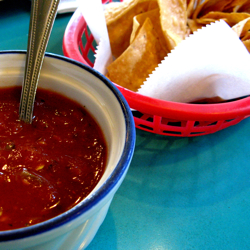 My Dark Days Challenge cohorts, please avert your eyes: With the exception of two or three breakfasts, there was absolutely nothing sustainable, local, or even organic about the way we spent our long Presidents Day weekend. Que lastima — we traded local for loco, spending a crazy four days eating nothing but Mexican food.
Since time was limited on Friday morning before work, we headed to an old standby. Los Jarritos has been the scene of more Sunday breakfasts than we can count, and one or two dinners over the years. The coffee is terrible, so stick with the Mexican chocolate, and the chilaquiles are limp and over-egged. But it’s hard to complain too much about a place that serves homemade tortillas, and the service is always so adorably welcoming that we’re more than a little forgiving of Jarritos’ shortcomings.
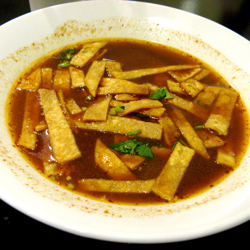 Maybe it’s was a case of diminished expectations, but I have to say that my lunch at Frontera Fresco on the lower level of Macy’s Union Square was not nearly the dreck-fest I was expecting after reading some early critiques. Yes, it’s corporate chain food — think Wolfgang Puck Express goes to Mexico — but it’s certainly no travesty.
It might be too strong to say that I enjoyed my meal, but I was served a thoroughly decent, well-garnished bowl of tortilla soup, and an unorthodox (but not unpleasant) chicken torta. I laughed out loud at the sandwich’s sundried tomato garnish, and its lettuce seemed to be dressed in Good Seasons Zesty Italian. But everything else was in the ballpark: rich frijoles, tinga-style chicken, and a chunky slab of queso añejo. Don’t get me wrong: It’s not fabulous, and it’s definitely not worth a special trip, but there are certainly worse ways to spend your $10 downtown. And I’d be downright ecstatic to find a Frontera Fresco branch in an airport.
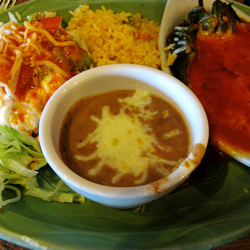 Friday afternoon, I hopped a southbound CalTrain after work. Cameron picked me up at Mountain View station and in just a few moments we were pulling into the parking lot of our favorite Mexican restaurant, Fiesta del Mar. Our friends Jason and Margaret introduced us to this fabulous place way back in the day — more than a decade ago, now — and we’ve been coming here religiously ever since. Sure it’s crazy to drive an hour to go to dinner, but such is our devotion.
And we’re not the only fans: Plaques on the wall attest to the restaurant’s enduring popularity: They’ve been voted “Best Mexican Restaurant” by the local paper every year but one since the early 1990s. They’re justly famous for their shrimp dishes — Cameron loves their Camarones Alex and the Camarones a la Diabla — but I love them for their great margaritas (El Jimador, rocks, salt… thanks!) and their unbattered chiles rellenos. There’s almost always a line out the door, but the tables turn quickly and you won’t regret the wait.
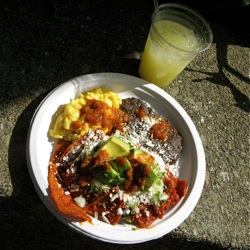 Saturday morning found us at our usual spot: The Ferry Plaza farmers market, and specifically the Primavera stand. Although this market favorite offers chilaquiles nearly every Saturday, they mix things up a little by varying the sauce; one week it’s a green tomatillo-serrano blend, the next it’s a tomato-chipotle salsa, and the next it might be a puree of guajillo chiles (as it was that weekend).
A plate of salsa-sauteed chips served with Cameron’s all-time favorite soft-scrambled eggs and some pretty delicious black beans… ahh, brunchly perfection. Of course, we couldn’t resist ordering a plate of tacos al pastor — and its perfect pairing, piña agua fresca. Weighted down by our mega-breakfast, we wandered our way around the market, vainly trying to work off our stuffedness while finishing our weekly shopping.
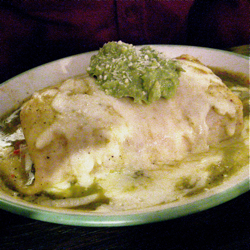 Not surprisingly, we weren’t hungry again until dinnertime. After the sun set, we made our way to the Daly City border to check out a little hole-in-the-wall we’d heard good things about. Lisa’s Mexican Restaurant looks like a biker bar from the outside, with its microscopic windows, spotlit sign, and ugly burglary bars facing Mission Street.
But when you step inside, you’re entering another world. Every surface but the floor is covered with goofy stuff — photos of old Mexican movie stars, life-size parrots, oversized sombreros, and creepy paintings of big-eyed children. The overall effect is like dining inside some crazy abuela’s closet, but somehow it feels cozy, not chaotic. The welcome is friendly, both from the staff and the other patrons. And the food…
Well, honestly, I don’t want to get your hopes up. Lisa’s is decidedly not gourmet, and it definitely isn’t in the same league as Fiesta del Mar. But if you’re a homesick Southern Californian pining for the cheesy combo-plates of your youth, Lisa’s will fill your heart and belly in a way that you’ve never experienced north of the Grapevine. Their chile relleno sauce is just right (it’s the kind with chunks of celery like you see absolutely everywhere in L.A.) and their crispy tacos are dynamite. The best thing we’ve had at Lisa’s — and I am embarrassed to admit, we’ve been back almost every week since we discovered it – is their chile verde. Cameron likes to ask for it in their Lisa’s Especial, a football-sized ‘wet’ burrito stuffed with everything a homesick Angeleño needs to feel right again.
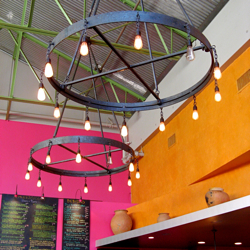 Sunday we crossed the bridge for brunch at our East Bay fave, Tacubaya. The spinoff of Temescal’s oft-lauded Doña Tomás, this taqueria — tucked behind Sur La Table and Café Rouge on Berkeley’s Fourth Street restaurant row — lures breakfasters into gorgeous skylit space decked out in tropical-fruit colors and natural wood surfaces. It’s a neighborly place, albeit one with a very calculated and upscale vibe, and though the crowds come out in force, the line moves fast and there’s never much of a wait for a table.
No matter what time of day we visit, we can never resist an order of churros y chocolate; other breakfast fare mostly starts and stops with so-so chilaquiles and decent variations on huevos, plus menudo on weekends. Like its O-Town sibling, Tacubaya bases its menu on local produce and sustainable meat.
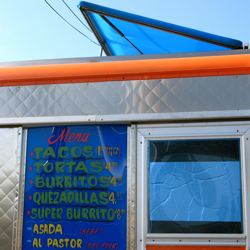 Later in the day, we took a long-overdue tour of Oakland’s taco-truck scene. We used to love planning day-long taco crawls with our Seattle crew, and when we first moved back to San Francisco, we tried to get our new friends to follow suit. Various circumstances conspired against us — ranging from a surreal bout of foul weather to half the group catching one of those pandemic colds — and eventually we gave up trying to get everyone across the bay at the same time. But I’d kept my notes, adding a truck here or a cart there from time to time, and waited for the right day. And now that day had come.
We started out at the corner of 22nd and International, at a former A&W Drive-In that’s now home to not one but two taco trucks. Tacos Sinaloa features the usual assortment of meats — carnitas, chorizo, carne asada, and such — ensconsed in the eater’s choice of tacos, burritos, tortas and more. Across the parking lot, Mariscos Sinaloa offers all these plus fish tacos, tostadas de ceviche, and other seafood-based items. I opted for a taco full of deliciously meaty carnitas; Cameron had a muy sabroso shrimp taco from the other truck. Off to a good start, we ate our way up and down the boulevard, stopping at any truck where we saw more than two people in line. Our favorites: El Grullo’s tacos al pastor, Tacos Guadalajara’s shredded carnitas, and the cabeza at El Novillo in the shadow of Fruitvale BART.
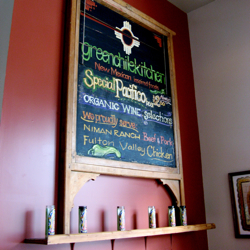 Monday is a hard day to find Mexican breakfast in the City; many family-run businesses take the day off after their weekend rush. We didn’t want to repeat ourselves, so we headed to Green Chile Kitchen over in NoPa. It’s the kind of storefront cafe you find in nearly every San Francisco neighborhood: Wood tables, tall windows, a chalkboard menu, and a tall counter where you place your order.
Sadly, the food’s no better than average, and it’s definitely Southwestern rather than Mexican. But they use quality ingredients (mostly organic produce, Niman Ranch meats, and Fulton Valley chicken) and there’s good coffee, easy street parking, and a pleasant little vibe.
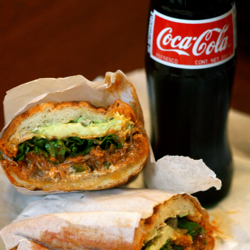 As we were leaving NoPa, the once-cloudy day turned sunny, so we grabbed the dogs and headed back to the Mission. There’s nothing better on a bright winter afternoon than a lazy meander down the eastern stretch of 24th Street, where you can walk and shop for hours without hearing a single word of English. When we’d finally gotten our appetites back, Cameron entertained the pups while I popped into Tortas Los Picudos, a cheerful slice of chaos where they sell grilled Mexican sandwiches and licuados (which many shops translate as “milkshakes” although they’re really more like smoothies).
Fillings at Los Picudos run the gamut from basic ham-and-American or turkey-and-Swiss to belly busters like the Cubana. A very distant relation to the medianoche you may be used to, Los Picudos’ porcine homage to La Isla includes roast pork, ham, queso fresco, lettuce, jalapeños, mayonnaise, butter… and a foot-long hotdog! We wisely chose to split a spicy pulled-pork torta, and picked up a Mexican Coke at Casa Lucas on our way back up the block.
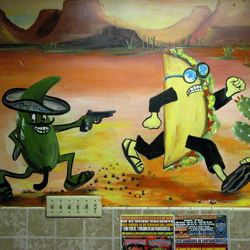 By the time we were hungry again, our options on a Monday night had diminished to a handful of late-night taquerias. Wanting to make sure we ended our weekend of gluttony on a high note, we popped down the hill to our nearby favorite, El Gran Taco Loco. Sandwiched in between a hard-liver bar and our local branch of Cole Hardware, Taco Loco has won our hearts despite its interrogation-room lighting, uncomfortable booths, and goofball murals.
We long ago discovered that the burritos and other semi-Americanized offerings at Taco Loco aren’t much to write home about, but their tacos — and most specifically, their carnitas tacos — are a thing of beauty and a joy forever. (Or at least the next 4 to 6 hours.) Cameron’s a huge fan of their birria, — a goaty, dark-chile-flavored soup that’s good for whatever ails you on a Sunday morning. But for our last meal of the long weekend, we kept it simple: A carnitas super-taco for me, and a buche taco for the bald guy. It certainly wasn’t the best meal of the bunch, but a late-night snack at our neighborhood favorite was definitely a fitting end to a gastronomical journey that spanned three area codes.
Los Jarritos
901 South Van Ness
San Francisco, CA 94110
415 648.8383
Frontera Fresco
170 O’Farrell Street, Macy’s basement level
San Francisco, CA 94103
415 296.4349
Fiesta del Mar
1005 N. Shoreline Blvd
Mountain View CA 94043
650 965.9354
Primavera
Ferry Plaza Farmers Market (Embarcadero at Market)
San Francisco, CA
Lisa’s Mexican Restaurant
6582 Mission Street (near John Daly Blvd)
Daly City, CA 94014
650 756.6289
Tacubaya
1788 4th Street
Berkeley, CA 94710
510 525.5160
Tacos Sinaloa / Mariscos Sinaloa
International Blvd & 22nd Avenue
Oakland, CA 94601
El Grullo
International Blvd & 26th Avenue
Oakland, CA 94601
Tacos Guadalajara
International Blvd & 44th Avenue
Oakland, CA 94601
Tacos El Novillo
1001 Fruitvale Avenue
Oakland, CA 94610
Green Chile Kitchen
601 Baker Street
San Francisco, CA 94117
415 614.9411
Tortas Los Picudos
2969 24th Street
San Francisco, CA 94110
415 824.4199
El Gran Taco Loco
3306 Mission Street
San Francisco, CA 94110
415 695.0621
breakfast, downtown SF, East Bay, Mexican, restaurants, The Mission
12 Comments »
Posted by Anita on 03.14.08 7:07 AM
 Happy St. Paddy’s Day!
A wee bit early, you say? Nae, says I.
Although St. Patrick’s Day is usually observed on March 17, this year — with Easter coming so early — a bit of liturgical arcana has moved mountains. Because Catholic rules prohibit the celebration of saint’s feasts during Holy Week, the Church has actually moved St. Patrick’s Day to March 14. (For those of you keeping score at home, the last time this ecclesiastic clash occurred was 1940, and the next time will be 2160… so we’ve got a few years to plan.)
Most bishops are none too happy about drunken revelry during the holiest week of the year, and the clever ones are supporting the official shift by offering dispensation to their flocks, absolving them of the sin of carousing on a Lenten Friday, which is traditionally a day of abstinence. As you might expect, this once-in-most-lifetimes rescheduling has plenty of civic celebration-mavens in a tizzy — apparently, not everyone got the memo, and most cities (and nearly every bartender I’ve asked) will still be trotting out barrels of green beer on Monday.
But regardless of when you’re celebrating, there’s got to be a better glass to raise than watery, shamrock-colored beer. Please, I implore you: Grab yourself a snoot of Jameson (or Bushmills, if you’re of a Protestant sort), a pint of Guinness, a Black Velvet, or something else — anything else! — that reminds you of the Land of Saints and Scholars.
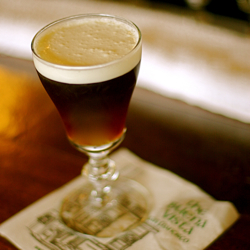
One of the best of your options, Irish Coffee was brought to America in the early 1950s by the then-owner of San Francisco’s Buena Vista Cafe, Jack Koeppler. Haunted by the drink he’d enjoyed at Shannon Airport before a seaplane flight home from the Emerald Isle, Koeppler and his friend Stanton Delaplane, a travel writer for the San Francisco Chronicle, tinkered and experimented for months to replicate the formula. Koeppler even made a return trip to Ireland — all in the name of “research”, of course — and brought back the official recipe from Joe Sheridan, the bartender who (by most accounts) invented the drink. Even today, enjoying an Irish Coffee at the Buena Vista remains one of the few legitimate reasons for a trip to Fisherman’s Wharf, an otherwise benighted stretch of The City best left to the socks-and-sandals set.
The cafe caused a tempest in a coffee cup last year when word leaked that the recipe had — gasp! — been altered. Although the current owner claims that cost was not a factor, the fact of the matter is that the Buena Vista abandoned their private-label whiskey in favor of off-the-shelf Tullamore Dew. The subtle change is lost on most customers, and the ol’ BV still turns out more than 2,000 Irish Coffees a day to windswept tourists as they toddle off the cable cars at the end of the line. I assure you that, Tullamore Dew or no, it tastes a heck of a lot better than green beer.




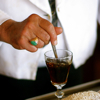
Irish Coffee
4oz fresh, hot coffee
2oz Irish whiskey
whipping cream
sugar cubes
Pour hot water into a footed coffee glass to bring it to temperature. Meanwhile, whip the cream lightly, just enough so that it will be able to float atop the drink, but not until peaks form. Pour the hot water out of the glass, and add two sugar cubes. Fill the glass about 3/4 full with hot coffee, and stir to dissolve the sugar cubes. Add the shot of whiskey, and top with the lightly whipped cream, pouring over a spoon to keep the layers distinct.
bar culture, coffee & tea, Drink of the Week, drinks, holidays & occasions
11 Comments »
Posted by Anita on 03.09.08 3:48 PM
 Our main fridge in the kitchen is a counter-depth, side-by-side model. Its narrow, shallow freezer doesn’t hold a lot, volume-wise, but picking a bigger fridge would have meant a lot of kitchen remodel trade-offs that we weren’t willing to make. The ancient fridge we inherited from the previous owners was wheezing and leaking by the time we started our remodel, so we killed two birds with one stone by buying an old-school (but brand-new and EnergyStar compliant) over/under fridge for the basement.
The plain-Jane newbie was a perfect stopgap for us to use until we moved back upstairs, and now we fill the basement fridge with all those goofy condiments we only need twice a year (cooking Thai food will do that to you) and extra beer. When fiesta time rolls around, the beer gets moved up to a cooler on the back porch, and the downstairs fridge gets filled with all the party mise en place. And, of course, the second fridge’s freezer is our storage vault for things like summer veggies, pasta sauce, make-ahead meals, and other frozen staples. We keep one or two packets of each thing in the main fridge, and the back-stock downstairs — a bit of it’s an oddball system, but it works for us.
At least 90% of the time it does. But when you’re prone to making megabatches of chicken stock, things can go south pretty quickly.
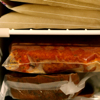
Last week, I innocently opened the freezer door in search of some chile verde, and a tectonic shift sent plastic-encased projectiles plummeting toward the floor. Thank goodness I had my clogs on, or I might’ve lost a toe! I’d stacked food cubes like a giant game of Tetris — or maybe more like Jenga — and I’d paid the price. Clearly, my version of Fibber McGee’s closet needed a clean sweep. I took everything out of the freezer (note to self: wear gloves next time!) and reconfigured it all in a less-precarious arrangement. Still, though, the tiny compartment was pretty close to capacity.
To try and eat down our storage problem, I put us on a strict diet: Every dinner we ate at home had to have at least one frozen element… at least until there was enough room to store another batch of Bolognese sauce. (It’s nice to have problems that can be solved by eating.) With spring on the horizon, it seemed safe to start really digging into our local-food stash. After all, we’ll start seeing roaster/fryer chickens at the market again next month, and we’ve got plenty of canned tomatoes to last us through to the new season — the hothouse Early Girls are already coming in, much to my shock.
Due to a combination of Presidents’ Day weekend festivities and long nights at the office, we only managed 5 dinners at home during the last half of February — all of them, of course, at least partially from the freezer. We’ll keep plugging away at our hoard over the next few weeks, but now there’s enough breathing room in the freezer that I don’t feel bad eating the occasional freshly prepared supper.
In fact, the downstairs freezer is looking downright breezy at the moment… A phenomenon that should last until we start getting 9 pounds a month of sustainable, local beef, pork, and lamb from Marin Sun Farms’ new meat CSA.
Hmm, do you think a third fridge would be excessive?



Dark Days Ticker — February 15 to 29
– Dark Days dinners at home: 5 dinners
– Locavore dining-out: O Izakaya Lounge, Primavera, Tacubaya
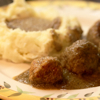
– Freezer fodder: Short-rib ragu, Cornish pasties, rigatoni bolognese, turkey meatballs, chicken pot-pie
New local items in the pantry:
– Scharffen Berger cocoa powder (Berkeley, 13 miles)
– Marin Sun Farms pastured eggs (Point Reyes Station , 44 miles)
– Katz champagne vinegar (Napa, 57 miles)
Dark Days challenge, locavore, preserving & infusing
16 Comments »
