Posted by Anita on 03.07.08 7:07 AM
 What is it about ginger-beer drinks that brings together unlikely bedfellows? The Moscow Mule, for example: Two guys sitting around a Hollywood bar, trying to come up with a novel way to slog their middlebrow vodka and their slow-moving sodapop, combine their bevvies in a novelty copper cup. Somehow, this unholy alliance actually resulted in a fabulous drink, one of the few vodka cocktails I’ll actually admit to liking.
Likewise, here’s our friend the Dark & Stormy. Or, I should say, the Dark n’ Stormy®. Yup — some wily bastard had the gall to trademark this classic island refresher. Worse yet, the corporate overlords who own the name actually go around telling people that it’s unlawful (!) to build your beverage with any other rum besides Gosling’s Black Seal.
However you punctuate the damn thing, it’s another product of oddball circumstance: During the late 1800s, the British Navy either bought or built (depending on who you ask) a ginger-beer plant on the island of Bermuda. Your guess is as good as mine as to what prompted Her Majesty’s finest to get into the soft-drinks line, but there you have it. It didn’t take long for the boys in blue to add their daily tot of rum to the spicy soda, and a beverage was born.
Now, I’m not entirely certain that the bartenders of my fair City are acquainted with the attorneys representing the interests of Gosling’s Export (Bermuda) Ltd, because — just between us kids — I’ve seen them pouring pretty much any dark rum that comes to hand. And trust me, I’ve watched a lot of these being made this winter: It seems like every Dom, Duggan, and Harry in SF has added this golden tipple to their cocktail list. Bars of some fame have hosted entire evenings devoted to the drink (Dark n’ Stormy night, har har). There’s no denying it: San Francisco’s pros may be knocking back Fernet, but the paying stiffs out front are guzzling rum-spiked ginger beer like it’s never going out of style.
Contrarian though I am, I’ll grudgingly admit that the best Dark and Stormys we sampled were indeed made with the legally prescribed brand. But I think it’s safe to say that your choice of ginger brew — and please, don’t use that supermarket crap, or even the fabulously subtle Fever-Tree here — will have a much more dramatic effect on the end result than any small variations in rum labels.
Given the drink’s naval origins, it’s a fair bet that Pusser’s wouldn’t be far off the traditional mark, for example. And I’ll vouch that the drink’s awfully good when made with a quality gold rum — like Appleton VX — and a sassy Southern ginger ale like Blenheim… although this turns it into something more like a “Fair n’ Breezy”. Cameron, lover of all things molasses, prefers his Stormys on the Extra Dark side, made with Cruzan Blackstrap and Bunda from Down Undah.
So, go ahead: Experiment, and find your own favorite combination. We promise not to sic the laywers on you.





Dark & Stormy
2 oz dark rum, preferably Gosling’s Black Seal
6 oz ginger beer (or quality ginger ale)
limes
Fill a highball glass with ice, and pour the rum over the rocks. Add the ginger beer to fill, and garnish with a healthy wedge of lime.
Drink of the Week, drinks, recipes
7 Comments »


Posted by Anita on 03.05.08 7:33 AM
 Oh, hey — how are you? It seems like it’s been forever!
Apologies to anyone who’s spent even a moment fretting if we’re OK. We’re (finally) healthy, and happy, and working hard. But for some reason that I just can’t put my finger on, we’re just not blogging.
I anguished over missing last week’s Drink of the Week — the first since our formal hiatus last year — and then I realized that probably nobody cared but me, and had a good laugh.
I feel like I have blogger’s block. Which is somehow distinctly different than writer’s block, as I’m actually doing a lot of writing. I have plenty of stuff on tap, and even lots of posts in draft mode but — as Cameron likes to say — “my finisher is broken”. I get to the point where a post needs its photos, or a last good paragraph, or a final polish… and I lose momentum. I still haven’t told you about the long weekend when we spent four days eating nothing but Mexican food. Or the wicked shortbread Cameron made. Or our happy-hour dinner at O Izakaya. Or the batch of vin d’orange we’re whipping up with the giant sack of oranges that Cookie gave us. Ah, well — it’ll happen when it happens. At least that’s what I keep telling myself.
I feel like I am running in place with a pile of office work and a million distractions. Whenever I find 30 minutes that I could use to blog, I always decide I’d rather take a nap, or watch an episode of The Wire, or cuddle with my old-man dog on the couch. (He had minor surgery last month, and I am feeling especially motherly toward him… even if he has no idea that anything happened. Seriously, I think he just thinks the whole anesthesia thing was a big nap with his favorite people — he loves the vet’s office, because they give him unlimited cookies — and has in no way connected it with the fact that we keep rolling him over to inspect his sutures. Which he has no idea exist, as far as we can tell.)
I’m chalking up my blogging blahs to the change of the seasons, at least in part. We’re having some truly gorgeous weather here — we’ve moved from just-spring into the real deal at the farmers market: asparagus… avocados! And on the home front, our plum tree is in full blossom and some of our herbs have mysteriously sprung back to life. The mint and verbena didn’t surprise me, but I had no idea that chives or tarragon would do that. Ah, the never-ending parade of surprises, and most of them are good ones.
So, see — we have plenty to write about. We’ll be back soon…. Promise.






other stuff
13 Comments »
Posted by Anita on 02.24.08 2:21 PM
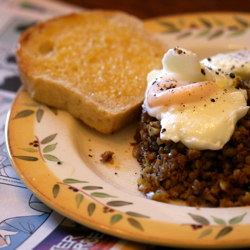 We’ve talked a lot about our Dark Days Challenge dinners, and even occasionally mention our lunchtime trials, but — aside from our “free-range” egg dilemma — we’ve rarely made a peep about breakfast. The truth of the matter is we’re in a bit of a rut: Nearly every morning, Cameron eats an over-easy egg and a slice of Acme toast with Spring Hill farmstead butter. Not such a fan of the usual breakfast fare, morning often finds me dipping into leftovers, cannibalizing my lunch, or scrounging some other non-breakfasty breakfast.
But when the weekends roll around, it’s big-breakfast time for both of us. Every Saturday, we head to the Primavera stand at the Ferry Plaza Farmers’ Market at the start of our shopping rounds. We’re so predictable that David and Paulette know us by name, tease us when we’re bleary-eyed, and generally treat us like the regulars we are. Some days we split a single order of chilaquiles, but more often — especially if there’s something else on the changing menu that catches our eye, like fish tacos, perhaps, or tacos al pastor — we’ll each get our own plate and share. Primavera’s tortillas and chips aren’t made from local corn, but they do manufacture both items in Napa, and purchase their eggs and produce from local farms. Judged by volume, our Saturday breakfasts probably don’t quite make it to the 90%-local mark, but we’re content with understanding exactly where our food is coming from, and knowing that we’re directly supporting such a fabulous crew.
We often stay up late on Saturday nights, so Sunday breakfast is more of a brunch-time affair. Sometimes we’ll brown some homemade pork sausage and Cameron will whip up biscuits and gravy with scrambled eggs. Other times we’ll simply fry up some local bacon — we alternate between Fatted Calf and Range Brothers — and serve it alongside two of Cameron’s perfect basted eggs and a slice of Acme toast topped with June Taylor preserves or local honey. We rarely plan these Sunday meals in advance, and yet they’re always wonderful.
During the first part of the month, we had two of my favorite brunches of all time: a post-porchetta batch of hash with poached eggs and buttery toast, and a plate of custardy French toast made from leftover baguette slices (we froze two bags full after the cocktail party!) alongside Range Brothers sausage. With the exception of maple syrup, and the flour in the locally made bread, everything on our table on both mornings was 100% local. And 100% fabulous.
For the most part, we stuck with old favorites and tried-and-true options for lunches and dinners in the first part of the month; even our Valentine’s Day dinner was a simple grilled steak with creamed spinach and roasted potatoes, with ice-cream sundaes for dessert. We did have one out-of-the-ordinary supper: A picnic in a cozy downtown hotel room. Much as I’d love to tell you that we planned a romantic escape, the truth is that the overgrown frat-boy who lives in the house next door decided to have (yet another) all-night party, and we had to evacuate.
While Cameron packed up the dogs and our overnight bag, I headed to a local supermarket for makeshift meal provisions. The locavore-friendly pickings at the Bristol Farms around the corner from my office are pretty slim, but I did manage to score a crusty loaf of Artisan bread, some respectable sopressatta from a outfit called Ticino (a second-label brand from local mega-brand Columbus, it turns out), and a couple of nice local cheeses. A quick stop at CocoaBella turned up just two locally made treats: peanut butterflies and salt caramels from Charles Chocolates — a sweet ending to an otherwise hectic evening.



Dark Days Ticker — February 1 to 14
– Dark Days meals at home: 8 dinners, 2 brunches, most breakfasts
– Locavore dining-out: Range
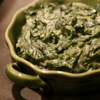
– New recipes: Chard gratin, Coq au vin
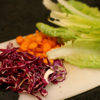
– Old faves: porchetta, pork hash, shaved fennel salad, Clearman’s red cabbage slaw
– Freezer fodder: Rigatoni Bolognese, Cameron’s chicken soup
New local items in the pantry:
– Capellino spinach-ricotta ravioli (San Francisco — 5 miles)
– Charles Chocolates (Emeryville — 13 miles)
– Ticino sopressata (Hayward — 35 miles)
– Marin Sun Farms range roosters & stewing hens (Point Reyes Station — 43 miles)
– Artisan Bakers sweet batard (Sonoma — 47 miles)
– Barbara’s Natural potato chips (Petaluma — 51 miles)
– Rancho Gordo chiles de arbol (Napa — 51 miles)
– Marin Roots Farm mâche/lambs lettuce (Petaluma — 52 miles)
– Fiscalini Farmstead ‘San Joaquin Gold’ grating cheese (Modesto — 87 miles)
breakfast, Dark Days challenge, locavore, shopping
8 Comments »
Posted by Anita on 02.20.08 11:34 PM
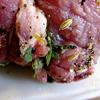
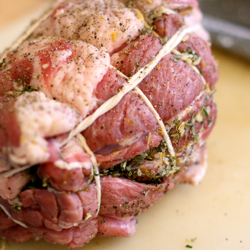 Even otherwise reasonable people have been known to complain about the length of the recipes in Judy Rogers’ Zuni Cafe Cookbook. Indeed, our favorite recipe for mock porchetta (which, unless you live in the Italian countryside or know someone who butchers their own hogs, is as close as you’re likely to get to the real thing) does run to many pages. But it’s anything but complicated — especially if you’re handy with a boning knife — and it’s not even all that time consuming. Once you’ve made the recipe a couple of times, you can have the roast prepped and stuffed in less than 20 minutes; once that work is done, you’re pretty much home free.
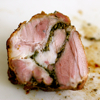
As our very patient friends will attest, the Zuni porchetta is a dish we love so much we can’t help hauling it out for dinner parties all the freakin’ time. The glistening, heavenly scented, herb-infused pork shoulder is a stunner, its vermouth-spiked pan sauce an exercise in decadence. And, oh harried host or hostess, you can even roast your side dishes right in the same pan as the porchetta — who doesn’t like rosemary-and-pork-drippings on their fennel and potatoes? (And what is their problem?)
But the dirty little secret, the real reason why we’ll use any flimsy excuse to trot out this old favorite, is that it makes the world’s best leftovers, hands down. Thinly sliced cold porchetta is brilliant on rustic bread with a schmear of ricotta and a few grinds of coarse black pepper. Larger bits, especially those doused in leftover gravy, make a stunning filling in a hollowed-out crusty roll. A handful of moist shreds add panache to a composed salad. The possibilities are, as they say, almost endless.
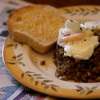
Despite all these lunchy luxuries, my favorite post-porchetta meal has got to be breakfast. Once you’ve had porchetta hash — especially when served with a perfectly poached pastured egg atop it and maybe some tomato-bourbon jam on the side — you may well forget about the corned-beef sort. Like the gorgeous love-child of crispy carnitas and silky rillettes, slow-cooked porchetta hash forms a golden-brown shell that hides a meltingly soft interior.
But first, you’ve got to make the porchetta.
I beg you: Don’t be daunted by the length of the recipe. Rogers has a knack for the subtle differences between a perfect outcome and a mediocre effort, and an all-too-rare talent for translating her technique into print. It’s nearly impossible for a pro to remember all the things she does by rote, the details that we amateurs need to be told explicitly, but Rogers gets this in spades.
Such a perfect recipe needs but one minor modification: Rodgers asks you to add the vegetables to pan, surrounding the roast, right at the start. I find they’re perfectly done if you add them at the one-hour mark, when you first turn the roast. (If you put your tongs on top of the veggie bowl, you won’t forget to add them.)


Mock Porchetta
— from The Zuni Cafe Cookbook
2-1/2 to 3-pound pork shoulder butt roast [Anita’s note: not the ‘picnic’ portion]
salt
1T capers, rinsed, pressed dry between towels, and barely chopped
1T lemon zest
3 garlic cloves, coarsely chopped
12 fresh sage leaves, crushed then coarsely chopped
a leafy sprig or two of fresh rosemary, leaves stripped and crushed (about 2T, packed)
2 tsp fennel seeds, barely crushed
1-1/2 tsp freshly cracked (not ground) black pepper
1 to 2 pounds prepared vegetables of your choice:
– carrot chunks, onion wedges, quartered fennel bulbs, baby potatoes, etc
a little mild-tasting olive oil
2/3 cup rich chicken stock
a few tablespoons of dry vermouth
Trimming, seasoning, and tying up the pork (1 to 3 days in advance):
Trim any discoloration and all but a 1/4-inch-thick layer of superficial fat from the pork. Study the natural seams between the muscles on each side of the meat. Choose one that runs the length of the roast and close to the center of any face. Use the tip of a knife to gingerly separate the muscles along that seam, gradually exposing more seams, which you should then separate as well. The goal is to create lots of internal surfaces to cake with seasonings. If your initial foray doesn’t expose many internal seams, you can take a second stab at a different face, so long as you don’t cut the pork in two. Salt the splayed piece of pork evenly all over (approximately 1/2 tsp of sea salt per pound of meat).
Combine the capers, lemon zest, garlic, sage, rosemary, with most of the fennel seeds and black pepper. (You should get about 1/2 cup, loosely packed.) Spread and pack this mixture all over the excavated insides of the pork butt, making sure the seasoning falls deep into the crannies where you’ve separated the muscles. Re-form the pork butt into its natural shape and tie tightly into a uniform shape, tying 4 or 5 strings around the circumference and another around the length of the roast. Rub the remaining fennel and pepper on the outside of the roast. Collect and refrigerate any loose herbs and seasonings. Cover the pork loosely and refrigerate.
Roasting the porchetta (2 1/4 to 2 1/2 hours)
Preheat the oven to 350°F. Toss the vegetables in a minimum of olive oil, barely coating the surfaces. Add a few pinches of salt and toss again; set aside.
Heat a 12- or 14-inch ovenproof skillet, depending on how many vegetables you are roasting, over medium heat. Place the pork roast in the pan; it should sizzle. Place in the oven.
The roast should begin to color at 45 minutes; if not, turn the heat up to 375°F until it does, then turn the heat back down.
At 1 hour, turn the roast over and add the vegetables, rolling them in the rendered fat. Work quickly, so you don’t lose too much oven heat and the roast doesn’t cool off. Turn the roast again at 2 hours and add about 1/3 cup of the stock or water.
Add any excess herbs and seasonings to the pan juices at this point and swirl the pan so they sink into the liquid. Roast for another 15 to 30 minutes, to about 185°F. The pork should be fragrant and glistening golden caramel.
Transfer the meat to a platter, tent loosely with foil, and leave in a warm, protected spot while you make the pan sauce. Place the vegetables on a separate warm plate.
Preparing the pan sauce and serving the roast
Tilt the skillet and spoon off the fat. Add the vermouth and the remaining 1/3 cup stock or water and set over low heat. Scrape and stir to dissolve the caramelized drippings on the bottom and sides of the pan. Skim the fat as the liquid comes to a simmer. Add any juice that may have trickled from the resting roast.
Slice the pork, removing the strings as you go, and serve garnished with the vegetables and a spoonful of the rich pan sauce.
cookbooks, meat, recipes
17 Comments »
Posted by Anita on 02.15.08 9:31 PM
 I know Valentine’s Day is officially over, but I’m not quite ready to leave the smooches and sweet-nothings behind quite yet. Like many of our friends, this year we’ve shifted our romantic celebration to the weekend. We’ve learned the hard way that being rushed through an overpriced set menu at a crowded restaurant, or scrambling to make a memorable meal at home on a weeknight, is no great recipe for romance.
Although it’s not quite as bad as going to a bar on New Year’s Eve, trying to find a suitable sip for your sweetheart is perilous at best. I get a headache just thinking about the insipid sea of sickly-sweet Cosmos and cheap Champagne that’s floated out in poor Saint Valentine’s name each year. Bleh.
Even if you already celebrated your amorous occasion last night, you might fancy a taste of Royal Romance this weekend. According to CocktailDB, this faintly exotic drink won first prize in the British Empire Cocktail Competition of 1934. Curious about which particular liaison might have captured the creator’s fancy, I did a little digging.
It turns out that the alliance in question was quite the fashionable one. In September of 1934, England’s Prince George, the Duke of Kent, proposed to Princess Marina of Greece and Denmark. According to royal-watchers, the bride was “an accomplished linguist and skillful dressmaker … also widely renowned for her style and beauty.” The groom was no slouch, himself. “Cheerful, popular and handsome” Time magazine said of the Duke in reporting his betrothal, tactfully glossing over a social life that would exhaust Bertie Wooster, including a long history of affairs with glittering celebrities, socialites, and entertainers of both genders, and some dabbling in pharmaceutical recreation.
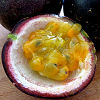
These two glamorous royals made headlines during their brief courtship, and had all London in their thrall in the run-up to the wedding — just the sort of hubbub that leads to the christening of a cocktail. Perhaps the Grand Mariner was a pun on the bride’s name, the gin a nod to Jolly Old England. Add some passion fruit juice for its allusions to ardent love, and grenadine for a bridal blush, and voilá: a cocktail worthy of the crown.




Royal Romance
1 1/2oz dry gin
3/4oz Grand Marnier
3/4oz passion fruit juice
grenadine
Shake the gin, Grand Marnier, and juice with ice and strain into a cocktail glass. Drop the grenadine from a bar spoon into the bottom of the glass as a garnish.
Drink of the Week, drinks, holidays & occasions, recipes
6 Comments »
Posted by Anita on 02.14.08 12:03 AM
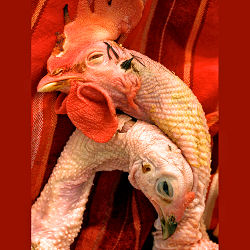 Have I mentioned lately how much I love the farmers who keep us fed? Even when I’ve done something utterly short-sighted, they managed to swoop in and save me from my own culinary stupidity.
Last week, Cameron came up from the basement and announced that somehow we’d run out of chicken stock. “That’s impossible,” I replied. “We had gallons…” A quick trip down the stairs showed that he was right. GULP!
Given that our source of pastured, local chickens dried up before Thanksgiving and that I didn’t really do anything to prepare for this eventuality other than making my usual batches when the bone-bag filled up, I guess I am lucky to have made it this far into winter without running dry. But how could we survive months without a local source of one of our most necessary staples?
After three grocery stops, I finally managed to find local, organic chicken backs. Unfortunately, the Rosie chicken parts that Whole Foods carries come from factory organic farms — they’re local, technically, and ‘free range’, technically, but they’re not really my idea of humane, ethical meat. Unless I wanted to go without stock until spring, I was going to have to choose the lesser of various evils. I went home chickenless and annoyed at my lack of planning.
Two days later, whatever deity watches over locavores and other fools swooped in to save my bacon:
From: Cara, Marin Sun Farms
Subj: Range Hens & Roosters
Range hens and range roosters will be offered this weekend at our Farmer’s Markets and Butcher Shop in Point Reyes Station on a first come first serve basis.
I could hardly believe my eyes: pastured chickens, in February? We’ll take two, please. They weren’t cheap — one rooster and one hen tapped out our protein budget for the week (and then some). But they were there, and that’s all that mattered to me and the other folks who swarmed the stand as the market opened.
It turns out that these sturdy birds were no spring chickens [groan!]. Happy by-products of Marin Sun Farms’ egg production, they’re easily double the size of the birds we buy in the spring and summer.
If you think you’re smugly immune to the grim realities of chicken butchery after a summer of dainty heads and tiny feet, you’ve got another thing coming when your supper greets you with an open-eyed stare. And cutting big birds into parts is no trauma-free event, either. Like most other creatures, chickens’ bones and tendons firm up as they mature. The simple shears-and-boning-knife operation required to part out a 3-month-old fryer is a walk in the park compared with the hatchet-job required to take apart a full-grown rooster — and I have the torn-up hands to prove it.
Even if these birds hadn’t been freakishly large, their long, narrow breasts would be a dead giveaway. Barely more than one serving of white meat per bird, these bony chests make an almost-comical sight paired with long, rangy legs. “They look like chickens that tried out for the basketball team,” quipped Cameron.
Mature fowl are best cooked low and slow; one of the MSF farmers was telling folks at the stand that he’d made an exploratory batch of fried chicken, just to see, and… well, no surprise, he didn’t recommend anything but the soup pot or a long, slow stew for any of these tough old birds. (See how many American idioms come from our agricultural roots?)
Of course, any grandma will tell you that modern factory chicken doesn’t taste like it did in the olden days, and much of that has to do with the fact that today’s chickens are slaughtered well before they’re adolescent, much less geriatric. As early as the 1960s, full-fledged stewing chickens were hard enough to come by that even Julia was calling for a measly 2-1/2 to 3-pound fryer for her coq au vin.
Thankfully, we found a lovingly thorough recipe — avec un vrai coq — in our new copy of the River Cottage Meat Book, Hugh Fearnley-Whittingstall‘s ode to sustainable eating in all its carnivorous glory. “They might be scrawny and … on the tough side” says our man Hugh, “But with a diet comprising largely natural forage, by god they’d be tasty.”
Not that I’d ever gainsay a meat maven like Mister F-W, but old-man rooster was definitely an acquired taste, even if you’re used to the “more-chickeny” flavors of pastured meat. Don’t get me wrong: The flavor it lent to the sauce was truly unparallelled — an unctuous, meaty taste that felt in all ways more like beef stew than anything poultry based. As for the meat itself, I liked it when I ate it in the small pieces that flecked the sauce, but the larger chunks were a tad too gamey for my girly palate. Cameron, however, gobbled his bowl while making little moaning noises, so chacun à son goût. For the leftovers, I shredded the meat and put it back in the sauce; served over pasta like a ragu, the flavor was perfect.
Oh, and the backs, wings, feet, heads, and other sundry bits made 12 glorious quarts of golden stock. Our freezer is chock-full of delicious homemade goodness once more. And if that’s not true love, baby, I don’t know what is.




Coq au Vin
— adapted from the River Cottage Meat Book
1 stewing chicken, ideally a farmyard rooster*
1/4 cup butter
1T olive oil
8 ounces pancetta or bacon, cut into large chunks
8 ounces onions, cut into quarters
1/3 cup all-purpose flour, seasoned with salt and pepper
4 oz brandy
2 cups red wine
2 cups chicken stock
bouquet garni of parsley stalks, bay leaf, and thyme
4 celery stalks, cut into 1-1/2-inch lengths
4 garlic cloves, smashed
2 cups canned chopped tomatoes
—
6 to 8 carrots, cut into 1-1/2-inch pieces
1/2 pound white button mushrooms, halved or quartered depending on size
4 to 8 ounces small onions (such as cippolini or pearl), peeled and trimmed
Preheat the oven to 250°F. Cut the chicken into 4 serving pieces, reserving the neck, back, and wingtips (and feet and head, if available) for stock. Heat the butter and oil in a large ovenproof casserole. Fry the bacon pieces in the butter/oil until browned, and remove to a plate with a slotted spoon. Lightly brown the onions in the same pan, and likewise remove them to the plate.
In a paper bag, shake the chicken pieces with the seasoned flour until coated, tapping them against the side of the bag to remove any excess. Brown the dredged chicken in the bacon-butter-oil, working in batches if necessary so as not to crowd the pan, and turning to brown all sides properly. If you’ve worked in batches, return all the chicken parts to the casserole. Pour the brandy over the chicken and (very, very carefully) flame it with a long-handled match. When the flames die down, remove the chicken to the plate with the onions and bacon.
Add the red wine to the casserole, scraping the bottom and sides of the pan to remove any stuck-on bits. Add the stock to the pan and heat to a simmer. Then return the bacon, onions, and chicken to the pan along with the herbs, celery, garlic, and tomatoes. Bring to a gentle simmer. Cover and cook in the oven for 2 to 2-1/2 hours (more like 1-1/2 hours for a younger chicken) until the meat is completely tender.
When you’re within a half-hour of serving time, saute the mushrooms in a bit of olive oil. Please resist the temptation to salt them until they are browned and delicious — you will get a much firmer, tastier mushroom. Meanwhile, in a small frying pan, gently cook the carrots and onions in a shallow layer of water, turning them occasionally and removing them from the pan when they’re just cooked through.
When the chicken is ready, check the consistency of the sauce. If you have a very tight-fitting casserole lid, and/or a wimpy chicken, you may need to reduce the liquid by as much as half of its volume. (Leave the chicken and vegetables in the covered casserole, and reduce the sauce in a separate pan.) Once your pan sauce is thick enough to coat the back of a spoon, put everything together — chicken, vegetables, mushrooms, and sauce — and bring back just to a gentle simmer.
Adjust seasonings to taste, and serve with your favorite mashed potatoes or herbed new potatoes.
* If no roosters are available, HF-W recommends substituting the legs, wings, neck, and giblets of a good free-range turkey, leaving the breast to be roasted another day.
Dark Days challenge, locavore, recipes, shopping
26 Comments »
Posted by Anita on 02.08.08 12:01 PM
 The fall that Cameron and I started dating was a brutal season. Everyone we knew seemed to have one of those colds that catches you in its grip and refuses to let go. The sound of coughing and sneezing was everywhere, and it seemed like the whole city of San Francisco had a red nose and bags under its eyes.
That was the first time — though certainly not the last — that I heard Cameron describe his favorite cold remedy, the Two-Hat Cure: “Grab a bottle of whiskey and put your hat at the foot of the bed. Get into bed, pile the blankets high, and take a good long pull of whiskey. Keep drinking until you see two hats.” It may not cure your cold, exactly, but you definitely won’t care.
In all seriousness, medical experts tell us to exercise caution when drinking while under the weather: Alcohol can dehydrate your already overtaxed system, and many over-the-counter medications are downright dangerous with booze. But even our grandmothers knew that there’s definitely a time and a place for the medicinal powers of whiskey. Especially when combined with sugar or honey, it has the power to calm coughs and soothe raspy throats. Adding warm water or juice helps adjust for the dehydration factor and alleviate sinus congestion. And its sedative effects can give over-exhausted bodies the push they need to get some much-needed Z’s.
In short, a Hot Toddy is just the ticket when you’re feeling under the weather. It’s one of those highly adaptable recipes — CocktailDB alone lists more than 20 variations — but nearly every Toddy follows a simple formula: Combine a shot of (usually brown) liquor and a sweetener (sugar, honey); fill the glass with warm water (or cider, juice, etc.), and garnish with complementary aromatics; traditional choices include lemon wedges, orange peel, and warm spices like cinnamon, nutmeg, or cloves. The less-commonly-seen cold toddy follows the same basic model, but is served in a rocks glass over ice.
 While spending the last two-plus weeks battling a world-class cold and its aftereffects — and in the spirit of month’s edition of Mixology Monday hosted by the fine Mr. Patrick at Jimmy’s Cocktail Hour — I’ve been exploring a number of variations in the key of Toddy. I started with bourbon, honey, and orange peel; I sampled brandy, lemon juice, and sugar; I tried rum with brown sugar, cloves, and nutmeg. But my favorite flavor combo includes a strong slug of 100-proof applejack, sweetened with unbleached sugar cubes and garnished with a stick of Mexican cinnamon and star anise. After all, if an apple a day keeps the doctor away, I’m all for it.





Hot Apple Toddy
1oz to 2oz applejack (or brandy, whiskey, etc.)
1 to 2 natural sugarcubes
hot water
Garnishes: cinnamon stick (preferrably Mexican canela), star anise, or other warm spices; lemon wedge, apple slice, orange peel, etc.
Place the sugar and applejack in the bottom of an Irish coffee mug. Add hot water to fill, stir to dissolve sugar, and garnish as desired.
Drink of the Week, drinks, Mixology Monday, recipes
11 Comments »
Posted by Anita on 02.06.08 11:10 PM
 You’d be forgiven for thinking that locavore eating in the dead of winter means a limited palate of kale-green, potato-brown and cauliflower-beige. But, much to our very pleasant surprise, we’ve been cooking up a colorful assortment of oranges, pinks, purples… and even reds.
I’ve told you about two of the drinks at our cocktail soirée, but here’s a little secret about the nibbles we served: Everything was at least 90% local, and most of it came from entirely within our 100-mile radius.
The prettiest plate of the night was Cameron’s gorgeous tower of tiny Martha-inspired canapes: roast beef and horseradish on herb bread, and two different kinds of smoked salmon with mustard-fennel sauce on rye. An assorted platter of Fatted Calf pâtés and sausages took their place beside a trio of locally produced mustards. The crudite plate included too-cute-to-eat baby carrots, fractal-icious romanesco, and blushing breakfast radishes. A batch of pesto-filled pastry pinwheels, a spicy dip of Rancho Gordo black beans, and a platter of Northern California cheeses rounded out the savory stuff. On the sweet side, a batch of Earl Grey-scented tea cookies caused such a stir that three different guests asked for the (ridiculously easy) recipe.
Much as I adored the tea cookies, my favorite new party recipe isn’t a recipe at all. We cut a big bagful of Happy Quail piquillo peppers in half — yes, we had local peppers in January! — removed the seeds, and stuffed them with a mixture of Fatted Calf chorizo and Acme breadcrumbs. A few minutes under the broiler and we had the most popular hors d’oeuvre of the evening. I can hardly wait until next season to try it again!
After a party like that, that last thing we wanted to do was cook. As the month wound down, we hit up some of our favorite restaurants to see what their midwinter menus had in store. Nopa served us yet another scrumptious supper courtesy of our local farmers: we split an order of goat cheese fondue, followed by a grass-fed burger for Cameron and grass-fed shortribs for me. A few days later we ended up with friends at The Alembic, where we shared local lamb sliders and a sinful order of truffled mac-and-cheese made with Mt. Tam and Serena — two of our favorite Northern California cheeses.
With Dark Days like these, it’s hard to feel deprived.



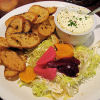

Dark Days Ticker — January 16-30
– Dark Days dinners at home: 7 (out of 16), plus the party food
– Locavore dining-out: Alembic, Nopa, Range
– New recipes: Pesto pinwheels, chorizo-stuffed peppers, Earl Grey tea cookies
– Old faves: Mom’s quiche Lorraine, Julia Child’s beef stew
– Freezer fodder: Linguine Bolognese, chicken & dumplings
New (to us) local items
– Cap’n Mike’s smoked salmon — red and white varieties
– Piper-Sonoma Brut and Blanc de Noirs sparkling wine
– Capellino pesto in a tub (made in SF!)
– Bellwether Farms’ pecorino-style Pepato
– La Clarine Farm’s Sierra Mountain goat Tomme
– Eatwell Farm‘s romanesco
– Happy Quail Farms piquillo peppers (last of the season!)
– Local mustards from Made in Napa Valley, Mendocino Mustard and Narsai’s
Dark Days challenge, entertaining, locavore
11 Comments »
Posted by Anita on 02.01.08 6:54 AM
 My friend Sam brought us the most fabulous hostess gift: A vintage copy of Robert Vermiere’s Cocktails – How to Mix Them. It’s a little pocket-sized gem of a book, best known as one of the first sources for the Sidecar. (It’s possible Harry MacElhone’s ABCs of Mixing Cocktails beat Vermiere to the punch, but both sport a 1922 publication date so I’m content to call it a draw.)
I spent a happy afternoon flipping through the book’s age-darkened pages, amusing myself by deciphering the spidery notes in its margins scribbled by some long-ago drinker. It’s a treasure trove of possibilities.
Alas, the spirit is willing, but the flesh is weak.
I’ve had no desire whatsoever to experiment, much less to imbibe. Like nearly everyone else in my area code, I’ve been slammed by the bug that doctors are calling the Super Cold. I’ll spare you the litany of disgusting symptoms and secondary infections, but I feel compelled to brag that I made a nurse say “Eeeww!”
After a trip to the emergency room and enough prescriptions to supply a small pharmacy, I’m finally back among the living. I even managed to have a drink or two last night. But frankly, the idea of tinkering with proportions or doing a lot of in-depth historical research is still making me a little woozy. Luckily, there were enough great bubbly-based drinks flowing at the Cockails and Canapes party that I won’t have to leave you in the lurch this week. Here’s one of my favorites:





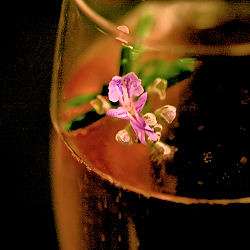
Le Mistral Mauve
1/2oz to 1oz creme de violette
1/2oz rosemary-infused simple syrup, or to taste
Brut Champagne or other dry sparkling wine
Measure the violette and rosemary syrup into a Champagne flute. Top with a dry bubbly, and garnish with a blossoming herb. (We used rosemary, but any pretty sprig will do.)
To make rosemary syrup, measure equal parts water and sugar into a saucepan. Bring to a simmer over medium-low heat, and stir occasionally until sugar is completely dissolved. Add a large bunch of rosemary to the pan, and remove from the heat. Allow the rosemary to steep in the syrup until its flavor is very pronounced. Remove the rosemary, and strain the syrup through a fine sieve (or a coffee filter, if you want to be fancy).
I usually add a fresh sprig of rosemary to the syrup bottle; it reminds me what’s inside, and has the side effect of looking rather charming. Flavored syrup keeps in the refrigerator for at least a week. Other drinks that use rosemary syrup include the Gin-Gin Cooler and the Rosemary Five; It’s also lovely in sparkling water as a homemade soda.
EDITED TO ADD: If you can’t find creme violette in your area, Monin makes a lovely non-alcoholic violet syrup that you can use in its place. Lots of restaurant supply stores sell these syrups, or you can buy them on Amazon.
Drink of the Week, drinks, recipes, wine & bubbly
9 Comments »
Posted by Anita on 01.25.08 10:34 PM
 We haven’t gone in much for New Year’s resolutions this year, but we are making a few small changes. As part of our Dark Days Challenge (and as a side effect of finally finishing reading Omnivore’s Dilemma, two years behind the curve) we’re moving more of our food-budget dollars around. We’d already dabbled a bit in acclimating our palates to grass-fed beef, and we’re going to get more serious about it this coming year.
But possibly the largest change — one that has an effect on something we eat literally every day — is making the switch to pastured eggs. As I mentioned in the comments to our last Dark Days post, I finally decided that spending the extra cash for ethically raised eggs was really not going to put a huge dent in the food budget. But man, $7 a dozen feels extravagant when you’ve been spending $2.25 for quasi-organic eggs.
Which brings me to one of my first food discoveries of the new year: Just because you buy your eggs from a joke-cracking fella at the Ferry Plaza market doesn’t mean they’re ethically raised. (If you get your eggs from Judy’s Family Farm or any of the other eggs at the stand across from June Taylor, do yourself a favor and click that link.) Needless to say, I was pretty pissed off to discover that I’d been duped by what Michael Pollan might call “farmers market pastoral.” It took a dose of righteous anger to open my eyes: A $5-per-week premium isn’t outrageous. It’s a tiny fraction of our food budget, and a drop in the bucket compared to the cost buying of ethically farmed meat.
 With that little surprise under my belt, I reluctantly started digging deeper into the true origins of other items that I’d previously assumed were sustainably produced. Much to my pleasant surprise, Clover Organic and a number of other brands I suspected might be greenwashing were entirely on the level. (I’m not sure whether I was more shocked by my egg supplier’s betrayal or the honesty of one of the area’s largest dairies.)
But back to the sunny side: Putting together Dark Days meals continue to feel far too easy. Our summer of canning, salting, freezing, and otherwise preserving the harvest is paying off in spades; sometimes dinner’s as simple as opening the freezer, thawing a bag of protein, and heating up a starch and a farmers market vegetable to go alongside.
We’ve also managed to add a number of new local items to our roster of ingredients. In the first half of the month, we sourced Liberty duck from Sonoma County Poultry (Penngrove – 48 miles); Giusto’s flour and baking soda (South San Francisco – 8 miles), and of course those Eatwell Farm pastured eggs (Dixon – 67 miles).




Dark Days Ticker — January 1-15
– Dark Days dinners: 7 (out of 15)
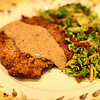
– New recipes: Duck burgers, country-fried steak, Cornish pasties
– Old faves: One-day cassoulet (leftovers)
– Freezer fodder: Chile verde tacos; gravlax; linguine Bolognese; fusilli marinara
Dark Days challenge, locavore, shopping
13 Comments »
