Posted by Cameron on 07.18.07 11:22 PM
 Welcome to part two of our garden tour! A little over a year ago, we landscaped the dirt-and-weed festival behind our house, using edible (or fruit-producing) plants wherever possible. This summer, our patch is coming to life, and we’re giving you a virtual look around.
During our last visit, we met Unruly Lavender and Lazarus the Lemon Verbena. Today, we venture into the Northside Fruit Preserve.
Just past Lazarus, at the corner of the deck (which marks the northwest corner of the garden) is our Santa Rosa plum tree. We have been advised by wise people that fruit production won’t really kick in until next year, but we’re getting a few this year, and they’re really tasty.
As we step away from the deck, we meet the next member of the Northside Preserve: a makrut (kaffir) lime tree that is far happier in our dry, cool Mediterranean climate than I would have thought possible. We know of at least one other person with a successful makrut lime who lives not far from us, but I am still bemused by this enthusiastic little refugee from the tropics. We will never lack for leaves in our Thai culinary adventures and it’s starting to look as if we may see some limes this year. They’re not much as fruit, but the zest is useful.
Tucked far too close to the fence in the northeastern corner is our bergamot tree. It seems to be doing well, although it hasn’t decided to go all lush with the fruit yet. I’m torn between a desire to prune it and the feeling that I should just let it do its thing. I’ll probably nip it a bit to give it some shape the next time I’m wandering around with the appropriate implements.
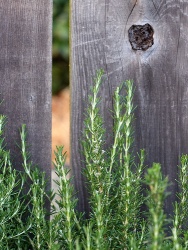
Around the base of our mini-orchard, we have two rosemary plants that are doing their best to imitate kudzu. I can’t say that I’m surprised, as rosemary grows absolutely everywhere in San Francisco. These specimens have contributed spears and leaves to everything from the Rosemary Five and Gin-gin Cooler to steak fiorentina.
Along much of the eastern wall of the garden, there is really nothing to eat, although that will change if the fennel that I just planted takes hold. In the meantime, a line of lilies and the magnolia tree are the lone survivors from the yard’s previous incarnation. The magnolia turned out to be beautiful once it got a haircut, with a main trunk sporting white blooms next to a cluster of volunteer shafts that produce purple flowers. They all seem like they’re from the same root structure down underneath the ground, but I’m not entirely sure how that’s possible, given the combination of blossom colors.
In the southeastern corner (again, too close to the wall), a Meyer lemon tree is holding its own against the magnolia. This tough trooper started delivering fruit practically as soon as it was planted and bids fair to give a repeat performance this year. I can’t wait. For a boy raised on New England summers and snows, there are few things as satisfying as nipping out to the garden for a fresh lemon.
Next: Dog-eating vines? Thyme will tell!


garden
2 Comments »


Posted by Cameron on 07.11.07 11:46 AM
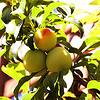
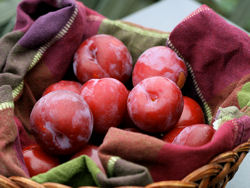 All spring, we watched the stone fruit come in at the Ferry Plaza farmers market. This year I noticed the cherries first, followed by peaches and what seems like a ridiculous bumper crop of apricots. Meanwhile, our young Santa Rosa plum tree poked lazily through its growth cycle. Flowers came and went, followed by small green globes that grew slowly and eventually blushed yellow.
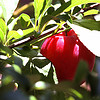
Looking back, I had a very funny reaction. Even as the fruit passed through red on their way to purple, I didn’t think, “Those will be ready to eat soon.†Instead, I marveled at how impossibly bright they seemed and wondered if there was any way to capture the ghostly neon luminescence with a camera. The branches of our bergamot and lemon trees had been bare for so long that fruit was something that we bought at the Ferry Plaza. I had unwittingly come to see our own plum tree as a pretty abstraction.
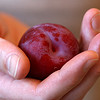
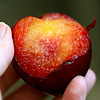
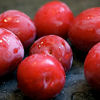
Then I walked out into the yard last week and found that a plum had dropped to the ground. I didn’t think too much of it. The plum didn’t really look ripe and it felt a bit hard, but it did smell good. I took it up to the kitchen and called Anita to look. We took a few pictures, and then I cut into the fruit with a small knife and everything changed.
The juice ran out over the blade of the knife and my hand and dripped on the floor. Startled, I moved over to the sink, finished cutting a wedge, and ate it. The flesh was sweet, and tart near the skin, and it was as juicy and wonderful as any plum that I had ever eaten. Anita and I shared the rest of the plum through big goofy smiles. This was what we had to look forward to. We had loved our tree and it was becoming real.
The next day, there were more drops. I gathered three, and then a fourth and a fifth. Cradling them against my chest, I reached up and pulled gently on another likely candidate. It whispered free into my hand. I ran upstairs, deposited my load and returned with a bowl, circling the tree and tugging gently on the ripe fruit, until I had 13 in all.
We never thought that we’d eat them all before they went soft — we don’t usually keep fresh fruit for snacking. But these little devils are scandalously fragrant and once I smell one, I have to eat it. Anita has plucked more while I’m traveling in NYC, and we’ll soon have enough for a batch of brandied plums.
I still can’t believe that we’re growing fruit in our back yard. I left town on Sunday, but Saturday morning we were at the market as usual. I stopped at one of the stalls where we’d bought peaches, picked up one of their Santa Rosa plums, sniffed it, and then tasted a sample wedge. It was good. I like mine better.
garden
6 Comments »
Posted by Cameron on 07.06.07 7:01 AM
 Not too long ago, we got together with our neighbors Erik and Mrs. Flannstad for an absinthe tasting. We cracked open our new bottle of Lucid, the first true absinthe to be sold legally in the United States in nearly 100 years. Our guests generously offered to share tastes of two absinthes that they had brought back across the pond: Jade 1901 and Fougerolles.
As we dripped cold water over sugar cubes and watched the clear green fluid louche, I was struck by the historic nature of our ceremony: It is no small thing to be a party to the greatest snake-oil scam of the last three centuries.
Like many of today’s cordials, absinthe was first promoted as a medicinal elixir. The benefits supposedly arose from the combination of anise, fennel, and grande wormwood, and it was given to French troops as a fever preventative. When the drink became spectacularly popular in France by the late 1800s, it captured the palates and imaginations of several well-known artists, and the allure of the liquor shifted shape. Absinthe, no longer medicine, acquired a reputation as a mind-altering hallucinogen. By 1915 it was considered so dangerous that it was banned in several countries, including France and the United States.
Alas, recent studies have proven that absinthe does not cause hallucinations. I wasn’t able to find anything written on its efficacy as a fever remedy, but I don’t anticipate absinthe putting aspirin or ibuprofen manufacturers out of business any time soon. Nevertheless, the legend, mystique, and flim-flam continues, thoroughly documented by the Wormwood Society and La Fee Verte Absinthe House. The story of a humble patent medicine that grew into a potion so potent as to be banned on two continents is one that would bring a tear to any huckster’s eye.
Happily, absinthe also makes a pleasant drink, and we had fun tasting and comparing the three examples. Of the three, the Lucid was the sweetest and least complex. Despite bringing up the rear in our taste test, Lucid has two strong points in its favor. First, it strikes far closer to absinthe’s correct flavor profile than any of the current substitutes. Second, its modest price and local availability means that absinthe once again becomes fair game for mixological experimentation.
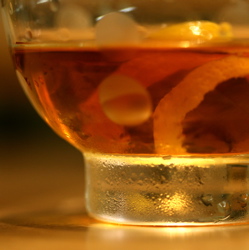
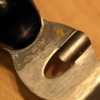
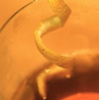
Sources tell us that many cocktails made with pastis (a la Ricard or Pernod) were originally made with — you guessed it — absinthe in the days before the ban. One such recipe, the venerable New Orleans staple known as the Sazerac, looks on paper like a shot of whiskey with some incidental flavorings. But a well-made Sazerac honors its pedigree: One of the oldest of all cocktails, it’s a parade of enchanting flavors that starts with lemon and ends with an herbal snap. Make it with the original American whiskey — rye — in place of that johnny-come-lately bourbon, and you’ve got a taste of cocktail history in an old-fashioned glass.


Vieux Sazerac
1/2 tsp absinthe
1/2 tsp simple syrup
2 dashes Peychaud bitters
2 oz rye whiskey
lemon twist, for garnish
Add the absinthe to a well-chilled old-fashioned glass, and roll it around to coat the inside of the glass. Pour out the excess, leaving a small puddle in the bottom of the glass. Add syrup, bitters, and rye; stir, and garnish with lemon twist.
Note: As this drink lacks ice, think “extra frosty” when chilling the glassware.
Drink of the Week, drinks, recipes
8 Comments »
Posted by Cameron on 06.29.07 7:03 AM
 I am not an enormous fan of rum, except for when I’m vacationing in a tropical clime. Then, it’s practically the only thing that I want to drink. I blush to think of how many Painkillers I put away during our too-brief trips to the British Virgin Islands, and as soon as my feet touch the ground in Hawaii, I develop a thirst for Mai Tais that strains the bounds of good taste.
But take the boy out of the tropics and the desire fades. The fruity mixtures never taste as good back in the real world, and when the going gets hot, I’d just as soon have a tequila (or gin) and tonic or a cold beer.
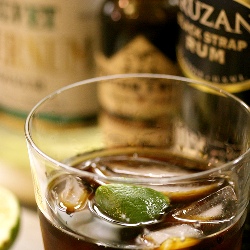
This week’s drink may change that, as I’ve fallen in lust with Cruzan Black Strap rum. It’s the perfect liquor to have a summer fling with: a bold, sexy troublemaker that dares you to stay out late. You know that by the end of the summer it will seem pushy and cloying, but until then: wow, what a body.
The enabler of my infatuation is the Corn ‘n’ Oil, a traditional drink from Barbados and other points Caribbean. The essential ingredients are rum and falernum — beyond that the proportions and additions vary greatly. For the rich, sweet Black Strap, use the recipe below. If you’re using a paler rum, double the falernum and ease off on the bitters and lime.
Want more? Allow me the honor of introducing you to several worthies who have written extensively on both the provenance of the drink and the history of (and creation of): falernum. Like the man said, I stand on the shoulders of giants.
Corn ‘n’ Oil
2 oz Cruzan Black Strap rum
1/4 oz Velvet Falernum
2-3 dashes aromatic bitters
Juice of 1/4 lime
Build over ice in double old-fashioned glass.


Drink of the Week, drinks, recipes
3 Comments »
Posted by Cameron on 06.28.07 7:00 PM
 At the beginning of June, we celebrated our fifth anniversary and spent part of the weekend in Napa. One of the highlights was a stop at Hoffman Farms. As Anita has written, we picked seven pounds of green walnuts in the dappled shade of a stand of trees that pushed up from dry, level soil.
Mr. Hoffman was kind enough to tell us what to look for as we picked, and we had the pleasure of chatting with him about his farm while we visited. Being around so many growing things started me thinking about our own garden — the experiment in edible landscaping that we began shortly after we moved into Chez Moultrie.
When we bought our house, the back forty (feet, that is) was absolutely disgusting: a flea-infested dirt-pit and dog-toilet, dominated by a sterile avocado tree, a junk fruit tree, a bottlebrush tree, and a badly overgrown magnolia. The avocado was as tall as the house and leaning dangerously, the “fruit” tree produced small cherry-like things that tasted awful, and the bottlebrush was also as tall as the house and sported a canopy at least 20 feet wide. Even though we had a list of house renovation projects as long as the trees were high, we had learned our lesson from a previous series of “why didn’t we do that sooner” landscaping episodes. The backyard would be our first project.
As our guiding principle, we decided that we would only choose plants that would produce fruit or could be eaten. We had a couple of must-haves (or rather, “hope-they’ll-grows”), and we enlisted a local landscaper to help choose the rest. We started work in March 2006, and by the end of May our backyard was transformed. Just slightly over one year later — and with summer beginning — it seems like a good time to take a full tour. I’ll spread it out over a few episodes so that we don’t get too tired. Put on your grubbies, and let’s get started.
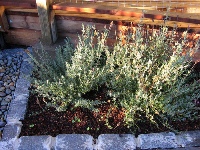
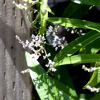
We enter the yard from the lower deck, down a couple of steps to the patio. On the left, you’ll notice our bed of lavender. If it looks a bit disheveled, it’s because I took to it vigorously with the clippers a few weeks ago. If there’s one thing that I can’t abide, it’s uppity lavender, and this pack had started acting like it owned the place. Nevertheless, it’s pretty and it smells good. Unfortunately, smelling good is about all that this particular breed is good for; I asked for lavender, but I didn’t specify the type, and our type doesn’t do so well for cooking. On the bright side, the flowers make a very pretty garnish and if we need insecticide or air freshener, we’re all set. Live and learn — and maybe rip and replace with a culinary variety next year.
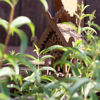
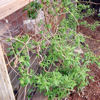
Continuing along the deck fence line, we see Lazarus the Lemon Verbena. This past winter, while facing a Day of the Triffids-caliber invasion of oxalis and other assorted weedy marauders, I’m ashamed to say that I resorted to chemical defenses. Powerful chemical defenses that came in spray bottles with warnings on the back and front. Careful as I was, some of the nearby plants paid an awful price including, I thought, the verbena. Within days, every single green leaf turned brown and dropped off, leaving behind a bleached tangle of branches lashed to the fence like a skeleton in a roadside gibbet.
Crushed and guilty, I wrote it off but left it in place, lacking the time or the energy to tear it out. Lo and behold, as winter turned to spring, the small green tips of fresh leaves poked out on a few branches. Today, it swaggers with such rude health that we’ve stopped shooing the dogs away from it; as far as they’re concerned, it’s one big salad bar. Did it really die and return to life? Well…no. My adventures with weed control happened to coincide with a few frosty evenings and the leaf drop was as natural as the seasons turning. We haven’t yet made the verbena the subject of a food project, although it did play a supporting role as garnish in last week’s Le Bourget. But the plant is waving about with such vigor that it’s only a matter of time — I’m sure it could spare a few leaves so that we can try our own version of Shuna’s verbena-infused ice cream, or perhaps an infusion.
And even though the verbena was just doing what plants do, the shower of brown leaves was an accusation as penetrating as the beating of that tell-tale heart. I don’t know what I’ll do when the next rainy season animates a green army of weeds, but I’ve sworn a mighty oath to resist the lure of chemical solutions (if you’ll forgive the pun). As I write this, I’m waiting for the sun to go down so that I can retrieve the container of ladybugs currently hibernating in our downstairs refrigerator and release them in the yard: a beetle Delta Force ready to kick some aphid butt.
Next time: The Northside Fruit Preserve and the magnolia that goes both ways!

garden
3 Comments »
Posted by Cameron on 06.06.07 8:40 AM
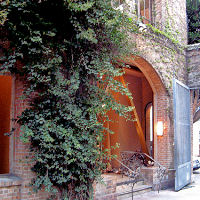 The descriptions of the food, physical locations, and presidential travel are either factual or based on our own experiences. The rest is best described like this…
Once upon a time, there was a restaurant named Hawthorne Lane. It was a very fine restaurant, with white tablecloths and brightly polished silverware. The restaurant was quiet and serious, with well-mannered waiters who would ask if you cared for another glass of iced tea—served with a miniature pitcher of sugar syrup—or perhaps some more wine.
The restaurant lived on a little stub of an alley that was also called Hawthorne Lane. Hawthorne Lane (the alley, not the restaurant) wasn’t a very large alley, but it was also very fine, with tall brick walls covered with ivy, and arches to walk through.
Hawthorne Lane (the restaurant, not the alley) was successful. It served delicious food to people who dressed well and enjoyed being asked if they cared for another glass of iced tea, or perhaps some more wine. Everyone thought very highly of the restaurant and told it so. One day, the president of the entire country came for lunch, and his big Southern laugh could be heard echoing through the ivy-covered arches.
But one evening—as it watched the light glow through its windows and listened to the thousand tiny clinks of polished silverware—the restaurant noticed something that it had never seen before. While everyone seemed to be enjoying themselves, they also seemed to be working very hard, not just the waiters and the cooks, but even the guests. When they talked, they were careful to keep their voices evenly pitched. Even when they laughed—which happened often, because the restaurant was truly pleasant—they seemed to catch themselves, as if everything that they did needed to be as brightly polished as the wine glasses, as crisply starched as the linens.
When the restaurant realized how hard its guests were working, it became sad. It wondered if being fine and well-mannered made everyone just a tiny bit uncomfortable. And—after much thought—it decided that it would rather be a restaurant where people felt relaxed when they visited.
Away went the white tablecloths and the elegant dining room. In came dark wood paneling and light fixtures that looked like grass skirts made out of tan suede. There was also a chandelier that looked like it was made out of real antlers, because the restaurant thought that it ought to have one thing that was very silly, and the chandelier was very silly indeed.
The waiters were outfitted in T-shirts and sleek trousers. The service was a bit less polished, but it was undeniable that everyone was having more fun, which helped the guests to feel comfortable. The host dressed smartly in a suit and tie, but he also wore canvas sneakers, knowing that it was important to be just a little bit silly. Instead of quiet music, the restaurant played rock-and-roll, including Emotional Rescue by the Rolling Stones, because it liked the part at the end of the song where Mick Jagger talks about riding a horse across the desert.
The restaurant created an interesting cocktail list with lots of inventive drinks. One of the best was a hold-over from the restaurant’s past, a Greyhound-like drink called the Royal Hound with very tiny, very delicious pieces of dried grapefruit stuck to the rim of the glass. The restaurant found a clever wine expert, who created a new wine list with a section of 50 wines priced less than $50 per bottle, because it wanted its guests to feel like they could try different things without worrying about the price.
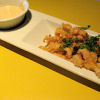
The restaurant thought that the food on its new menu should be less proper than before, but still interesting and exciting. It greeted each guest with a plate of crunchy, cheesy crackers and small, rich chive biscuits that disappeared so quickly that the restaurant wondered how anyone could possibly eat them so fast.
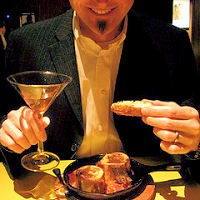
Wanting to serve food that made people feel comfortable, the restaurant offered an absolutely delicious chopped salad, and a tasty wedge of iceberg lettuce with St. Agur blue cheese dressing. There were richer starters, such as potato skins with very good housemade bacon, and deep-fried clam strips with tangy aioli. The appetizer list also included unusual foods like headcheese and marrow bones, both of which were well prepared indeed. One of the visitors didn’t like the tomato sauce that came with his bones, but he happily ate all the marrow anyway.
The restaurant struggled a little bit with its pasta courses; the pappardelle with peas and ricotta was heavy and bland, and the rock-shrimp linguine was rather ordinary. However, the guests liked the spaghetti dressed with uni and breadcrumbs, remarking on how comforting and homey the dish tasted, in contrast to how unusual it sounded.
The restaurant recovered its balance for the main courses. The pork schnitzel was perfectly fried, juicy, and not the least bit greasy; braised lamb cheeks on polenta had at least one person licking the plate. If the hamburger was somewhat dry, at least it was cooked medium-rare all the way through, just the way the guest had asked.
That only left the dessert menu, and the restaurant had to admit that it was puzzled, as one couple absolutely did not like any of their desserts. On one night, they complained that the jelly doughnuts were overfilled. On another night, they said that neither the ice cream nor the cookies in the baby ice-cream sandwiches tasted at all good. The restaurant understood that not every person would like every dish, but it couldn’t understand why these two were so upset when so many other people said nice things about the desserts. But the restaurant was a very wise restaurant and understood that these were small problems. And that there’s no pleasing some folks.
The restaurant has been busy for several months now, content with its new look, new mission, and new name. It is quickly winning new friends, as people visit and tell others that they should go. Some diners are drawn by the buzz, as restaurant-goers often are. Others hold memories of what the restaurant once was, like the young lady who popped in one day looking for the old, elegant, white tablecloth restaurant. Maybe she wanted some of the iced tea served with the little pitcher of sugar syrup. The host in his suit and basketball shoes smiled at her.
“We used to be Hawthorne Lane, but not anymore,” he said. “Now we are Two.”



Two
22 Hawthorne Street
San Francisco, CA 94105
415 777-9779
downtown SF, restaurants
1 Comment »
Posted by Cameron on 06.01.07 7:05 AM
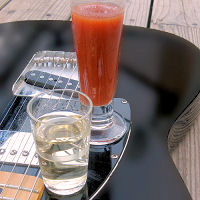 I felt a bit odd concocting this week’s entry, given that I had never before had an authentic sangrita — by which I mean served in a roadside shack in Mexico, or in a dark Mission District dive drawing inspiration from our friends to the South. Truth be told, I’d never even had an inauthentic sangrita — served anywhere. Given my fondness for tequila, this seemed an odd state of affairs. A post from Steve over at Rancho Gordo extolling the virtues of “a shot and a sangrita” inspired me to correct this deficiency.
I was initially concerned that my lack of personal experience with the drink might prove to be an obstacle, but my research provided me with great comfort. As far as I can tell, if you ask fifteen sangrita aficionados to list the drink’s ingredients, you will get fifteen wildly different recipes and possibly an entertaining fistfight, depending on how many of the aficionados are in the room at the same time and how much tequila they’ve had.
Most of the sangrita recipes that I found started with some combination of tomato juice and citrus — usually orange juice. The next most common ingredient was grenadine or pomegranate juice. After that, ay dios mio, baby, just go to the vegetable market, close your eyes and point. I found instructions for chopped onion, chopped jalapeno, lime juice, chipotle powder, dried chopped ancho chile, Tabasco, cayenne pepper, chili powder, and lemon juice. I’m sure that there are even more exotic mixtures lurking in the darkness. I’m just happy that I stopped before I found anything that would require the services of an entomologist.
We tested recipes that included nearly every ingredient mentioned above, but ultimately settled on a combination of juices without a lot of additional hoo-hah. The key was achieving a balance between the tomato and fruit juice flavor — a process that required countless hours of selfless taste-testing… all in the interest of you, our faithful reader. With that done, we found that all of the other exciting additions just got in the way, added to the prep time, and made the drink grainy and unpalatable. Our winner was loosely based on a recipe from Rick Bayless’ Authentic Mexican. The beauty of this concoction is that you can easily adjust the proportions to your taste.
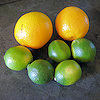
A few words about the ingredients: The orange juice was freshly squeezed; storebought juice will be more acidic and not as sweet. You can substitute grenadine for the pomegranate juice, but the result will be much sweeter. It’s worth the time to make your own good-quality tomato juice — all you need is a blender or food processor, a fine metal sieve, and some canned tomatoes.
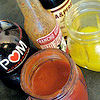
Finally, skip the Tabasco, Tapatio, or other vinegar/cayenne sauces in favor of a good quality hot sauce that adds flavor as well as heat. We used Frontera Red Pepper Hot Sauce, which is, coincidentally, the bottled version of Bayless’ Chile de Arbol Hot Sauce, another recipe from Authentic Mexican. These days, the Frontera line is available in most grocery stores; you can also buy it online. Por supuesto, we got the very best results using Rancho Gordo Rio Fuego Very Hot Sauce, but we are impossibly biased.
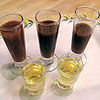
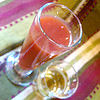
Sangrita Casada
makes four shots
4 oz. tomato juice
2 oz. orange juice
2 oz. lime juice
4 tsp. pomegranate juice
1/2 tsp. hot sauce
1/8 tsp. salt, or to taste
6-8 healthy dashes Worcestershire sauce
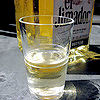
Combine all ingredients in a glass container, and chill well in the refrigerator. When thoroughly chilled, divide into 4 shot glasses, and serve alongside 4 shots of good-quality gold tequila, preferably reposado. Sip… first the tequila, then the sangrita.
Drink of the Week, drinks, Mexican, recipes
11 Comments »
Posted by Cameron on 05.17.07 5:23 PM
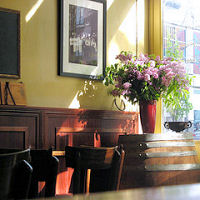 Seattle must have missed us, because she tucked away her raincoat and put on her cutest spring dress for our recent three-day-weekend trip. Not that we would have cared if it had poured rain for 72 straight hours. Well, maybe a little. But the sunshine rounded out an amazing trifecta of food, friends, and fantastic weather.
As soon as we checked in at the hotel, we headed over to ‘Seattle Customs and Immigration’, better known as the Zig Zag Cafe. Anita has already posted about that stop, but I’ll just add that the joint was as packed as we’ve ever seen it. The revival of the cocktail and a couple of years of steady national press, including a spot for Murray on Playboy’s Top 10 American Bartenders list, have alerted the rest of the world to the magic happening there.
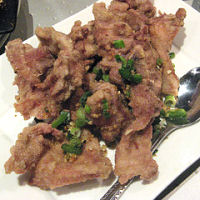 We usually keep to ourselves on our first night in Jet City, but we weren’t surprised to run into several friends at the Zig Zag, including Rocky (a.k.a. Old Two Livers). When the lights went on and the chairs went up on the tables, we followed Rocky to The Purple Dot in the International District. The menu at the Purple Dot reads like a description of a catering accident at the United Nations, and we took full advantage, ordering beef internal delicacies (belly, tendon, and tripe), soup noodles with beef and fish balls, beef curry, spaghetti with ham and chicken, and salt-and-pepper pork ribs. This is stuff that’s meant to be eaten at 3am with a serious load on, but I’d go back for those ribs at any time of day or night.
Dawn’s early light made way too much noise on Saturday morning, accompanied by a call at 7:30am from our remodel contractor spouting incomprehensible (and ultimately inessential) gibberish. Seeing round out of one eye and square out of the other, we shaped up as best we could and set course for the Steelhead Diner by way of the Daily Dozen Donut Company at Pike Place Market.
 We figured that a mixed dozen baby doughnuts would be essential sustenance for a wait for brunch at the Steelhead, as it was close to noon on a bee-yoo-tifful Saturday. There was no line, but we killed some time snarfing doughnuts and replenishing the world’s stock of pictures of the Market’s famous sign. As it turned out, that bag of pastry would be the best thing that we’d eat that morning.
Despite a promising menu packed with foodstuffs from local purveyors, the half-empty Steelhead took nearly 45 minutes to deliver disappointment on white plates. The fish portion of my fish and chips was pretty good, but the chips absolutely sucked. The whole plate cost $16, and they didn’t even put bourbon in it or anything. Anita’s eggs Ellenburg — a Sysco-style chicken-fried steak topped with (broken!) fried eggs and a terrible sausage gravy — was stunningly bad.
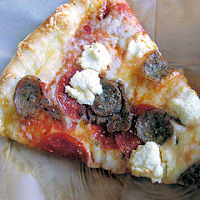 Salvation lay only a couple of hours away. When the mid-afternoon turned peckish, we decided to visit our friend Jason at his ‘office’: Pagliacci Pizzeria in Lower Queen Anne. We ordered a couple of slices, sampled the monthly special ‘za (Portabello Primo: yum!), and re-acquainted ourselves with the sorely missed Pagliaccio salad.
After a quick stop at the hotel to freshen up, we met a crew of friends for drinks at the stylish, strikingly beautiful Vessel. Read Anita’s review and go now: This winning combination of smart, solid cocktails, tasty nibbles, and attentive, welcoming service is already drawing crowds.
From Vessel, we taxi-ed over to Tavolata, a new Belltown Italian venture from Union superchef Ethan Stowell. With a little help from a friendly kitchen, our posse of eight serious eaters managed to sample almost the entire menu. It was all very, very good, right down to the lemon zeppole for dessert. (How can you argue with a day that begins and ends with doughnuts?)
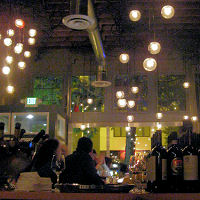 Two weeks later, Anita is still dreaming about this meal. Ethan’s crew is making most of their pasta from scratch in a basement workroom filled with flour-grinders, dough-extruders, and restaurant-sized rollers. And, while the secondi are glorious — both the Fiorentina-style T-bone and the double-cut pork chop are among the best meat dishes of the year so far — the pasta is amazing and totally different than anything else in town. Out of a near-dozen options, we sampled eight and there wasn’t a clinker in the bunch, from familiar standbys like a heart-stoppingly good rigatoni in tomato sauce to more-adventurous recipes like gnocchi with bitter greens.
Mind you, this was after we’d eaten our fill of gorgeous starters like cork-shaped fried polenta with bagna cauda, asparagus and fried duck egg topped with shaved Parmesan, octopus and bean salad (which will win over tentacle haters), and house-made mozzarella cheese served with a hazlenut-butter crostino. And they serve all of this gorgeous fare until 1am daily — sure beats the pants off of Beth’s.
 One of the pleasant hazards of visiting our second home city is that we have a long list of ways to complete the sentence, “A visit to Seattle wouldn’t be complete without…” Sunday morning, the Mad Libs answer was, “brunch at Cafe Campagne with friends: ouefs en meurette, ouefs en cocotte, bloody marys, and bowls of cafe au lait.” We filled in another blank later that day with “…pizza and pasta at Cafe Lago,” with Tea and Carla.
Our last day was a bit of a struggle, food-wise. Breakfast: indifferent ouefs plats (but fabulous conversation and to-die-for morning light) at Le Pichet. Lunch: Lots of laughter (and friendly staff) at Bernard’s on Seneca, a “morbid curiosity” favorite as much for its “Germans storming the castle” decor as for the surreal food.
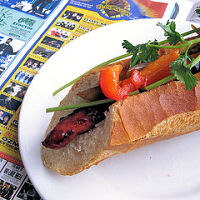 The lone bright spot for our tastebuds on Monday was a pint of cream ale at Hale’s Ales. We knew better than to try and eat at the pub, and decided to grab a pre-flight late afternoon snack at Baguette Box as we passed through lower Cap Hill. Can we say it? We are completely over this place. Every time we go, poor execution torpedoes a nifty “bahn mi-goes-global” sandwich-shop concept. And they’re always out of the first two things I want to eat… argh.
The rain began to fall as we drove south to the airport, and the droplets obscured the glimpses that we were catching of the skirts of Rainier. The distant mountain just barely peeked through the haze that erases her enormous presence even when the day seems clear and bright. We waved and said goodbye. Maybe she’d come out for our next visit — one of the many dear friends that we look forward to seeing again.
ps: You can see photos from all 15(!) food and drink stops in our Seattle Collection.
Purple Dot Cafe
515 Maynard Avenue South
Seattle, WA 98104
206 622-0288
Daily Dozen Donut Company
93 Pike Street (Pike Place Market)
Seattle, WA 98101
206 467-7769
Steelhead Diner
95 Pine Street
Seattle, WA 98101
206 625-0129
Pagliacci Pizzeria
550 Queen Anne Avenue North
Seattle, WA 98109
206 726-1717
Tavolata
2323 Second Avenue
Seattle, WA 98121
206 838-8008
Cafe Campagne
1600 Post Alley
Seattle, WA 98101
206 728-2233
Cafe Lago
2305 24th Avenue East
Seattle, WA 98112
206 329-8005
Le Pichet
1933 First Avenue
Seattle, WA 98101
206 256-1499
Bernard’s on Seneca
315 Seneca Street
Seattle, WA 98101
206 623-5110
Hale’s Ales Pub
4301 Leary Way NW
Seattle, WA 98107
206 782-0737
Baguette Box
1203 Pine Street
Seattle, WA 98101
206 332-0220
bar culture, breakfast, Italian, restaurants, Seattle, travel
2 Comments »
Posted by Cameron on 05.11.07 7:00 AM
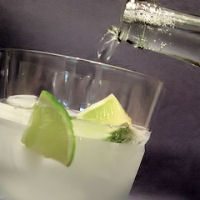 I can’t remember exactly when I first tried a tequila and tonic, but I can remember why: I was searching for a standard drink. I wanted to have a drink in my mental back pocket that I could order when the specialty cocktail list got too goofy. Or when I’d arrived late and everyone else was already halfway through their glasses and a waitress was asking, “And can I get you anything?” as she whooshed by on her way to another table. An easily-described drink made out of ingredients available pretty much anywhere, one that even the most ham-handed bartender couldn’t screw up too badly.
I started from a gin and tonic baseline. Rum and tonic was too sweet. Vodka and tonic just tasted like tonic. I never tried bourbon and tonic, because that’s just too weird even for me. But one night I asked for a tequila and tonic with a lime, and I’ve never looked back. Tequila and tonic trades on the same bittersweet, citrus pleasures as the gin and tonic, but substitutes spicy roundness for medicinal bite.
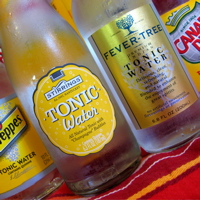 These days, I’m looking forward to a tequila and tonic at the homestead even more than usual, as the renewed national interest in cocktails has spawned a couple of boutique tonic waters. So, as part of the Drink of the Week and Mixology Monday festivities, we rounded up a couple of the new entries–Stirrings and Fever Tree–to put them to the test against the supermarket standbys: Schweppes and Canada Dry.
The results were interesting. Canada Dry was the clear loser with a Two Tongues Stuck Out in Disgust rating; “Overly sweet and chemical-tasting,” said our panel. Our tasters were also a bit disappointed by the Stirrings tonic. It had the advantage of tasting like natural product, but was nearly as sweet and oddly fruity as the Canada Dry. The second mass-market entry, Schweppes, fared better, although it brought out the boozy, horse-blanket nature of the tequila. The overall winner was the Fever Tree tonic, which balanced sweet and bitter and added welcome herbal notes.
Purely in the interest of science, we also compared the two supermarket brands in multiple formats: 10-ounce bar bottles and liter-sized big ‘uns. Just as I’ve always thought, the contents of the larger bottles were OK when fresh, but quickly took a turn for the flat and lackluster, which further exacerbated their chemical-y, medicinal undertones.
 Tequila & Tonic
2 oz. aged tequila (we use El Jimador Reposado)
3-4 oz. good-quality tonic
lime wedge, for garnish
Build over ice. Sip suavely, Rico.
Drink of the Week, drinks, Mixology Monday, recipes
25 Comments »
Posted by Cameron on 04.20.07 7:05 AM
![cabaret [c] AEC 2007 ** all rights reserved](https://blog.marriedwithdinner.com/wp-content/uploads/2007/04/cabaretc2007aecallrightsreserved.jpg) “What a party.”
“What a party.”
I figured that we were in for a good time when we hosted Mixology Monday: how can you go wrong with champagne and fun-loving crew of cocktailian bloggers? But there’s no way that I could have prepared for this bash.
The place was the kind of mess that only a spectacular party leaves behind. Bottles of champagne stacked three deep on the kitchen counter. The compost bin overflowed with squeezed fruit and zested lemons and limes.
I shambled through the house, stumbling across glassware, napkins, and hazy flashes from the night before. I remembered a woman musing on the best cocktail for an Aquarian. An intricate lesson in granita manufacture. A heated debate over the qualities of rye. A dessicated pile of yellow strips reminds me of the impromptu peel-carving contest.
“Oh hell. It’s Thursday. ” Anita wandered into the kitchen. “That party lasted all week. I don’t know what I’m going to tell the office. And what are we going to post for Drink of the Week?”
“There has to be something here we can use,” I said, pawing through the regiment of half-empty liquor bottles standing guard on the counter: bourbon, brandy, gin, vanilla Cognac, homemade infusions, syrups. “What about this?” I waggled the bottle of Benedictine that we’d purchased to make the Pegu Club version of the Prince of Wales.
“Hang on.” Anita dove into the Web and came up with a recipe: gin, vermouth, Benedictine, and bitters. We mixed it up and clinked glasses. “L’Chaim,” I said, “Funny thing, isn’t it?”
A smile touched her lips. “Yes,” she said. “It’s a Cabaret.”
Cabaret
1 oz. gin
3/4 oz. dry vermouth
1/4 oz. Benedictine
2 dashes Angostura bitters
Stir with ice. Strain into a cocktail glass. Garnish with a brandied cherry.
Drink of the Week, entertaining, recipes
5 Comments »
