Posted by Anita on 09.28.07 7:11 AM
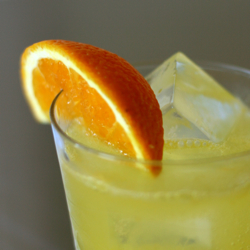 The folks at The Spirit World sure picked a doozy for the inaugural episode of their “Raiders of the Lost Cocktail” challenge. I spent many evenings thumbing through my bar library, searching for recipes featuring Liquore Strega, and found precisely one mention of this saffron-tinted herbal liqueur.
Excitement quickly turned to despair as I noted the drink’s name: The Strega-nator.
Oh, please. Spirits snob that I am, I didn’t give it so much as a second glance. There’s no way in hell I am making a drink called the Strega-nator, much less putting it on the blog. I’d never be able to show my face at Mixology Monday again! I headed back to the drawing board, muttering under my breath about slapped-together cocktails with frat-boy names, cursing the editors who foist them on their unsuspecting readers.
Next, I hit the public library. Even among dozens of titles both old and new, I didn’t uncover many options. My curiosity was piqued, though, by a UK-published book that suggested mixing Strega with Orange Smash Squash. I consulted our City’s guru of British comestibles, who promptly dashed my hopes again. Orange Squash was nothing short of “putrid” said Sam: “I wouldn’t trust anyone who suggests you put it in a cocktail.” (After having personally sampled it — I found a bottle in the British foods section at Mollie Stone’s — I’m inclined to agree. It’s something like the bastard stepchild of SunnyD and Hi-C Orange, neither of which has any place in my kitchen, much less my bar.)
Once you’ve sunk to the depths of imported kiddie-colored juice substitutes, there’s nowhere to go but up. Having all the necessary ingredients on hand, I grudgingly gave the Strega-nator a whirl. And damned if it wasn’t tasty. Especially considering that it has no base liquor as its spine, it’s a fine drink. Well-balanced, nuanced, perhaps a tad sweet for my taste, but the herbal finish is quite bewitching. After much hand-wringing, I came to the realization that we’d all lived through one Drink of the Week with a god-awful name; why not make it a pair?
Unfortunately, I can’t imagine that a cocktail recipe published 18 months ago could really be considered “lost” for the purposes of the challenge. (Unless, of course, everyone else took one look at the name and flipped right past it, too — a distinct possibility.) I’ve got a few tricks up my sleeve, plus a full bottle of Strega and enough time before the challenge ends; there just might be another entry in the works.
As Arnold would say: “I’ll be back.”





Strega-nator
– published in Food & Wine Cocktails 2006
credited to BLT Prime, New York City
2 oz Strega
1 oz fresh orange juice
1 oz fresh lime juice
2 oz chilled club soda
1 orange wedge, for garnish
Fill a cocktail shaker with ice. Add the Strega and juices, and shake well. Strain into an ice-filled rocks glass, and top with club soda. Garnish with the orange wedge.
cookbooks, Drink of the Week, drinks, other blogs
11 Comments »


Posted by Anita on 09.27.07 8:04 PM
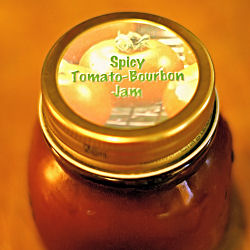 Making your own preserves may not exactly be the world’s simplest kitchen task. But if you limit yourself to a relatively small batch, and pick the right recipe — preferably one that avoids the canning process altogether — it can be a lot of fun. A lot more enjoyable than say, the back-breaking labor and knuckle-biting stress of processing 100 pounds of San Marzano tomatoes. (Details on that soon… promise.)
Tomato jam may seem like an odd beast, but it’s really not too far removed from ketchup. My favorite use for this spicy-savory preserve is spread liberally onto good Acme white bread, topped with Fatted Calf bacon and a wedge of Will’s avocado — a sort of post-summer BLT substitute. (We served tea-sized versions of these exact sandwiches at our housewarming party, and they disappeared faster than I could assemble them.) The jam also makes a glorious glaze for meatloaf, a dipping sauce for empanadas… really, the possibilities seem endless.
If you want to simplify even further, omit the seeding and straining. It won’t hurt the flavor of the final product, and it shaves another 15 or 20 minutes off your prep. Myself, I prefer the seedless version. But then, I am all about gilding the lily.
Need more bright ideas for preserving summer’s veggie bounty? Over at The Passionate Cook, Johanna’s hosting this month’s edition of “Waiter, there’s something in my…. [Savoury Preserves]”. Check back here in a few days for a link to the roundup in the comments.



Spicy Tomato-Bourbon Jam
3/4 cup sugar
3/4 cup bourbon
3/4 cup cider vinegar
3 pounds tomatoes (preferably dry farmed)
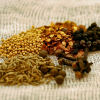
1 tsp black peppercorns
8 whole allspice berries
8 whole cloves
1 tsp red-pepper flakes
1/2 tsp mustard seeds
1/2 tsp whole cumin seeds
Combine the vinegar, sugar, and bourbon in a glass or ceramic bowl. Stir to dissolve sugar, then set aside.
Prepare an ice-bath. Stem the tomatoes, but do not score them or remove their cores. Working in batches, blanch the tomatoes in boiling water until their skins start to split — a step beyond what you’d normally do if you wanted the tomatoes to stay firm. The timing will depend on each tomato’s size and ripeness, so keep tongs or a slotted spoon handy to check them regularly. As soon as each tomato splits, remove it and plunge into ice water. Peel off tomato skins and discard.
Make a spice sachet by placing all of the spices in the center of a square of cheesecloth and tying into a bundle with a piece of kitchen string.
Set a wide-mesh strainer over a medium bowl. Pull open each tomato gently, and use your fingers to remove the seeds and seed jelly from each pocket, letting them fall into the strainer. Place the seeded tomato pulp onto a cutting board set over a rimmed cookie sheet.
When all tomatoes are seeded, rough-chop them and place them in a large saucepan along with any juices from the cutting board. Add the vinegar-sugar-bourbon mixture and the spice sachet, and bring to a boil. Do not leave unattended, as the mixture will greatly expand as it comes to a boil.
 Using a spatula or wooden spoon, push the liquid surrounding the seeds through the strainer as much as possible. (This is where much of the flavor hides, so don’t stint here.) When you’re left with a dryish mass of seeds, discard them and add the liquid in the bowl to the saucepan, along with any puree on the underside of the strainer.
Reduce the heat to medium and, stirring occasionally, cook the tomato mixture 45 minutes or until it reaches a jammy consistency. Discard spice bag and divide tomato jam among sterilized jars or transfer to a container with tight-fitting lid. Let cool on countertop, then refrigerate until ready to use.
Note: Because this jam is not processed for storage, it must remain refrigerated. It will keep for about a month, provided you use a clean spoon every time.
farmers markets, locavore, other blogs, preserving & infusing, recipes
6 Comments »
Posted by Anita on 09.19.07 11:58 AM
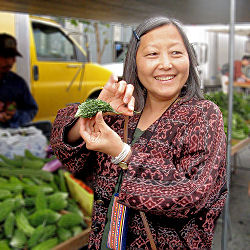 Back in May, I talked about the Thai cooking classes offered by Kasma Loha-unchit in her Oakland home, and mentioned that “Kasma’s classes, especially the beginning series, are perennially booked”. But if you get a wiggle on, you might be able to score a place in her 2008 classes, which were announced today.
Seven sets of the four-class Beginning series, which costs $170, will be offered next spring:
March: Mondays, March 3, 10, 17 & 24
Tuesdays, March 4, 11, 18 & 25
Wednesdays, March 5, 12, 19 & 26
April: Mondays, March 31 & April 7, 14 & 21
May: Tuesdays, May 6, 13, 20 & 27
Thursdays May 8, 15, 22 & 29
June: Mondays, June 2, 9, 16 & 23
There’s more information, including menus, online at Kasma’s site, although the 2008 dates are not yet listed. You can send a request to hold your space to kasma[at]earthlink[dot]net; Kasma’s husband Michael recommends that you send along second- and third-choice series the first time around, as classes really do fill up quickly.
Good luck!

classes, East Bay, Thai
4 Comments »
Posted by Anita on 09.14.07 7:05 AM
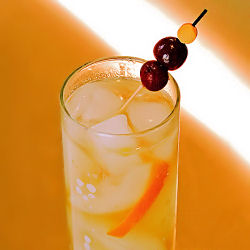 The year is 1895. In a Bordeaux village, brothers Paul and Raymond Lillet begin commercial production of a Sauternes-based elixir known as Kina Lillet. A bittersweet concoction steeped with cinchona and citrus, Lillet quickly becomes popular enough to spawn imitators, leading to an advertising campaign that encourages consumers to “avoid knock-offs.” The aperitif was (and is) often served with a citrus twist, sometimes along with ice and/or sparkling water.
The same year, across the Atlantic, a gentleman by the name of George Kappeler publishes a book called Modern American Drinks, and for the first time in print describes an old-fashioned cocktail:
“Dissolve a small lump of sugar with a little water in a whiskey-glass; add two dashes Angostura bitters, a small piece ice, a piece lemon-peel, one jigger whiskey. Mix with small bar-spoon and serve…”
Fast-forward to 2007: Cocktail purists cry out against the modern practice of befouling an otherwise respectable Old Fashioned with a shot of soda water. Some highly orthodox practitioners even go so far as to ban the presence of muddled orange, advocating a return to the absolute original. I wish I had a dollar for every time I’ve heard a cocktail geek declare the Old Fashioned their litmus test of a bartender’s skill, their canary in a cocktail coal-mine. Even the merest splash of fizz is enough to send them running out the door, or at least huddling behind the safety of the beer list.
I’m with these libational Luddites, at least most of the way. But I find a touch — not a hearty glug — of soda a pleasant lightening agent in an Old Fashioned. Omitting the orange seems a tad austere for my palate; even the otherwise old-school DrinkBoy admits that the citrus adds “some useful and interesting flavors”. Rye is my whiskey preference here, but I will not deny a well-made bourbon variation, or even scotch in a pinch. In the realm of cocktail snobbery, I’m not quite Orthodox. I’m also a fan of tinkering with tradition, of using the classics as a springboard for modern variations.
So imagine my amusement with this entry on the drinks list at Downtown, a popular pre-theater stop across the bay in Berkeley:
Fashionably Lillet: Sugar cube, a slice of orange, brandied cherry & a dash of bitters muddled together with Lillet, served tall and cool with soda.
Hey there, that’s a clever hybrid of the continental Lillet & Soda and the all-american Old Fashioned. I’ve got no way of knowing if the bartender was poking good-natured fun at the soda-scoffing set, but the name alone tells us she’s got a sense of humor.
Amused at the idea, I order one up. Alas, the pint-glass concoction I’m served falls a bit short of the mark. Lillet’s a fairly mellow aperitif, after all, and even with plenty of ice, 16 ounces of headroom means the drink ends up tasting like lightly flavored soda water. It’s also unwieldy, so much so that the straw isn’t just a clever summery touch, but a necessity. And then there’s all that muddled fruit in the glass, which gums up the straw.
Back at home, we fiddle with the ingredients and try to come up with a solution. We futz with proportions, with glassware, with preparation methods, and with ratios, all without success. We set the recipe aside, and go about our summer.
This month’s Mixology Monday theme — Fizz, hosted by Gabriel at cocktailnerd — seemed like a good excuse to take another pass. While reading up on Old Fashioned history, a line in Robert Hess’s highly opinionated recipe post catches my eye:
“…the maraschino cherry doesn’t really add anything at this [muddling] stage besides a mangled carcass and a little bit of extra sugar…”
Hmm. He’s onto something there. The next time through, I leave out the cherry, saving it for garnish. The resulting drink is better, but still fairly weak. Adding more Lillet — the natural route to a stronger cocktail — makes the drink one-dimensional; the aperitif’s mildness, in this case, is no asset.
Suddenly, the solution becomes obvious: It’s a riff on an Old Fashioned, after all — why not a splash of rye? (Bourbon could work, but I’m trying to keep the sweetness in check.) It may have taken all summer, but I’m happy with the final mix: A light, summery cooler with a nod to both sides of The Pond.



Fashionably Lillet
– adapted from Downtown
 1 cube natural sugar
1 orange slice, halved (divided use)
3 dashes aromatic bitters
1/2 oz rye or bourbon
2-1/2 oz Lillet blanc
3 oz soda water
brandied cherries, for garnish
Fill a highball glass with ice, arranging half of the orange slice among the cubes; set aside. In a mixing glass, muddle the sugar, half of the orange slice, and bitters together. Add the rye and the Lillet, and top with ice. Stir until well chilled, then strain into the prepared highball. Top with soda, and garnish with brandied cherries.
Drink of the Week, drinks, Mixology Monday, recipes
12 Comments »
Posted by Anita on 09.11.07 9:43 PM
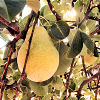
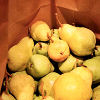
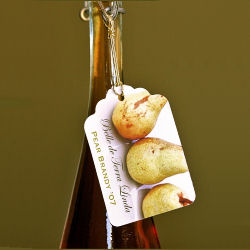 When a friend sends you home from a dinner party with a grocery bag full of her surplus fruit, there’s bound to be a bowl of pears you can’t quite devour before they get too ripe. This fact remains true no matter how many salads, croustades, soups, canapes, or batches of ice cream you make. Pear butter makes good use of these softies, of course, but there’s only so much toast — and so many hostess-gift occasions — in a year.
Preserving fruit in liquor is a time-honored way of extending its shelf life; we’ve made brandied plums many times. They’re incredibly simple to make, and they’re fabulous served warm alongside good vanilla ice cream, or baked in a boozy clafoutis. But here’s the dirty little secret: When all is said and done, the steeping liquid might even be better than the plums themselves.
One of my favorite fruit liqueurs is a pear cognac called Belle de Brillet, a spicy-sweet nip of autumn in a glass. It’s lovely all on its own, and it makes a glorious addition to Champagne (with or without candied-ginger vodka). So deep is my affection for the Belle, and so cher its pricetag, I have to ration my doses; if I sipped to my heart’s content, we’d be in the poorhouse by year’s end.
You see where all this is going, clever reader?
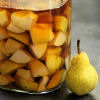
My homemade, locavore pear brandy is one of those “so-simple-there’s-no-recipe” recipes: Cut your ripe pears in half, and remove the core. Chop the unpeeled fruit into large chunks, and put them into a scrupulously clean glass or ceramic container. Top with a decent brandy — Korbel‘s based in Guerneville, if you’re keeping things close to home — and let sit, covered, for 3 or 4 days.
At the end of the steeping period, drain the brandy through a colander into a scrupulously clean glass or ceramic bowl; contrary to your frugal desires, do not press on the pears to release more juice. (If you absolutely cannot resist, press them into a separate container and drink this cloudy stuff first.)
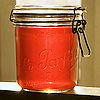
Filter the drained brandy through successive layers of cheesecloth (one layer first, two layers the next time, etc) until the mixture looks reasonably clear. Clean out your steeping jar — scrupulously, of course — and store the filtered liquid in it. Refrigerate, resisting the urge to pick up the jar and peek at it, at least overnight.
After resting the infusion, ladle the liquid through a coffee filter set into a small sieve; I complicate things by placing the filter + sieve contraption on top of a metal funnel, and draining everything directly into a large storage bottle. You may prefer to keep things simple by first straining into a bowl. (You know what kind and how clean, right?) You’ll probably want to change filters at the end of each funnel-full of brandy; the microscopic pieces of pear that you’re removing will clog the filter and slow process considerably if you re-use the filters, especially as you get to the bottom of your jar, where the sediment has collected. The more times you filter, the longer the brandy will last before developing ‘off’ flavors. I always re-filter when making smaller gift-sized bottles.
Once you get the brandy filtered, taste your final product. I found my batch to be quite drinkable right out of the bottle, but Cookie’s pears were so ripe we had to cover them with a towel to keep the fruit flies at bay. If you prefer something sweeter, feel free to add simple syrup, agave syrup, or honey to taste.
I don’t usually store my infusions in the refrigerator — alcohol acts as its own preservative — but pear brandy goes south more quickly than other fruit liqueurs. Unlike limoncello that will last virtually unchanged for a year or more, pear brandy experiences a noticeable loss of flavor by the third day. It will be delicious for weeks and drinkable for months, but it loses its evanescent crispness by the end of the first week. Enjoy it (or, better yet, share it) right away.

drinks, locavore, other blogs, preserving & infusing
12 Comments »
Posted by Anita on 09.10.07 1:04 PM
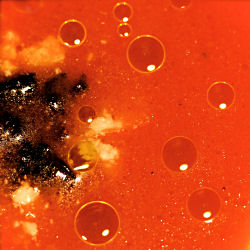 It’s been a gazpacho-filled summer for us. In addition to the traditional Spanish soup’s regular appearances on our warm-weather menus, we kicked off tomato season with Cookie’s gloriously deconstructed version, and were lucky enough to sample Sean’s gorgeous white Andalucian gazpacho, too.
Now, I love me a straight-ahead gazpacho as much as the next tomato fanatic — that magical combination of cucumber, pepper, tomato, and vinegar is nearly unbeatable when it’s too hot to cook. But with two show-stopping variations fresh in my mind, I craved something equally appealing for Tami’s second Super Soup Challenge.
Rummaging through my library copy of Mitchell Davis’s Kitchen Sense, I spied a likely candidate. Much like the watermelon salad we brought to DPaul’s party last month, this fruit-based gazpacho is actually a savory appetizer, not a dessert. But it’s still easy as pie.
After rough-chopping all the veggies — all of which are in season and readily available from local farmers markets — you simply whiz them all together with a few simple seasonings, strain out any remaining bits, and chill for an hour in the fridge. At serving time, a pair of salty garnishes teams up with your best olive oil to add a touch of contrast. Drizzling the olive oil off the edge of a spoon gives the sparkle of beautiful small droplets.
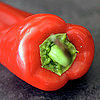
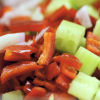

Watermelon Gazpacho
– adapted from Kitchen Sense
1 6-pound ‘icebox’ watermelon, red-fleshed
2 Kirby cucumbers or 1 hothouse cucumber, peeled (seeded, if necessary) and chopped
1 fresno chile or other medium-hot red chile, chopped
1/4 large red pepper, cored, seeded, and chopped
1/2 medium red onion, chopped
2/3 cup tomato juice
1/4 extra-virgin olive oil
1/4 cup sherry vinegar
1/2 tsp kosher salt
fresh-ground black pepper
—–
2 oz feta cheese, crumbled
3 T finely chopped Kalamata olives
your best olive oil, for drizzling
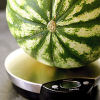
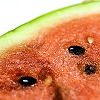
Remove the rind from the watermelon. Cut the flesh into chunks and remove the seeds, if necessary; you should have about 6 cups of melon. Using a stick blender, traditional blender, or food processor, blend all soup ingredients (except the garnishes) until well liquified — about 1 to 2 minutes. Strain the puree through a large-mesh strainer to remove any lingering seeds or other bits, pushing the pulp through with a spatula. Adjust seasonings as needed, and chill for at least an hour. Serve garnished with the feta and olives, and a drizzle of olive oil.
Serves 6 as an appetizer
cookbooks, cooking, farmers markets, locavore, other blogs, recipes
10 Comments »
Posted by Anita on 09.06.07 12:02 PM
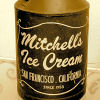
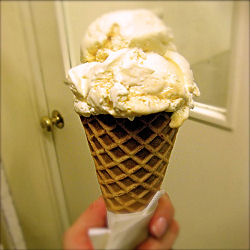 Sure, sure… we’ve all heard the swooning coming from the assembled masses lining up outside Bi-Rite Creamery. (And yes, we’re in awe of their salt-caramel ice cream, just like everyone else.) But waaayyyy down at the other end of The Mission, there’s another ice-cream shop that’s packing them in every night, just like they have since the kids in line sported white bobby socks and greased hair.
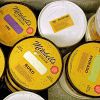
Although the days when Mitchell’s used milk from its own dairy farm are long gone, each flavor is still made on the premises in small-batch freezers. More than 50 state-fair ribbons and medals on the wall tell the story of the family’s commitment to quality.
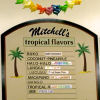
You won’t find any honey-lavender or soy-chai scoops here, but that doesn’t mean that Mitchell’s doesn’t get its gourmet groove on. The shop’s biggest claim to fame may be its roster of tropical flavors, sporting tongue-twister names like langka, macapuno, and lucuma, alongside a longer list of ‘standard’ (but still interesting) tastes. Reading the menu’s like a trip around the globe: Thai tea, Mexican chocolate, and New York Cherry are just three options. Feeling cocktailian? Rum raisin, Kahlua, and mojito might do the trick. A set of flavors rotates seasonally; peach holds court today, but pumpkin can’t be far off.
Go ahead, take a number. You’ve got plenty of time to decide…
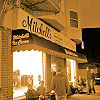

Mitchell’s Ice Cream
688 San Jose Avenue (at 29th)
San Francisco, CA 94110
415 648-2300
dessert, locavore, shopping, The Mission
9 Comments »
Posted by Anita on 08.31.07 7:02 AM
 Unless you’re a certified cocktail obsessive, you’ve probably never even heard of the gin-based cocktail known as the Blue Moon. Originally, the drink was close kin to the better-known Aviation: a heavy dose of gin with a splash of lemon, tinted a pale blue with Creme Yvette, a long-lost violet liqueur lashed with vanilla and other spices. The family resemblance doesn’t stop there: Cocktail historians tell us that the original Aviation contained both Creme Yvette and Maraschino liqueurs, and its name’s a nod to its original wild-blue-yonder tint.
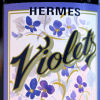
After the Yvette disappeared, bartenders substituted other less-complex brands of creme de violette to create this once-popular violet cocktail. But soon, even the substitute became nearly impossible to find. Cocktail geeks would rummage through French liquor stores during their vacations, looking for hard-to-find bottles of a version made by Benoit Serres. Those with an unlimited cocktail budget might order a bottle of Suntory’s Hermes Violet from one of the eBay sellers based in Japan. But, without going to extraordinary lengths, it simply wasn’t possible to make anything close to a proper Blue Moon; the drink all but disappeared, and its cousin the Aviation lost its sky-blue hue.
All that changed last month when Haus Alpenz — best known as the importers of the cult-fave Zirbenz stone-pine liqueur — rolled out its 2007 line. In addition to another formerly-defunct ingredient, Batavia Arrack, Alpenz also brought out the first violet liqueur available in the US in recent memory: Rothman & Winter Crème de Violette.
Tasting all three violettes — the Hermes, the Rothman, and the Serres — recently with friends, we found the three brands to be about as different as violet-scented liqueurs could be. Colors ran the gamut from indigo through to deep purple. Sampled on their own, the Serres tasted driest, while the Hermes combined tooth-rattling sweetness with a shocking floral intensity. The Rothman struck a pleasant balance: Violet-hued without being garish, floral without perfumey notes.
Once mixed with other liquors in a cocktail, the brand differences mostly fade away, although the sweetness of the Hermes in particular (and the Rothman, to an extent) means you’ll need a steady hand to achieve the desired blue tint without oversweetening your cocktail. I’m still partial to the Serres, myself, but — especially when factoring in price and availability — the Rothman makes a more-than-acceptable alternative.
But back to the Blue Moon: Recipes vary, but they all start with gin and violette; some stop right there, but most add lemon juice. A few recipes replace the lemon with dry vermouth and a dash of orange bitters for a Martini-esque concoction. Still others add an egg white… although that tweak really does make it a different drink, which used to be known as a Blue Devil. (Confusingly, that name’s been co-opted in modern times by a mixture of gin, lemon, Maraschino, and blue curacao.) All these overlapping ingredients are making my head spin. I think I need a drink…




Blue Moon
2 oz dry gin
3/4 oz lemon juice
1/2 oz creme de violette (quantity varies by brand)
Shake ingredients with ice; strain into a chilled cocktail glass. For an Old Blue Devil, add a tablespoon of egg white before shaking.
Drink of the Week, drinks, recipes
24 Comments »
Posted by Anita on 08.26.07 11:19 PM
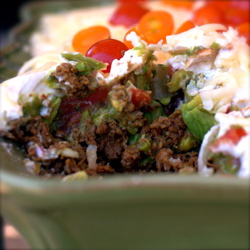 Although I am a major fan of authentic comida mexicana, I’ll readily admit to an equal fondness for old-fashioned gringo-style ‘Mexican’ food, a love I come by honestly courtesy of my Southern California roots. So when our favorite Marin-dwellers invited us up for more pear-pickin’ fun — this time under the guise of a 1960s-theme potluck — I had a treasure trove of retro recipes to choose from already in my files.
Most recipes for Seven-Layer Dip feature a storebought fiesta of canned beans, taco mix, shredded cheese, and pre-made guacamole in a tub. But this party’s guest list included some of the area‘s best loved and most popular food bloggers — there’s no way I’d serve them anything from a can.
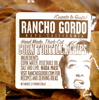
Taking things a little bit over the top (shocker!), I wondered if I could make the entire recipe using local ingredients. By ditching the usual topping of canned black olives in favor of multi-colored baby tomatoes, it was a slam dunk: Rancho Gordo red nightfall beans, homemade chorizo — made at our SausageFest from Prather Ranch pork shoulder — plus Will’s excellent avocados, Dirty Girl tomatoes, and local dairy products… even the chips were made in Napa.
Locavore -and- retro? Hell yeah.

Seven-Layer Dip, food-blogger style
1/2 pound ripe tomatoes, diced
1/2 to 1 jalapeno or serrano chile, minced
1/2 white onion, diced
1/4 cup chopped cilantro
salt, to taste
1 pound Mexican-style chorizo
1/2 onion, chopped
1 pound Rancho Gordo beans, cooked in the approved fashion
1 tsp Mexican oregano
1/2 pound cheddar cheese, shredded
1/2 pound Jack cheese, shredded
3 large Haas avocados
1/2 jalapeno or serrano chile
1/2 onion, minced
2 small tomatoes, diced
pinch of ground cumin, or to taste
1 large container sour cream
1/2 pint Sweet 100 tomatoes, halved
2 bags good tortilla chips
Mix up the tomatoes, jalapeno, onion, cilantro, and salt in a medium bowl, and set aside to allow the flavors to combine.
Saute the chorizo in a large skillet until cooked, breaking up any chunks as you go. When fully browned but still juicy, remove the sausage to a bowl or plate with a slotted spoon, leaving the fat in the skillet.
In the same skillet, saute the onions in the chorizo fat until browned and soft. Add the beans and some of their cooking liquid, smashing with a potato masher until mostly smooth; add additional bean liquid or warm water to get to a smooth consistency. Add the Mexican oregano, and stir to combine. Spread the beans in the bottom of a 13×9 casserole; top with the browned sausage, then half of the shredded cheese; set aside.
Halve the avocados and remove the pits. Score each avocado half at 1/2- to 3/4-inch intervals, cutting down to — but not through — the skin. Scoop out the avocado chunks with a soup spoon and place them in a large bowl. Add the pepper, onion, tomatoes, and cumin, mixing just until combined; you want plenty of texture. Carefully smooth the guacamole over the cheese-topped chorizo, then top with the salsa, the sour cream, the remaining shredded cheese, and the Sweet 100 tomatoes. Serve with tortilla chips for dipping.
Note: If you’re serving the dip immediately, it’s more attractive to use the guacamole as the last layer before the tomatoes; this isn’t very practical when you’re taking the dish (chilled, please!) to a party in another county, unless your friends like brown avocado.
—–
Top photo ©Sam Breach / Becks & Posh; used with permission
entertaining, locavore, other blogs, recipes
17 Comments »
Posted by Anita on 08.24.07 7:02 AM
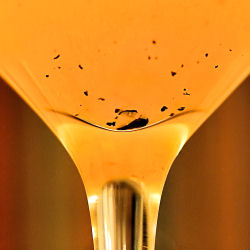 Passing time waiting for a table at Range, I noticed some of my favorite bottles clustered together along the bar: Chartreuse, St-Germain, and No. 209 gin.
“Are those all for the same drink?” I asked Brooke, the bartender.
“Yes they are — our nightly special.”
“Sold,” I said, closing the menu unread.
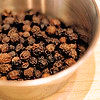
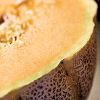
She set to muddling black peppercorns in a mixing glass along with some cantaloupe chunks. Ugh, I thought to myself, that looks nasty. No fan of the muskmelon, the mere idea of a cantaloupe cocktail made me gag.
And then she added the St-Germain and the Chartreuse to the muddled mixture, and I realized that was my drink in her hands. Oh god…
But really, I should have known better than to fret. The crew at Range, while adventurous, rarely steer me wrong. This drink was no exception. Somehow it all worked — the Chartreuse brings out the melon’s herbal overtones, and the St-Germain accentuates its floral notes. A splash of lemon juice keeps things in balance, and a good long shake opens it all up. The black pepper’s heat isn’t immediately apparent; it works like an internal garnish that becomes more obvious as the drink warms, a great counterpoint to the increasing sweetness as the chill fades.
Range christens its creation the Can-Can, a clever nod to the cantaloupe base, the two French liqueurs, and the pepper’s kick. We’ll just overlook the fact that there are at least two other cocktails with the same name — a surprising oversight from the upstanding mixological minds behind Range’s bar.



Can-Can a la Range
3/4 tsp black peppercorns
1/2 cup cubes of ripe cantaloupe (4-5 chunks)
2 oz dry gin (Range alternates between Plymouth and No. 209)
1 tsp Chartreuse
1/2 oz St-Germain elderflower liqueur
juice of 1/2 lemon
In a heavy-bottomed pint glass, muddle the peppercorns with half the melon until cracked. Add the rest of the cantaloupe cubes and continue to muddle until juicy and soft. Add the remaining ingredients, then shake well and strain into a well-chilled cocktail glass.
Drink of the Week, drinks, recipes, restaurants
12 Comments »
