Posted by Anita on 07.10.07 1:14 PM
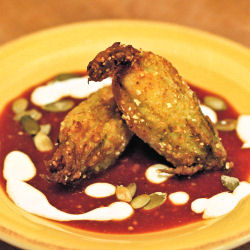 Every summer, I walk by baskets of squash blossoms at the farmers market, longing to find a use for them. Stuffing fragile flowers seemed like a tedious task for a weeknight meal, so I’d always given them a pass. But once I saw Jen’s fritters — which were in turn inspired by a course at Derrick and Melissa’s much-discussed dinner party — I knew I couldn’t put it off any longer.
The basic idea seemed simple enough: Stuff the blossoms with cheese, dredge them in dairy and starch, and fry until golden. But I wanted to dress them up a bit — make them nice enough to serve as a light supper, alongside a simple salad — so I turned to my new favorite cookbook, Big Small Plates. The text of this popular title is written by Cindy Pawlcyn (of Mustards Grill fame) but the recipes themselves are largely the work of her two partners: Pablo Jacinto, the chef at Cindy’s Backstreet Kitchen, and his brother Erasto, who holds the same title at Mustards.
The book’s tapas-style approach draws inspiration from around the globe. There are plenty of straight-up California-American preparations, and Asia is well represented: A Vietnamese mini-burger salad we tried was especially delicious. But — and here I must admit to being biased — it’s the book’s Latin-influenced dishes that really shine. We’ve tackled a glorious mole casera, two batches of perfectly wonderful empanadas, and a handful of other Mexican-tinged dishes that hit the mark both in taste and in appearance.
The book’s a delight to use, aside from a few scale issues: the empanada recipe yields twice as much filling as wrappers to enclose it, and the original squash-blossom dredge made easily three times as much as I needed (I’ve corrected the proportions below). Most of the recipes serve six as an appetizer course or side dish, but many can serve as two or even four entree-size portions. Some dishes involve prepping multiple sub-recipes, but the auxiliary instructions usually revolve around simple garnishes like the lime-infused crema here. Ingredient lists can seem daunting, but the end results come together with minimal fuss. And they look as good on the plate as they do in the photos — no small compliment in the realm of chef-written cookbooks.
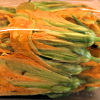
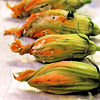
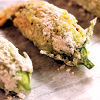
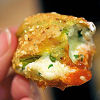
But back to those blossoms. I was worried that I’d waited too long between market day and making the dish: The flowers had started to wilt and the petals were sticking together. But despite their tissue-thinness, and warnings in nearly every recipe I read about the perils of tearing the flowers, the squash blossoms proved surprisingly resilient. Pulling two petals apart at the seam between them, I could split the blossom (much like you would when making a chile relleno) to remove the pollen and stuff the interior. The petal’s own natural moisture combined with the stickiness of the filling meant that I could patch the petals back together after stuffing; the batter held in any remaining leaks during frying.
It was a fiddly process, to be sure, but a highly rewarding one. Once the blossoms are stuffed, you can hold them in the fridge for a few hours. The dredging and frying comes along quite quickly after that, and if your garnishes are prepped and waiting, you’re 90 percent done with a spectacular summer appetizer. (Or one very decadent supper.)
Crisp-Fried Squash Blossoms
adapted from Big Small Plates
2 ears fresh corn
1 tsp olive oil
1/2 cup grated Monterey Jack cheese
1/2 cup fresh ricotta
2 T minced cilantro leaves
—
1/4 cup cornstarch
1/4 cup cornmeal
1/4 cup all-purpose flour
1/2 tsp salt
1/4 tsp freshly ground black pepper
1/4 tsp cayenne pepper
—-
1/2 cup buttermilk
vegetable or canola oil, for frying
—
12 to 18 very fresh squash blossoms
1/4 cup toasted pumpkin seeds
1/4 cup sour cream, mixed with the juice and zest of 1/2 lime
1 cup tomatillo red-chile salsa (homemade or a good store-bought brand), warmed
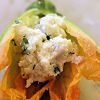
Cut the kernels off the cobs. Heat the olive oil in a skillet over medium-high heat and saute the corn 2 to 3 minutes. Set aside and allow to cool, then combine with the Jack cheese, ricotta, cilantro.
Open each blossom as gently as possible, and remove the stamen. Stuff each blossom with a spoonful of the cheese-corn mixture; the amount will vary with the size of your blossoms, but don’t be afraid to stuff them well. The flowers seem delicate, but they’re surprisingly resilient. If you need more room to work, peel the flower apart at one of the ‘seams’ between the petals; you’ll be able to pinch everything back together (within reason) using the filling as glue. Leave enough room to twist each blossom shut.
Set the stuffed blossoms on a wax-paper-lined cookie sheet and place in the fridge to set. Meanwhile, combine the cornmeal, cornstarch, flour, and seasonings in a shallow bowl; put the buttermilk in another shallow bowl. Dredge each stuffed blossom, first in the buttermilk, then in the flour mixture, shaking off the excess at each step. Return them to the wax paper, then refrigerate again briefly.
Set up a cooling rack topped with two layers of paper towels next to the frying area. Add oil to a shallow skillet to a depth at least half as high as the average stuffed blossom. (I used 2 cups in a 10-inch pan.) Heat oil to 375 degrees. Slowly lower the blossoms into the pan, four or so at a time to prevent crowding, turning each over as soon as the bottom side is golden brown. It will go rather fast, but if the coating turns dark brown immediately, back off on the heat a bit; you need enough time to melt the cheese. With a spider or slotted spoon, remove the crispy blossoms to the paper towels. Repeat until all blossoms are fried.
Spoon a bit of the warmed salsa on each plate, then top with 2 or 3 blossoms. Drizzle with the lime crema, and scatter toasted pumpkin seeds for garnish.
cookbooks, cooking, farmers markets, Mexican, other blogs, recipes
6 Comments »


Posted by Anita on 07.04.07 7:33 PM
 Summertime is finally upon us! Even here in San Francisco — where our summer months are notoriously cold and foggy — the sun is shining high and bright, the skies are a precise shade of coastal blue, and everyone’s outside enjoying the weather. We know it’s merely a respite from the gray gloom that will descend again, without fail; Three days of sun are all San Franciscans ever expect.
Another sure sign of the season: Ice cream and sorbet stories are everywhere. Today’s food section turned up as crammed full of ice cream as an apartment freezer: Make it, buy it, stand in line for it… the Chron‘s got us covered in the frozen-confection department.
As if that’s not enough, not one but two blog events this month are dedicated to scoopable sweets: Laura picked sorbet as this month’s “Hay Hay, It’s Donna Day” theme, and Meeta’s Monthly Mingle 12 focuses on ice cream. So I was already flipping through the recipe file when I got an email from the library, telling me that my copy of David Lebovitz‘s new ice-cream book — the darling of the blogosphere — is ready to be picked up, at long last.
OK, wow. Really, I can take a hint: Time to get churning.
I won’t bore you with another gushing post describing what a treat it is to read The Perfect Scoop — I’m too late to the ice-cream social for that, and I couldn’t possibly come up with any more synonyms for “mmmmm!” than you’ve already read elsewhere. Suffice to say that I was bowled over (har har) by all the delectable-sounding options — hello, chartreuse ice cream? — and picking just one recipe proved impossible. I compromised: One ice cream, one sorbet.
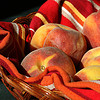
Sultry summer weather at the Ferry Plaza Farmers Market seduced us into buying more stone fruit than two people could possibly eat, so we opted to sacrifice a few pounds’ worth for the apricot variation on David’s peach sorbet. Not wanting to overwhelm their perfect ripe essence, we substituted St-Germain liqueur for the recipe’s standard kirsch. The color was vibrant and the flavor sublime, but the texture turned a tad bit grainy for my taste. A beautiful scoop, nonetheless, but nothing to make me abandon my old standby ice-cream book.
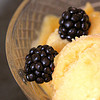
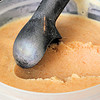
Our second trial, though, helped me understand what all the swooning reviews were about. A perfect coconut ice cream doesn’t just toss a cup of shreds into a vanilla custard and freeze them up. Instead, it starts by infusing warm dairy with freshly-roasted coconut, steeping to extract subtle flavors. Then we strain the solids out of the coconut-scented cream, which is used to finish a rich, not-too-sweet custard base (and which I could barely restrain myself from eating with a spoon).
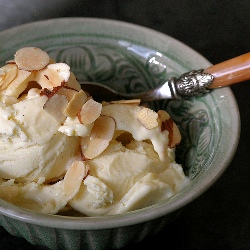
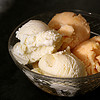
After churning and freezing, the mixture emerged as a beautiful, smooth off-white velvet, redolent with coconut but minus the “pencil shavings” texture that some (including Cameron) find unappealing. We loved it equally on its own and topped with toasted almonds for added crunch. But our favorite treat of all — sure to be the hit of the summer — paired the luscious toasted coconut ice cream with the icy apricot sorbet to make a Creamsicle-style treat to brighten even the cloudiest day.
Bring it on, summer. We’re ready for you.
Toasted Coconut Ice Cream
adapted from The Perfect Scoop by David Lebovitz
1 cup unsweetened coconut flakes
1 cup whole milk
2 cups heavy cream (not ultra-pasteurized)
3/4 cup granulated sugar
1 vanilla bean, split and scraped
5 large egg yolks
1 teaspoon dark rum
Toast the coconut on a baking sheet in a moderate (350°) oven for 5 minutes or until golden and fragrant, stirring occasionally to toast evenly.
Warm the milk, half of the cream, and the salt and sugar in a heavy saucepan over medium-low heat. Add the toasted coconut and the vanilla seeds and pod. Cover the pan and remove from the heat to steep.
After an hour, rewarm the infused mixture. Strain through a medium-mesh strainer into another saucepan, pressing down on the solids to extract all the liquid. Discard the solids, reserving the vanilla-bean pieces for another use, if desired.
Combine the remaining cream with the rum in a large bowl. In a separate large bowl, whisk the egg yolks together. While whisking constantly, slowly add the coconut cream to the egg yolks.
Return the custard to the pan and place over medium heat, scraping the mixture to avoid scorching. Cook until the custard coats the back of the spatula. Pour the custard through the strainer into the cream-rum mixture, and cool over an ice bath.
Cover the bowl of cooled custard, and place in the refrigerator until well chilled, preferably overnight. Freeze according to your ice-cream machine’s directions for custard-based recipes.
cookbooks, dessert, other blogs, recipes
11 Comments »
Posted by Anita on 07.02.07 12:18 PM
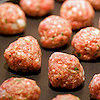
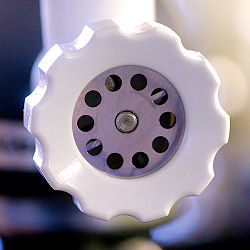 Frankly, I don’t know how I ever survived without my KitchenAid mixer’s meat-grinder attachment. Sure, it’s great for the occasional sausage-making session, but its real appeal lies in its ability to turn a worthy chuck roast into the world’s juiciest, tastiest hamburger in nothing flat.
When we were living in the basement, I resorted to store-ground meat a few times, and got a taste of what I’d been missing: Even when we bought good Prather Ranch ground beef, the pre-processed meat morphed into chewy, dry-ish, and lackluster patties — a pale shadow of the glorious burgers made the same beef, freshly ground.
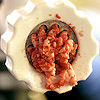
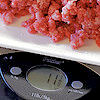
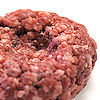
Fortunately, grinding your own burgers is so simple it’s easy enough for a weeknight: Cube your chuck roast, run it through the grinder’s coarse plate, season the ground meat, and measure out 5 to 6 ounces per patty. Ever-so-gently, pat each portion into a thick disk, then make an indentation in the center to keep the patties flat when cooked. Grill or broil to your desired doneness, and serve on a good, lightly toasted bun — we like the pain de mie buns from Acme.
Cleanup’s a snap, too: All the grinder parts go right in the dishwasher. Even taking into account setting up the mixer — which takes all of 2 minutes — the process isn’t drastically more troublesome than opening a cellophane-covered styrofoam pack.
And in this age of mad cows, it’s comforting to know that our hamburgers contain only the parts that I put through the grinder. But even if it weren’t a safer alternative, the taste of home-ground meat alone would win me over. And if you aren’t feeding a crowd, you can make more patties and freeze them for later, although I find they lose a bit of the charm in the freeze-thaw cycle — I usually turn my leftover ground chuck into meatballs.
Whatever you do with your home-ground beef, I promise you’ll taste the difference.

cooking, equipment, meat
17 Comments »
Posted by Anita on 06.24.07 8:07 PM
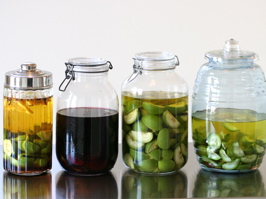 Every June 24, Catholics around the globe celebrate the feast-day of John the Baptist. And every year, on that same day, traditional-minded Europeans head into their local walnut orchards, filling baskets and bags with unripe nuts in order to make nocino, an Italian walnut liqueur, or its French cousin vin de noix.
We’ve made nocino every summer for the past three years, usually a bit later than the traditional saint’s day due to trouble in our local supply chain. Suffice to say that we lack the necessary ferme, fattoria, or bucolic farmhouse of any sort, and we’ve relied either on nuts shipped from afar or the whimsical schedule of a certain vendor at the Alemany market.
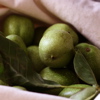
This year, we not only avoided our usual delay, we even jumped the gun a bit. But I hope you’ll agree our motives were good: We were off to Yountville for our anniversary, and I’d remembered reading Shuna’s story last fall about Hoffman Farm, a Napa u-pick with a vast walnut orchard. The idea of making liqueur with nuts we’d plucked ourselves from local trees was simply too attractive to pass up, no matter the date was a tad early.
It took me days to work up the nerve to call John Hoffman and explain what I had in mind. He’d never heard of anyone wanting green walnuts before. “You do know they’re incredibly bitter?” he asked me on the phone. But he graciously allowed that we might stop the coming weekend and pick some nuts, as long as we didn’t come on Sunday morning during church. I assured him that we’d work around his schedule, and would be sure to call before we came, in any case.
Saturday rolled around, bright and sunny. We called Mr. Hoffman to make sure he was home, then donned hats and sunscreen and pointed the car toward Silverado Highway. Just past the intersection with Trancas, we spied the farm’s little sign, a blink-and-miss-it affair. We pulled up the gravel drive and found Mr. Hoffman waiting for us in the shade near his farmhouse garage.
We introduced ourselves and chatted a bit, and he asked me to remind him about what I would do with my early harvest. I explained about splitting the nuts and soaking them in alcohol for most of the summer, then setting aside the strained, sweetened infusion until Christmastime. I marveled that a walnut farmer — and one with Italian in-laws, at that — had never tasted what I’d always assumed was a relatively common homebrew. Not only had he never made it, he’d never even heard of it. Chuckling, he quipped: “Sounds like a waste of a good bottle of vodka,” and winked at Cameron.
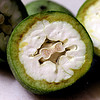
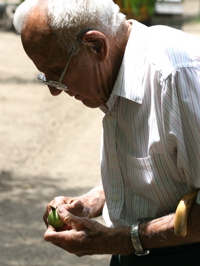 Then he picked up his cane and strolled us out into the orchard. A sun-dappled canopy of walnut boughs stretched as far as the eye could see, all the way back to the crossroads. Mr. Hoffman showed us how to avoid the nuts that suffered from blight — they were few, this early in the season — and how to spy the telltale bore holes of caterpillar infestation. He reached for his pocketknife and cut open one of the few rotten nuts he could find, to show me how the fungus penetrates the hull and works its way to the developing meat.
It was a botany tutorial, a history lesson, and a glimpse at a disappearing way of life. The Hoffmans have worked this land since the end of World War II. Now, they’re farming one of Napa’s few remaining diversified acreages, as vineyards squeeze out the fruits and nuts that once were the valley’s pride. As Shuna mentions, although the Hoffman land is protected for agricultural use, there’s nothing to prevent these noble trees from being torn out in favor of yet another mass of wine grapes.
After a half hour of picking nuts and snapping photos in the late-morning glow, we brought our canvas sack back to the garage. Mr. Hoffman discussed how to price our unusual transaction while he weighed our haul on his weathered scale. When all was said and done, he refused to take more than a fraction of what we’re used to paying, even when we told him that the going rate was much, much higher. He shook his head like we were citified fools, then added: “You can keep the quarters if you tell me that recipe again.” I smiled broadly and promised to send him prints of the photos we’d taken, plus a few different recipes to try.
We grinned all the way home, amazed at our good fortune in finding Mr. Hoffman — all thanks to Shuna.
After stopping by the local liquor depot for bottles of 100-proof vodka, I quickly set to work halving and quartering the green nuts, measuring sweeteners and spices, and sterilizing my infusing jars. Never had I had the luxury of using nuts picked within hours of infusing, much less 7 pounds worth gathered with my own two hands. Unsurprisingly, we had sufficient nuts for two different batches of nocino — my usual recipe, plus an experiment — as well as a version of Abra’s traditional vin de noix and Lucy’s lighter recipe made with white Burgundy and maple syrup.
I left my quartet of crockery on the new breakfast table for a day or two; they caught the light so beautifully that I wanted to see them (and sneak a sniff of them) all the time. Once the liquids steeped to a black-hole opacity, I followed tradition and put them out in the garden — in this case, the back deck — where they’ll commune with nature for the next 40 days and 40 nights. Then we’ll filter them, bottle them, and wait for the other end of the year, when midwinter brings us yet another celebration of the natural cycle disguised as a religious feast.

Hoffman Farm
2125 Silverado Trail
Napa, CA 94558
707 226-8938
drinks, holidays & occasions, Italian, locavore, Napa & Sonoma, preserving & infusing
13 Comments »
Posted by Anita on 06.19.07 3:11 PM
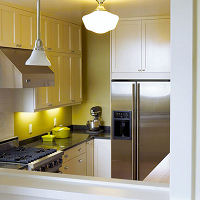 I know it’s been months, literally, since I told you we were almost done, and promised an update soon. And truth be told, it did take a lot longer to nail down the last details than we expected. Just over a month ago, I wrote to family and friends, telling them we were done, at long last:
“Every item on the punch list is crossed off. The permits are all final-ed. The kitchen countertops are securely affixed to the cabinets. The new sidewalk — and driveway, and drain — is in place.”
Sidewalk? Driveway? Huh? I thought this was a kitchen remodel?
Yeah, well… long story short: When the city came out to ‘final’ the permits for the kitchen, the inspector noticed that our sidewalk wasn’t quite level. Now, almost every driveway in San Francisco leaves a little divot in the sidewalk, to allow cars access to below-ground garages. They’re not (usually) a serious detriment to public safety, and our gradual, 2-inch slope definitely didn’t pose a hazard. But the planning department, lord love them, have decided they need a new source of income. (According to a Realtor friend, this sort of thing is happening all over town.) So even though our sidewalk wasn’t any worse — and in fact was much better — than most of our neighbors’, our kitchen permit gave the city an excuse to hunt for anything else they could find to generate some cash. Nice, eh?
Of course, there’s always a silver lining: We got a smooth new driveway out of the deal, complete with a much-needed trench drain to keep water from running into the garage. During excavation, it became obvious that installing said drain meant moving — and thus, replacing — an 80-year-old water-supply pipe. Oh, boy! More money flying out of my purse! Still, it needed to be done: One look at that photo and you can guess that our water pressure is vastly improved, not to mention that our tap water is a lot less crusty. Bleh!
But back to the kitchen: After an escalating six-week stream of coaxing, cajoling, criticizing, and (ultimately) crying, our contractor harrumphed back and deigned to wrap up the punch list. Cabinet knobs at last! No more sagging utensil drawers! Oh, the joy.
We’ve been so busy cooking and entertaining that we haven’t have much time for food blogging, much less documenting the last remodel steps. Luckily, our architect, the affable and talented Andrew Mann, spurred us to action by stopping by to take some portfolio shots. Late last week, he sent us the proofs… and, wow. I mean, I knew how gorgeous our kitchen was, but seeing it through the eyes of a professional artist makes a world of difference. I got a little teary-eyed looking at the photos and forgot, at least for a moment, about how painful the last months of construction had been. In my wildest dreams, I would never have thought we’d live and cook in a magazine-worthy kitchen, but there it is.
Inevitably, we still have a few items to tackle, more in the scope of decorating than real remodeling. Since we can’t afford the sort of narrow Parisian bistro table we covet for the breakfast room, we bought a temporary placeholder. (Although party guests complimented its DWR-esque looks over the weekend, and our housekeeper chased us down just to tell us it was ‘perfect’, so maybe it has an appeal we’re not seeing!) We still need to make cushions for the breakfast bench, and order the window coverings… morning sun is brutal at this time of year.
But really, there’s no denying it: The kitchen’s done. Ta-dah!





photos courtesy Andrew Mann Architecture and Joseph De Leo Photography
kitchen
12 Comments »
Posted by Anita on 06.15.07 7:02 AM
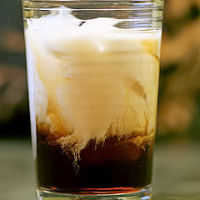 This month’s Mixology Monday, Creme de la Creme, features drinks made with cream-based liqueurs.
When our hostess, Anna, allowed that “lazy bums can include cream in their cocktail” in lieu of a cream liqueur, my path became clear.
“Sometimes, there’s a man, well, he’s the man for his time and place. He fits right in there. And that’s The Dude, in Los Anglez. And even if he’s a lazy man — and The Dude was most certainly that. Quite possibly the laziest in all of Los Anglez County, which would place him high in the runnin’ for laziest worldwide.”
A perfect inspiration for lazy, creamy-cocktail drinkers everywhere, wouldn’t you say?
For those of you not acquainted with the Coen Brothers’ 1998 noir parody, The Big Lebowski …well, there’s no way I could possibly convince you of its worth in 20 words or less. Suffice to say that its hysterical, convoluted plot finds room for Jeff Bridges, John Goodman, Steve Buscemi, Julianne Moore, Phillip Seymour Hoffman, John Turturro, Flea, and Tara Reid all on the same screen. It’s a rollicking two hours filled with mistaken identities, bowling tournaments, extortionate Nihilists, and many, many White Russians.
Right there in the opening scene, we find our hero Jeffrey Lebowski — known to all as The Dude, or “His Dudeness, or Duder, or El Duderino if you’re not into the whole brevity thing” — strolling through his local Ralphs. He picks a carton of half-and-half out of the dairy case with a connoisseur’s care, pausing to open the container and sniff the contents.
That particular carton meets a sad fate well before finding its way into The Dude’s signature cocktail, but never fear: Many a vodka-Kahlua-cream concoction appears in The Dude’s mitts as the story unravels. One even serves as the vehicle for a nasty plot twist…
“But… aw, hell. I’ve done introduced it enough.”
Like most cocktails that have been around the block a time or two, the White Russian sports plenty of variations, and a number of competing formulas. The “official” recipe seems a bit out of synch with common usage, proposing a 5:2:3 (vodka, Kahlua, cream) ratio. Most cocktail manuals and drink sites lean more toward a 4:2:1 mix, which I prefer. More vodka seems fine, but an abundance of cream quickly overpowers the Kaluha.
Of course, you could do as many folks — including The Dude, it should be noted — do, and swap the cream for a lighter dairy product. Half-and-half makes a pleasant drink; whole milk will do in a pinch; I can’t recommend low-fat or any of that other what-have-you.



White Russian
2 oz vodka
1 oz Kahlua
1/2 oz cream (or half-and-half, if you’re not into that whole gluttony thing)
Combine the vodka and Kahlua in an ice-filled rocks glass. Float the cream on top.
Drink of the Week, drinks, Mixology Monday, movies & tv, recipes
9 Comments »
Posted by Anita on 06.11.07 11:43 PM
 In my youth, I was actually something of a photo geek: I built a darkroom in my parents’ garage, I worked for my Dad all summer between 8th and 9th grade to buy my first SLR, and I won a school-wide award for photography a year later. I was, even then, a tinkerer, a collector of gadgets and gizmos.
By all rights, you’d think an equipment geek like me would have some big, black, long-lensed monstrosity… when instead I actually tote a cute, shiny, pocket-sized snapshot-maker. I’ve looked longingly at the gorgeous shots created by those who own the real deal, all the while coaxing my poor little PowerShot into giving up decent photos.
Cameron — who hails from a photo-obsessed clan — hasn’t helped matters. He’s been egging me on to purchase a dSLR for months, reminding me of the old adage that equipment should always be better than the human behind it. I knew he was right, but I felt like I couldn’t justify the expense: I’d just upgraded my point-and-shoot last November, a purchase that set me back far more than I really wanted to spend. And ultimately, the blog’s just a hobby… it’s not like anyone cares whether the image is a little noisy, or the lens distortion gets a little distracting.
Early last week, my equipment envy reached a peak. A friend who just started blogging mentioned that he’d splashed out for some gear to help improve his online shots. I replied covetously, saying something to the effect of “I wish I could buy a dSLR, but it’s not like I have a spare grand sitting around.”
And then, two very interesting things happened.
I got home, opened the mailbox, and found a check — a completely unexpected payment for something I did on a lark more than a year ago — for $945. Not quite a grand, it’s true, but you could say that the universe had succeeded in grabbing my attention.
The next morning, I noticed a lot of inbound blog traffic from a link called “DMBLGiT: The Winners!” I clicked the tracking URL, and my jaw hit the keyboard. Holy cats: I’d tied for first place in this month’s Does My Blog Look Good in This?, the food-bloggers’ photo contest! I’d never even entered before, and I’m up there on the big screen with DPaul & Sean, and Ilva, and plenty of other talented folks whose blogs I read regularly and whose photos make me swoon. It’s so ridiculous, I still don’t really believe it. But does that stop me from celebrating? No, it most certainly does not. Celebrating is something I understand very, very well.
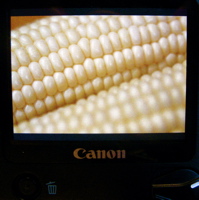
The rather obvious end of this little tale: I am now the proud owner of a brand-spanking new Canon 30D. At last, a real camera. Interchangeable lenses! A usable viewfinder! And best of all, as Cameron says, “It makes that Girls on Film noise!”
We took the new toy up to Napa this weekend, and both of us captured a surprising number of lovely shots, considering we hadn’t even read the manual yet. (No, I didn’t haul this behemoth out at The French Laundry. Shuh… even I have my limits!) I know it’ll take a while before I dial in the seemingly limitless new features at my disposal — no film camera was ever this confusing …or have I just gotten old? But in the meantime, if you keep an eye on my photostream, you’ll get to see me take my first baby steps back from the point-and-shoot realm.





equipment, geekery, other blogs, other stuff
10 Comments »
Posted by Anita on 06.08.07 12:43 PM
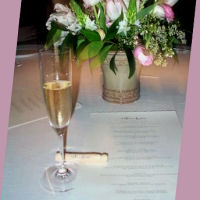
We’ll be away from the blog for a few days. We have an occasion to celebrate, and dinner reservations at a special place tonight. (Please forgive the photo — it was the best of the roll from our last visit in 2005!)
I’m stunned to realize that it’s been more than two years since we visited Wine Country. Is it possible we haven’t been back since we left Seattle? That’s almost as hard as it is to believe that it’s been five whole years ago since we were married, just on the other side of the hills in Sonoma County.
Have a great weekend. I know we will!
holidays & occasions, Napa & Sonoma, restaurants
9 Comments »
Posted by Anita on 06.07.07 11:02 PM
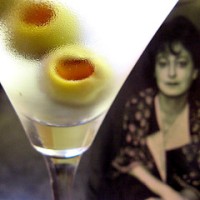 I like to have a martini,
Two at the very most.
After three I’m under the table,
After four I’m under my host.
Michael at A Dash of Bitters reminds us that tonight marks the 40th anniversary of Dorothy Parker‘s demise. She died not, as one would expect (and she might have preferred) from suicide or cirrhosis, but from a heart attack in old age. Her modern notoriety hinges on witty bon mots and wry verse, but in her heyday she was nothing short of a cultural icon, a woman who led trends and set tongues a-wagging.
Mrs. Parker found fame as Vanity Fair‘s drama critic, and later reviewed books for the New Yorker under the sobriquet “Constant Reader”. She penned a pile of short stories, and her semi-autobiographical Big Blonde (although she was a dainty brunette) won the O. Henry prize for short fiction. Later, she and her second husband Alan Campbell became a sought-after Hollywood screenwriting team; the original, Oscar-winning A Star is Born topped their credits.
Although much of the Parker mystique hinges on her wisecracking party-girl persona, in fact she was a near-teetotaler for part of her life. In her twenties, she hardly drank at all. Her biographers tell us that she weathered the ironic excesses Prohibition better than many. One or two drinks a night would be plenty for her, in an era and milieu when an evening on the town typically started at sundown and lasted until breakfast at dawn.
As the years progress, the drinks get stiffer: Dottie’s small beer on the bar beside her pal Robert Benchley‘s large Scotch, an Orange Blossom at the speakeasy, Manhattans at her country house, and, eventually, all-night parties fueled by pitcher after pitcher of Martinis (with no food!). Sweet misery — imagine the mornings after those night-befores:
Drink and dance and laugh and lie,
Love, the reeling midnight through,
For tomorrow we shall die!
(But, alas, we never do.)
In the Algonquin era, the Martini had not yet suffered from modern innovation. None of the Round Table denizens would have recognized the drink as anything other than a well-chilled mixture (always stirred, never shaken) of five or so parts gin to one part dry vermouth, and a dash of orange bitters. No gin, no Martini. If olives weren’t at hand, a simple lemon twist could be substituted, but even this would be noted as a touch unorthodox. One can only imagine what the Vicious Circle would make of so-called Martinis of chocolate, sour apple, or (God forbid) vodka.
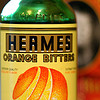
Martinis made in the classic style fell out of fashion through the years; some speculate that a lack of proper bitters hastened the drink’s metamorphosis into little more than a bruising-cold glass of gin. Thankfully, renewed interest in classic cocktails means there’s an abundance of delectable orange bitters to choose from today. Our house brand is Regan’s, with a bottle of Hermes on hand as a pleasant alternative. But you’re more likely to find Fee Brothers’ in your local liquor establishment, and that will certainly do just fine. I daresay that once you try your Martini made this way, the modern rendition will seem rather flat and unappealing.
Now, what’s stopping you? As Mr. Benchley would say: Get out of that wet coat and into a dry martini.

Classic Martini
1-1/2 oz gin
1/2 oz dry vermouth
1 dash orange bitters
Stir with ice, and strain into a chilled cocktail glass. Garnish with olives or a lemon twist.
Drink of the Week, drinks, literary
5 Comments »
Posted by Anita on 06.04.07 12:14 PM
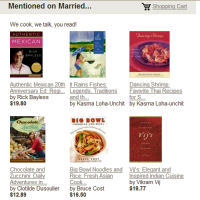 It may have escaped your notice — especially if you’re reading the blog through an RSS reader — that we’ve added a new tab on Married… with Dinner. Ladies and gentlemen, I present you with the Bookshelf.
Pretty snazzy, eh?
The default page shows all of the books we’ve mentioned on the site, with a link to their Amazon pages for more information. We’ve also built sub-pages that show our favorite books (those that have earned a slot on the bookshelf cubbies in the new kitchen lab-shelves) and for our entire collection.
Our primary motivation in building out the Bookshelf was a desire to have a handy place to link when we mention cookbooks on our site. And, you know, to let you snoop through our bookshelves without having to drop by the house on some pretense or other.
Full disclosure: If you start your Amazon shopping — for these books or any other products — from our site, we earn a small commission. (You don’t pay anything extra, but you get to support us anyway. How cool is that?)
cookbooks, shopping
Comments Off on Bookshelf browsing
