Posted by Anita on 11.01.08 2:36 PM
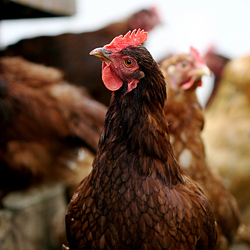 Last year, when I discovered — after reading Bonnie Powell’s excellent post — that the Judy’s Family Farm eggs I’d been buying at the Ferry Plaza Farmers Market were the product of an intensive factory operation called Petaluma Farm, I was pretty pissed.
I first blamed CUESA, the market’s organizers, for allowing me to be duped. But soon I realized the real culprit was my own ignorance, and I directed my anger where it properly belonged. It was foolish, after all, to expect that all food sold at the Ferry Plaza market would meet some rudimentary ethical standard and that the products would be sold by, you know, actual small farmers. I really should have wondered how Judy’s managed to sell their eggs for a third of the price of Marin Sun or Eatwell, but I was blinded by the almighty bargain.
My frustration at having been deceived spurred me to pay closer attention to how the food — especially the eggs, dairy, and meat — we buy at the market is really grown. I spent the better part of 6 months asking a lot of questions, and I am sure some farmers got pretty sick of me. But when all was said and done, I was pleased to realize — with the exception of this one major blip in the egg department — that the Ferry Plaza was full of real farmers whose animal-care practices I can support in good conscience.
But now, with the attention CUESA has given Petaluma Farm as part of their coverage of Proposition 2 — the California initiative that would require all caged and crated animals the exceedingly modest consideration of being able to stand up, lie down, turn around, and extend their limbs — I feel I really must speak up and question their motives as an organization.
To put it in perspective: I realize that, as recently as last year, there weren’t enough pastured eggs to meet demand. Egg aficionados lined up before the market opened, and latecomers (or even on-timers) were often heard sighing over how they’d been beaten to the punch yet again. I’d like to think that the decision to permit this…. shall we say “less-than-ideal” vendor was a matter of filling in the gaps; local and quasi-free-range eggs are better than nothing. But now that Marin Sun, Eatwell, Marin Roots, and Soul Food offer a steady supply of pastured, humane egg options, I’m shocked that CUESA continues to allow large-scale, factory producers to sell at the Ferry Plaza market. There’s no excuse left that I can find.
But the thing that really sticks in my craw is that CUESA offered the bully pulpit of a prime feature spot in their weekly newsletter to the specious anti-Prop 2 arguments of Petaluma Farm’s Steve Mahr.
Mahr’s got a right to his opinions, and (for now at least) the legal freedom to cram as many laying hens into confinement as he sees fit. I’m glad to learn that he raises at least some fraction of his hens in a cage-free environment. But the hypocrisy of passing off his blatantly industrial product as the sustainable and humane gleanings of some idyllic family farm needs to be called out. And I’m absolutely furious that CUESA is letting it pass.
Mahr claims in the CUESA story that, “I will not be in business if Prop 2 passes.” To which I say: “It’s no worse than you deserve, you greenwashing jive-turkey.” At least the eggs sold at Safeway aren’t pretending to be anything other than the inhumane, factory-produced crap you’d expect.
Of course, pastured eggs are still a luxury that many shoppers can’t afford. But not everyone has room in their weekly food budget for pastured beef, either, and yet you don’t see CAFO meat at the Ferry Plaza. If CUESA is going to claim that one of the 10 reason to shop to shop at their farmers market is “to promote the humane treatment of animals … who have been spared the cramped and unnatural living conditions of so many of their brethren,” then that’s what should be offered, period. And they need to get on the bus and support Prop 2 without any ifs, ands, or buts.


Pastured Eggs at the Ferry Plaza
Eatwell Farm
Nigel & Frances Walker
5835 Sievers Road
Dixon, CA 95620
organic@eatwell.com
866.627.2465
Marin Sun Farms
David & Julie Evans
10905 Highway 1
Point Reyes Station, CA 94956
david@marinsunfarms.com
415.663.8997
Soul Food Farm (at the Prather Ranch store)
Alexis & Eric Koefoed
6046 Pleasants Valley Road
Vacaville, CA 95688
soulfoodfarm@aol.com
707.469.0499
Marin Roots Farm
Jesse Kuhn
PO Box 74, Petaluma, CA 94952
info@marinrootsfarm.com
415.309.2474
More information about Proposition 2
Yes on Prop 2 official site
Michael Bauer (SF Chronicle)
Los Angeles Times (op-ed)
New York Times (endorsement)
Grist Environmental News
Oprah Winfrey Show
The Ethicurean
farmers markets, farms & farmers, locavore, other stuff
14 Comments »


Posted by Anita on 10.31.08 7:07 AM
 It’s been a good year or two for vintage cocktail buffs. After wandering in the metaphorical desert for so long in search of lost ingredients, our oddball desires have finally been vindicated. Every few months, a flurry of spirits are resurrected from the dustbins, opening up another chapter of classic recipes for experimentation.
The latest no-longer-missing link is genever, also known in the old cocktail manuals as Holland gin. Of course, genever’s never really gone away. Industrious cocktail hounds have traveled to the Netherlands and brought back suitcases full of the juniper-laced spirit, or scoured the dusty shelves of liquor stores in search of the odd bottle or two. And the drink-nerdy among us will vouch that San Francisco’s very own Anchor Distilling — of Junipero gin and Old Potrero whiskey fame — produces their own genever-ish expression known as Genevieve.
But true Dutch-style genever has been rather thin on the ground in the States, at least until this fall. At the West Coast reintroduction of Bols Genever, I had a chance to chat with cocktail historian David Wondrich, most recently known as the author of the top-notch Jerry Thomas biography, Imbibe!.
Accustomed to a fair bit of cynicism in the professional cocktail world, I was struck by how genuinely excited Wondrich seems about this re-release.
“When you make some of the old [Thomas] drinks with London dry gin,” says Wondrich, “You take a sip and think ‘Hmm, tastes must have changed in the last 100 years’ and dump it out. But when you mix them with genever — which was the gin the bartenders were using in those days — the flavors suddenly click.” Running down the Thomas drinks roster with Wondrich, you get a sense of how a steady supply of good genever could change things dramatically for vintage cocktail aficionados; perhaps 19th-century cocktails will be the next big thing after all.
If you’re expecting genever to taste like a typical English gin, you’ll be taken aback; its flavor is closer to a young whiskey minus any of the woody notes, or perhaps a silver tequila without agave’s horse-blanket overtones. Though genever is commonly regarded as the forerunner of gin, most gin is little more than herb-infused vodka, redistilled to remove harsh flavors and cloudiness. Traditional genever starts out as maltwine, which in turn begins as a beer-like mash. Bearing all this in mind, Bols has taken pains to ensure that their genever is not labeled or marketed as a gin, instead pushing the government to recognize it as a distinct spirits class. On the other side of the Atlantic, genever benefits from a new European Union location-protected appellation — analgous to Champagne or Cognac or Roquefort — mandating production within the Netherlands and adjoining low-countries regions in order to bear the name.
(Oh, and about that name? It’s pronounced gen-EE-vrr, as opposed to JEN-eh-ver. Yes, I’ve been saying it wrong all these years, too, so don’t feel too bad.)
And oh my, what a gorgeous bottle. Bols tells us it’s the first use of smoked glass in a spirits bottle, manufactured using a technique that was not as easy to borrow from the perfume world as they had hoped. The logotype evokes the beautiful calligraphy found on the dark windows of old Dutch cafes.
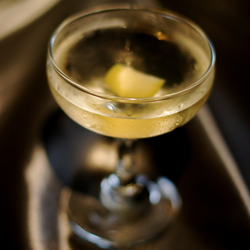
Bols plied us with a parade of cocktails that afternoon, but my favorite — a preference shared by many of the folks I chatted with — was the Holland Gin Cocktail. Actually, Bols styles it the Improved Holland Gin Cock-Tail on their site, but since their recipe lacks any maraschino, I don’t think that’s actually the correct nomenclature. (I won’t bore you with the details here, but if you’re curious, I blathered about it elsewhere.) However you call it, this simply elegant combination showcases genever’s taste to a T, highlighting just how much you’re missing if you make many of the old drinks with plain-old gin.





Holland Gin Cocktail
– Jerry Thomas, by way of David Wondrich
2-3 oz Bols Genever
2-3 dashes rich (2:1) simple syrup
2 dashes orange bitters
1 dash dry orange curaçao
Prepare a chilled coupe or cocktail glass by wetting the rim with a lemon slice. Stir the drink ingredients with large ice cubes and strain into the prepared glass. Cut a large coin-sized zest of lemon directly over the cocktail, spraying the oils over the drink and running the zest around the rim before dropping it in the drink.
Drink of the Week, drinks, recipes
5 Comments »
Posted by Anita on 10.19.08 1:05 PM
 It’s more than a little embarrassing to admit that we’re on Day 19 of this year’s month-long Eat Local Challenge, and I haven’t even gotten our initial post up yet. Here’s the short version: We’re following the same guidelines we used for last winter’s Dark Days Eat Local Challenge, attempting to stick to them for every meal for the entire month of October. Of course, we do this pretty much all the time nowadays, with a few notable exceptions: Specialty ingredients for Thai and Chinese food, and the occasional non-locavore restaurant meal. But this month, we’re going for 100%, or as close to it as possible.
Suffice to say that life has gotten interesting over here — mostly in good ways — and that blogging was lower down on the totem pole than many other end-of-summer activities. We’ve enjoyed three weeks full of fun, including visits from good friends and trip to one of our favorite food cities in the world. We also spent a magical afternoon under the dappled sun at a picnic in the Santa Cruz Mountains, where the guest of honor was a whole roast pig accompanied by a beautiful buffet of side dishes, wines, and desserts (which were all way too good to call ‘potluck’).
During the week, we’ve been working like a pair of crazy people, but that doesn’t mean we haven’t been eating an amazing assortment of locally sourced meals. I won’t bore you with all the details, but I’m feeling incredibly blessed that we have locavore-friendly Range, Nopa, SPQR, and Beretta within easy shouting distance of home. And, of course, a freezer full of pasta sauce, sloppy joes, and other planned leftovers keep us fed when we’re too busy to cook.
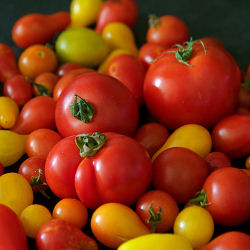
 You might be surprised to hear that, amid all this culinary chaos, there’s one dish I’ve loved so much that I’ve made it not just once but three times. When I first spotted this gazpacho salad in a magazine that I’d brought along in my carry-on luggage, I couldn’t wait to get home and try it. Luckily, even though the season for larger heirloom varieties is winding down here, it’s still pretty easy to find cherry tomatoes at the market. I soon discovered that although blanching and peeling a whole pint of cherry tomatoes may sound too fussy for everyday meals, it’s actually a surprisingly quick process that’s well worth the effort.
I’ve made a few changes to the original recipe — I’ve gone more savory than sweet in the tomato brine. Unable to source local sea beans (which I’ve since discovered at Far West Funghi in the Ferry Building), I substituted the tiniest haricots verts I could find. The next time, I left the beans out entirely, and it was equally delicious.
For my first attempt, I used a combination of baby tomatoes, including Sweet 100s, tiny Yellow Pears, and Sungolds. But plain-old cherry tomatoes — as the original recipe specifies — are a better choice. They’re far easier to peel, they all blanch at the same rate, and you don’t end up with yellow varieties muddied by the pulp from their red and orange pals. And, the larger size of the cherry tomatoes gives you a better chance to enjoy the salty, spicy burst of flavor you get with each one.
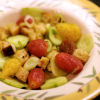
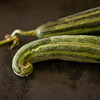
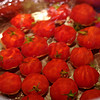
Gazpacho Salad
— adapted from Andy Nusser’s recipe, Food & Wine
– Brined tomatoes
1 pint cherry tomatoes
1 cup water
1 T sugar
1 T kosher salt
1 T red pepper flakes
1 (2 1/2-inch) cinnamon stick [Note: We use the softer, mellower Mexican canela]
– Salad
3 1/2-inch piece of baguette, cut into 1/2-inch dice (about 1 1/2 cups)
2 T plus 2 tsp extra-virgin olive oil
Salt and pepper
1/4 pound sea beans, or tiny haricots verts (optional)
1 cucumber, seeded (if necessary) and sliced 1/8-inch thick
2 scallions, thinly sliced
1 T sherry vinegar
To brine the tomatoes, bring a saucepan full of salted water to a boil. Prepare an ice-water bath and set near the stove.
Trim and blanch the beans or sea beans until just tender, and remove them with tongs or a strainer to the ice water bath. Remove and set aside on a towel to dry.
Blanch the tomatoes until the skins just begin to burst (15 to 30 seconds), and quickly remove them to the water bath to chill. Discard the blanching water.
In the same saucepan, simmer 1 cup of water, sugar, salt, red pepper, and cinnamon until the salt and sugar dissolves.
Drain and peel the tomatoes, and place them in a heat-proof bowl or Pyrex measuring cup. Strain the brine over the tomatoes. Brine the tomatoes until cool, about 40 minutes.
Meanwhile, preheat the oven to 350°. Cut the baguette into 1/2-inch cubes, and toss with 2 tsp of olive oil. Season with salt and pepper, and bake for 5-10 minutes, until lightly toasted.
In a medium bowl, toss the tomatoes, croutons, beans or sea beans, cucumber, scallions, vinegar and the remaining 2 T of olive oil. Season to taste, and serve.
Eat Local Challenge, locavore, recipes
10 Comments »
Posted by Anita on 09.15.08 3:41 PM
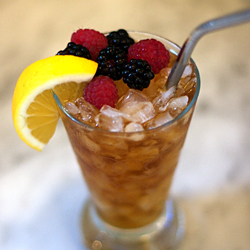 This month’s edition of Mixology Monday, hosted by Dinah and Joe at Bibulo.us, focuses on 19th century libations.
We’re no strangers to this era: Previous editions of Drink of the Week have covered the venerable Mint Julep (1824), Sazerac (1859), Martinez (1862), Manhattan (1870), Ramos Gin Fizz (1880s), Whiskey Sour (pre-1888), Widow’s Kiss (1895), and Horse’s Neck (1897). But, to a greater or lesser degree, all of these drinks have remained well-loved throughout the years.
But what of the Sherry Cobbler, the late 19th century’s most popular drink? What became of the darling that inspired such adulation?
Gin-sling, cock-tail, mint-julep, are about as vulgar as blue ruin and old tom at home; but sherry cobbler is an affair of consideration.
— “Canada and the Canadians“, Richard Henry Bonnycastle (1848)
Most sources date the origins of the Sherry Cobbler to the 1840s — the height of its popularity, to be sure. Digging through web references, I found a mention of it in Washington Irving’s Knickerbocker’s History of New York, Complete, a satirical record of early New York City, first published in 1809:
[Residents of Maryland] lay claim to be the first inventors of those recondite beverages, cock-tail, stone-fence, and sherry-cobbler, and to have discovered the gastronomical merits of terrapins, soft crabs, and canvas-back ducks.
It’s surely a tongue-in-cheek admonition, as the word “cocktail” wouldn’t have been known in the colonial era that our fictional historian details. But despite his tomfoolery, Irving thought that cobblers were sufficiently well-known in 1809 that he could reference it without description — a full 30 years before cobbler-mania’s peak.
There’s hardly a peep about cobblers until the late 1830s, but mid-century publications are chock full of evidence that Sherry Cobbler took England by storm soon thereafter. By 1844, no less a light than Charles Dickens name-checks the drink in his serial novel Martin Chuzzlewit, an otherwise scathing indictment of all things American. In one chapter, the title character’s traveling companion Mark Tapley supplies him with a restorative tipple:
He produced a very large tumbler, piled up to the brim with little blocks of clear transparent ice, through which one or two thin slices of lemon, and a golden liquid of delicious appearance, appealed from the still depths below, to the loving eye of the spectator.
 ‘What do you call this?’ said Martin.
But Mr. Tapley made no answer; merely plunging a reed into the mixture — which caused a pleasant commotion among the pieces of ice — and signifying by an expressive gesture that it was to be pumped up through that agency by the enraptured drinker.
Martin took the glass with an astonished look; applied his lips to the reed; and cast up his eyes once in ecstasy. He paused no more until the goblet was drained to the last drop.
‘This wonderful invention, sir,’ said Mark, tenderly patting the empty glass, ‘is called a cobbler. Sherry cobbler when you name it long; cobbler, when you name it short.
Presumably upon reading Dickens’s account of ecstasy on ice, British university students were swept up in a cobbler craze. Despite initial problems with substandard ice sourced from fishmongers, the drink’s popularity soared, finding its way into genteel parlors and private gentlemen’s clubs. By 1862, so firmly was the cobbler established that Jerry Thomas devoted an entire section of his Bartender’s Guide to different recipes for cobblers made with sherry, claret, Champagne, whiskey, and sweet wines: hock, catawba, and Sauternes. Thomas tailors ingredients to the base spirit: Often there are oranges (peel or pieces), other times pineapple; an occasional sweet liqueur joins dissolved sugar for added sweetness.
A drink that could be enjoyed by gentlefolk without incurring scorn, it’s only fitting that the cobbler would have its own trinkets. The cobbler popularized the drinking straw; before the 1888 invention of the wound-paper model, hollow reeds or even macaroni strands were used! Cobblers were also, according to some highly reputable sources, the first drinks where ingredients were shaken with ice. I haven’t been able to find primary sources to support that observation, but it’s clear that the Sherry Cobbler craze of the mid-1800s was indeed the force that propelled cocktail shakers into every bar of any size. To this day, a three-piece cocktail mixer with a built-in strainer is known as a cobbler shaker.
Unlike many antique cocktails, this one’s still quite delectable to modern palates; the fresh-fruit garnish and wine base seem downright contemporary. Rescuing this drink from near-obscurity, a new breed of bartenders are cranking up variations coast to coast.



Sherry Cobbler
3 oz medium-dry sherry (such as Oloroso or Amontillado)
1/2 oz Cointreau
1/2 oz simple syrup (or to taste)
2 lemon or orange wedges
berries or other seasonal fruit, for garnish
Squeeze one citrus wedge into an ice-filled cocktail shaker. Add the spent citrus wedge, sherry, Cointreau, and simple syrup, and shake until very cold. Strain into a cobbler glass filled with crushed ice; garnish with the remaining citrus wedge and a riot of fruit, and serve with a straw.
Drink of the Week, drinks, Mixology Monday, recipes
11 Comments »
Posted by Anita on 08.29.08 11:48 AM
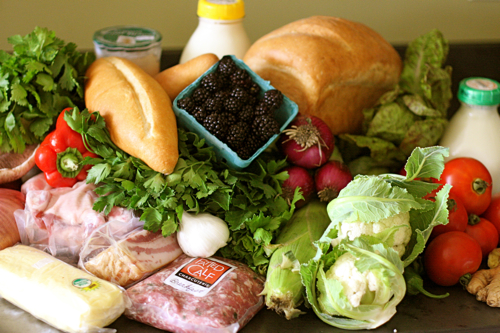
Our weekly shopping haul; One Local Summer, Week 13
—–
Unless you’ve been in a self-imposed media blackout, you may have heard about the party that Alice, Carlo, and friends are throwing here in Our Fair City. And you’d probably guess that a pair of diehard food dorks like us would be camped out in line, waiting for the chance to storm the gates first thing in the morning, wandering through the Victory Garden as we sample a continent’s worth of canapes in the dappled summer sun.
But the fact is, we live a Slow Food Nation life all the time. We spend practically every weekend grazing around the City and around the Bay Area. We live in a community where our oddball food choices have become fairly mainstream. We hang out with a crowd of thoughtful food-worshippers who can carry on a spirited debate about how to balance being a locavore with being a (small-c) chowhound.
We’re truly blessed to make our home here in the epicenter of the local, organic, sustainable food movement. San Francisco’s a city where it’s hardly a challenge at all to eat well and eat ethically… so much so that I get fairly bent out of shape when circumstances or travel force me to do otherwise.
So, no — No “Foodstock” for us. Happily, we have a lot to do this weekend:
– Buying our weekly groceries from the people who grow/make them
We do this every week at the Ferry Plaza Farmers Market, but just to make it interesting — and to bypass the frenzy of out-of-town foodies descending there this weekend — we’re heading across the bay to the Berkeley Farmers Market. We’ll see some of our usual vendors there, but I’m looking forward to exploring new stalls and new ingredients.
– Putting up food to preserve the harvest
Later in the day, we’ll pick up 100 pounds of San Marzano tomatoes at Mariquita Farm’s “guerilla veggie” drop-off. Later in the weekend, we’ll be hauling out the pressure canners and turning them into puree, marinara sauce, and whole canned tomatoes to feed us through the winter
– Supporting restaurants that support local farms
Mariquita’s making their drop at Piccino, so we’ll have a chance to experience their brunch for the first time. The fact that Sher and Wayne — like so many other San Francisco restaurateurs — procure so much of their raw ingredients from the same farmers and artisans that we buy from makes me inexplicably giddy.
– Exploring the food traditions of our neighbors
Saturday night, we’re heading out to a family-run ethnic restaurant with a group of food-obsessed friends. Later in the weekend — if we get our canning done — we’ll visit a Thai food festival put on by the local Buddhist temple at Golden Gate Park. Neither of these experiences are Slow, in the sense of using exclusively sustainable/local/organic ingredients, but supporting ethnic foodways is an essential part of being a citizen of our city and the world.
– Celebrating the bounty of our region
On Monday, we’re having some friends over for a little nosh. We’ll eat some pâté and peaches, sharp cheese and homemade plum chutney. We’ll drink local bubbly, sip homemade pear brandy, maybe even shake up a cocktail using artisanal spirits. Later there’ll be farmers-market pasta tossed with some of the marinara sauce we made earlier, maybe baguette slices spread with pesto. A pie, perhaps… made with a local-flour-and-butter crust (learned from a friend who also happens to be a local treasure) and filled with yet more amazing farmers market finds.
—-
 Am I conflicted about opting out of the Slow festivities? Absolutely. I’m already drooling over the Slow on the Go and Taste Pavilion tidbits showing up in friends’ Flickr streams. By all accounts, the Friday events have been beautiful, interesting, and delicious. I hope that they keep it up, because the people who’ve traveled here from all over the world deserve it. And so do the farmers, food-makers, and volunteers who are going all-out to make a fabulous impression.
But on the other hand, I know we’ll make the perfect slow celebration, in all the ways that matter most to us, just as the folks visiting our city and our local producers will have theirs. Either way, I can’t think of a better way to celebrate Labor Day than by honoring the backbreaking effort — both physical and political — that our farmers and artisans spend to put quality food on our tables.
Bay Area, farmers markets, locavore, One Local Summer
18 Comments »
Posted by Anita on 08.24.08 6:08 PM
 Aside from grinding and stuffing a few pounds of sausage now and then, curing meats is a task — much like beer-brewing and bread-baking — that I am more than happy to leave to the experts. Don’t get me wrong: I love getting up to my elbows in fatty meat and curing salts and aromatics. But when you have local artisans like Fatted Calf, even the most enviable meat-curing skills become obsolete.
To say we’re big fans of the work that Taylor Boetticher, Toponia Miller, and the rest of the Fatted Calf crew are doing is a huge understatement. We’ve spent the last two years gleefully eating our way through their entire offering, and there’s barely a thing we’ve tried that didn’t make us squeal with delight. Their smoky bacon is heaven in a frying pan, their rind-on pancetta is nothing short of funky-fabulous. Their beef jerky is addictively awesome, and their pâtés and terrines are a slice of savory joy. Their sausages — especially the Toulouse and the andouille — are light-years better than anything we make at home.
So when we heard that Piccino — a jewelbox cafe/restaurant in Dogpatch, the next neighborhood over — was hosting a supper featuring Fatted Calf products, cooked jointly by Taylor and the Piccino crew, we reserved two slots as fast as our little fingers could email the RSVP.
I should add at this point that Cameron and I have mostly given up on these sorts of one-night foodie extravaganzas. It’s too easy to get your expectations set impossibly high, or to calibrate each bite to the fantastic sum of money you’ve spent. We went against our usual stance this week for two reasons: Piccino is precisely the kind of restaurant we love — a cozy neighborhood space with a short, ingredient-driven menu that actively supports local farmers and food artisans — and because we can’t get enough of Fatted Calf.
On the night of the meaty meal, we gathered on the sidewalks in front of Piccino’s corner doorway. Happy gaggles of diners shunned the interior and spread down each street, glasses of deep-pink rosé in hand as we savored a rare, warm San Francisco summer evening. We hung back for another reason, too: We weren’t sure how we would all fit into the small dining area. Eventually, we were called to the communal table, so we squeezed onto the banquette, tried not to knock elbows with our neighbors, and wondered just what we’d gotten ourselves into.
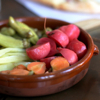
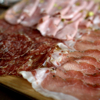
We needn’t have worried. By the time the second course (and third glass of wine) rolled around, we’d been utterly, completely won over. There were some service mishaps — one end of the table missed out on a pizza that somehow got misdelivered not once but three times — but these were forgivable, almost-funny oversights. We were chatting with our neighbors quite amiably by this point, companionably sharing platters of assorted charcuterie and a casuela full of lightly pickled, jewel-like vegetables.
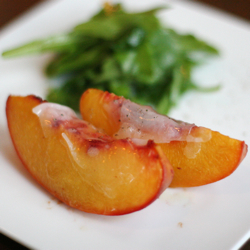
For the next course, we each got our own plates… a wise move, as I suspect that riots might have broken out otherwise. Who could be trusted to share a perfectly ripe Hamada Farms peach, draped with tissue-thin lardo, accessorized with a bitter-crisp salad of baby dandelion greens? (Hint: Not me.) Next up came an inspired riff on pork and beans: Shelling beans cooked to a toothsome creaminess, garnished with crisp-chewy pork rillons and melted Early Girl tomatoes.
Then, the main course platters filled the table: unctuous smoked lamb; bowls of fregola with charred young onions and baby potatoes; marinated eggplant with roasted gypsy peppers and capers; golden beets with their own sauteed greens, tarragon, and ricotta salata; and an out-of-this-world mint chutney. After hours of joyful din, passed platters, copiously refilled glasses, and a bevvy of spontaneous toasts to the kitchen, we were struck dumb. Everyone, all down the table, sat nearly silent, in awe of the fabulous food.
We hardly had room for dessert, but we bravely soldiered on. Plates of figs in various stages of caramelization arrived, dolloped with sheep’s milk fromage blanc, decorated with strawberries, and accompanied by an almond tuile. We lingered in the candlelight, talking with new acquaintances and exchanging plans to run into one another at the market next weekend. When I looked at my watch, I was stunned to see it was nearly midnight: We’d passed 5 hours in a magical space that somehow seemed to have grown larger, filled with conversation, light, and laughter.
To me, the most amazing thing about the whole meal was that (with the exception of the fregola and the wines) everything we ate came from within our local foodshed. The lamb was grown on the same Napa homestead as the shelling beans, both brought to Taylor as part of an over-the-fence trade with a prolific neighbor. Like all of Piccino’s regular meals, the vegetables and fruits for the evening were sourced from local farmers; many of their names graced the menu.
Although this was a one-time event, we’re already looking forward to going back to Piccino often. (I’ve stopped in a few times for a glass of wine and a bite to eat after picking up my Mariquita mystery box, but I haven’t really tried a whole meal there. That’s going to change.) And, if you’re in the mood for an epic food evening like ours, check out the Piccino schedule; there’s another meat dinner scheduled with RoliRoti’s Thomas Odermatt in October, and a mushroom feast with Far West Fungi in November.


Piccino Café and Pizzeria
801 22nd Street
San Francisco, CA 94107
415/824-4224
Fatted Calf Charcuterie
Oxbow Public Market
644-C First Street
Napa, CA 94559
707/256-3684
– Also sells most products at:
Berkeley Farmer’s Market
Saturday, 10 to 3
Ferry Plaza Farmer’s Market
Saturday, 7:30 to 2
locavore, meat, Napa & Sonoma, One Local Summer, restaurants
10 Comments »
Posted by Anita on 08.20.08 5:35 PM
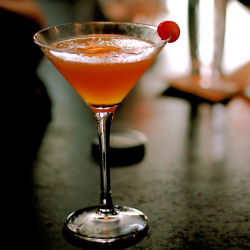 As our book club sips its merry way around the City, we’re discovering quite a few cocktails that we really like. Try as we might to work up enthusiasm for the drinks we’ve intended to sample, more often than not we actually become quite captivated by another option on the menu.
Such was life the other night at the bar at Range, where we’d gone to sample the Green Lantern, their contribution to Food & Wine Cocktails 2008. It’s an interesting enough drink, and if you hadn’t told me the lurid green came from muddled kiwifruit, I probably would have been stumped.
But the highlight of the evening was two pleasant surprises behind the bar: A newly-shorn Carlos Yturria — who, much to everyone’s pleasure has taken the Wednesday shift alongside the ever-fabulous Brooke — and the reappearance of a summertime favorite on the drinks list. The stalwart known as the Sungold Zinger has graced Range’s warm-weather cocktail menu since the restaurant’s earliest days, and its fan club is legion.
Jen ordered one, served by the man who invented it. Then Fatemeh followed, and then me, and then Cameron, and pretty soon there was a line down the bar of these sharp-looking, vibrant-orange cocktails. Well-balanced, tangy but not too tart, it’s a simple but beguiling combination… the kind of drink you wonder why nobody invented before. Everyone who tasted it had to have one of their own; we were totally smitten. And, apparently, we’re not alone: the Sungold Zinger was chosen one of the 20 best cocktails in America by GQ magazine.
It’s a simple enough recipe to make at home, especially when Sungold tomatoes are at their peak, as they are right now. But if you’re anywhere near Range — especially on a Wednesday night when Carlos is around — drop in for a little sip of summer sunshine.




Sungold Zinger
3-4 Sungold tomatoes
Pinch of sea salt
1/2 oz agave syrup
1/2 oz lemon juice
1-1/2 oz 209 gin
Muddle the tomatoes, salt, and syrup together in a mixing glass. Add lemon juice and gin, and shake well with ice. Strain into a chilled cocktail glass, and garnish with another tomato on the rim.
Variation: Replace the agave syrup with an equal amount of St-Germain elderflower liqueur, a nice alternative if you want a little floral hit.
(leftmost filmstrip photo courtesy of book-club member *fatemeh* via CreativeCommons)
bar culture, Drink of the Week, drinks, recipes, restaurants, The Mission
14 Comments »
Posted by Anita on 08.17.08 4:00 PM
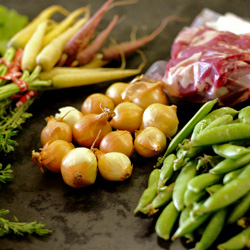 Compared with other parts of the country, most of the Bay Area’s food-growing regions benefit from amazingly temperate climates. Our summers here are so mild that we never really lose our early crops. We’re able to buy all those little springtime dainties — sugar-snap peas, baby carrots, and tiny onions — deep into August.
It’s a little joke of nature, of course, because the summer months in San Francisco feel like the worst parts of everyone else’s schizophrenic spring. You know that “in like a lion, out like a lamb” effect that people ascribe to March? Well, here we get it all in a single August weekend. Repeatedly.
For every warm and sunny Sunday where all you want is a summer supper of insalata caprese and a nibble of grilled chicken, there are twice as many foggy, grey Saturdays where something a little more substantial is in order. Not that we’re hauling out the cassoulet or anything, but our summertime cold snaps are so inevitable that we almost always plan a stew or braise each week, to haul out when the fog rolls in.
But even when the mercury dips down into the 40s, I have a hard time getting behind ultra-heavy dinners. The nights are still short, after all, and we’ve probably had at least a glimpse of sun during the day. So I prefer a compromise; a stew that’s almost spring-like, with a lighter air about it.
In France, you’d probably serve a lighter braise like the one we made this week in springtime, with a glass of rosé and a loaf of crusty bread. But, socked in by fog so dense we could barely see the neighbors’ yard, we opted for a pile of mashed heirloom potatoes and a half-bottle of local Syrah.
The good news is that the best is yet to come: The true beauty of San Francisco weather is our Indian Summer. When the rest of the world is gearing up for deep autumn, our farmers will still be pulling in corn, tomatoes, and all the other high-summer crops. But for now, while we slip on our sweaters, a stew will do.

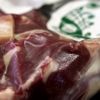
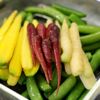
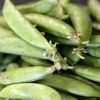
Navarin Printanier — Braised Lamb with Young Vegetables
1 large thyme sprig
1 rosemary sprig
1 bay leaf
6 whole black peppercorns
2 pounds lamb stew meat
olive oil
1 small onion, small dice
3 cloves garlic, minced
1 cup dry white wine
2 cups beef stock
12 pearl onions
1/2 lb baby carrots, trimmed and scrubbed
1/2 lb sugar snap peas, trimmed
2 T unsalted butter (room temperature)
3 T all-purpose flour
Preheat oven to 300°F. Put the rosemary, thyme, bay leaf, and peppercorns in an infusing ball, or tie into a square of cheesecloth.
Trim the stew meat of all excess fat, and cut into 2-inch pieces; season with salt and pepper. In a 4-quart pot, heat enough olive oil to coat the bottom of the pan, and brown meat in as many batches as needed to keep from crowding the pan. As each piece becomes well browned, remove it to a bowl with tongs or a slotted spoon. Continue with remaining meat, adding more oil as needed.
After all meat is cooked and resting, add onions to the pan. Cook over medium heat until softened and beginning to color. Add minced garlic and continue to cook until onions are golden. Add the wine and the stock, scraping the bottom of the pan to loosen any browned bits. Return the meat and its juices to the pan, along with the herb ball. Bring to a simmer on the stovetop, then cover and put in the preheated oven for 60 to 90 minutes.
While meat is braising, prep the vegetables. Place a large bowl two-thirds full of ice and water near the stove. Bring a large pot of salted water to a boil, and cook the unpeeled pearl onions until tender; timing will vary greatly depending on size and freshness of your onions. When tender, remove with a slotted spoon to the ice-water bath to cool, reserving the boiling water. Parcook the peas next, and remove to the ice-water bath when cooked through but still bright and snappy. Finally, parcook and chill the baby carrots. When all vegetables are cooked, drain them in a colander. Peel the onions, being careful not to remove too much of the root, and set aside with the rest of the vegetables until lamb is cooked.
When the meat is just tender but not falling apart, return the pan to the stove over medium-low heat. Adjust seasonings with salt and pepper, then scoot the meat to one side of the pan. Stir together the butter and flour to make a paste, and add it, bit by bit, to the simmering braising liquid to thicken the juices to a gravy-like consistency; you may not need all of the paste. When you get the thickness you like, stir the meat back into the sauce and simmer for another 2 minutes to allow the flour to cook out. Add the vegetables to the pan, and cook just until heated through. Adjust again for salt and pepper, and serve.
locavore, meat, One Local Summer, recipes
5 Comments »
Posted by Anita on 08.17.08 12:20 PM
 I mentioned this a few months ago, but — since it took a while to get rolling, and then a little longer to get things dialed in — I thought it might be nice to revisit my other blog-home, The Daily Green. My mini-column, SOLE Food Digest (Sustainable, Organic, Local, Ethical) recaps the good-news side of eating with a conscience, including seasonal suggestions and other encouraging tips from the blogosphere and beyond. It runs three times a week, and you can add it to your reader by subscribing to the SOLE feed.
If you want to read all Daily Green food bloggers’ posts — including “What to Eat” from Marion Nestle, “Recipes from the Gluten-Free Girl” by Shauna Ahern, and “100-Mile Diet” updates from Alisa Smith and James MacKinnon, then subscribe to the feed for New Green Cuisine.
Back on the home front, if you’ve been clamoring for a way to keep on top of Married …with Dinner — and you’re not using an RSS reader, for whatever reason — you can now subscribe via email.
And if you’re waiting on a comment response from me… mea culpa. It’s been a doozy of a week here, and I will try my best to write coherent follow-ups soon.
other blogs, other stuff
Comments Off on Here and there
Posted by Anita on 08.11.08 12:07 PM
 The Bay Area is home to so many fabulous local spirits that it seems almost impossible to single any of them out for special attention. For gin alone, we’ve got 209 and Junipero right here in the City, and Sarticious over the hill in Santa Cruz. We’re close to two top-tier artisan vodka companies — Charbay in Napa and Hangar One on Alameda — both of which also make a variety of other liquors and liqueurs, including St. George Absinthe and Single-Malt Whiskey, and Charbay Rum and Pastis. We’ve got a local brandy-maker, an old-school whiskey distiller, and even a bierschnapps haus.
But honestly, San Francisco’s best local drinking resource may be its bumper crop of creative mixologists. As Camper pointed out (and I keep harping on at every chance I get), Food & Wine Cocktails 2008 includes an unmatched 17 recipes from SF’s watering holes. The bartenders in our City aren’t just great at mixing up other peoples’ recipes, they’re tops at creating new drinks, too.
San Francisco’s bragging rights as a cocktail-creation mecca can be traced to an illustrious heritage, arguably starting with Jerry Thomas‘s 1880s invention of the Martinez, running through the 1920s with Duncan Nicol’s creation Pisco Punch, and Trader Vic’s Bergeron‘s (oft-disputed) introduction of the Mai Tai in 1944. And — just as today — the City’s always been full of canny restaurateurs popularizing drinks that were invented elsewhere, bringing signature drinks like Irish Coffee to the masses.
All by way of saying: This month’s episode of Mixology Monday — Local Flavors, hosted by Kevin at Save the Drinkers — has got our name all over it.
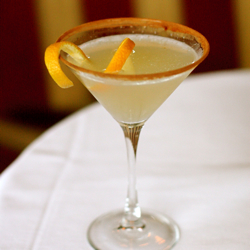
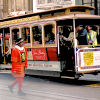
Now, I’m generally not a fan of tampering with the classics. But here’s one exception: The Cable Car, a clever Sidecar variation with a decidedly local angle. Created by Tony Abou-Ganim in 1996, the drink became the signature cocktail at Harry Denton’s Starlight Lounge, the iconic nightclub perched at the top of the Sir Francis Drake hotel “between the stars and the cable cars”. The Starlight’s specialty drink menu leads off with the Cable Car to this day… no mean feat in a town where cocktails are forgotten before the publicity even hits the presses.
So the Cable Car’s got a good back-story, and a gorgeous home bar. But how’s it taste? Frankly, the sample we sipped last weekend was unworthy of its lofty setting, not to mention its illustrious pedigree. Captain Morgan may be the 900-pound gorilla in the spiced-rum category (not to mention a pop-culture icon), but he’s no friend of my palate. And really, a drink with its roots in France deserves a better orange liqueur than Marie Brizard. I know it gets busy at the Starlight, but I’d like to think that the cocktail world has evolved past the point where a reputable bar resorts to sour mix, even its own house-made stuff.
So let’s bring this one a little closer to today’s standards: Fresh lemon juice, quality rum, a dash of real spice, and a top-shelf orange liqueur. A true San Francisco treat.



Cable Car Deluxe
– inspired by Tony Abou-Ganim‘s modern classic
1-1/2 oz gold rum (such as Appleton V/X)
scant 1/4 tsp allspice dram
3/4 oz Grand Marnier
1 oz lemon juice
1/2 oz simple syrup (highly optional)
Shake with ice, and strain into a chilled, cinnamon-sugar-rimmed cocktail glass. Garnish with an orange or lemon spiral.
———————-
Other featured cocktails with a San Francisco twist:
- Bee’s Knees – Our version, made with 100% local ingredients
- The Soiree – SF Cocktail Week’s signature drink for 2008
- Martinez – Jerry Thomas invented it here in San Francisco
Drink of the Week from our local bars:
bar culture, Bay Area, downtown SF, Drink of the Week, drinks, locavore, Mixology Monday, recipes
8 Comments »
